Can a teenager stay calm while the whole world watches? This is the question that follows the rise of Nodirbek Abdusattorov, born September 18, 2004, in Tashkent. He earned his grandmaster title in April 2018 at just 13 years old and shocked many by winning the World Rapid Chess Championship in 2021 at 17 — the youngest open world champion in any recognized time format!
We’ll show why pressure shows up on the clock, on the board, and in the mind. Then we’ll connect real tournament moves and team moments — including coverage of Uzbek team grit — to easy practice steps you can try at home.
Why it matters: If your child loves competition, this story proves that calm choices and steady practice beat nerves. Want to learn skills in small chunks? Check out Debsie courses, the Debsie leaderboard, or take a free trial class to get a personalized tutor!
For context on team pressure and big matches, see this piece on the young Uzbek squad and their Olympiad run: the young guns who ruled the.
Key Takeaways
- Abdusattorov rose fast — grandmaster at 13, world champion at 17.
- Pressure shows up in time, pieces, and emotions — and he stays focused.
- Parents and kids can learn calm, repeatable skills through short lessons.
- Debsie offers courses, a leaderboard, and free trial tutoring to help you grow!
- The article will map early years, breakouts, and training habits you can use.
From Tashkent Prodigy to Grandmaster: Nodirbek Abdusattorov’s Early Rise
A child from Tashkent began beating much older opponents and catching the chess world’s eye. He won the 2012 World Youth Chess Championships Under-8 in Maribor. That gold was the first big signal to coaches and scouts.
In 2014, at age nine, he stunned spectators by beating two grandmasters at the Georgy Agzamov Memorial. Those giant-killing games showed fearless calculation and real tactical courage!
By May 2015 he set a FIDE record as the youngest to enter the top 100 juniors at 11. Fast jumps in rating and strong junior results put him on the global map. Soon he met the strict norms and consistency needed to qualify as a grandmaster at 13 years, 1 month, 11 days. The title was awarded in April 2018.
Why it mattered: early wins and a quick rise in rating told a clear story. This player could handle stronger fields and tougher pressure. Scouts saw a long-term ceiling, not a short spark.
“Steady training, brave play, and the right opportunities turned youth success into elite progress.”
Families: kids don’t need to be a prodigy to grow fast. Short lessons and steady practice work! If you want a guided path, Learn Via Debsie Courses and track progress over the years.
For added context on team pressure and big moments, read the suspense piece on his rise.
Nodirbek Abdusattorov’s Breakthrough Moments on the World Stage
One event turned steady progress into global headlines: the 2021 world rapid showdown. He finished the preliminaries with 9½/13 and beat top rivals in critical games. The tiebreak win vs Ian Nepomniachtchi sealed the match duel and the title!
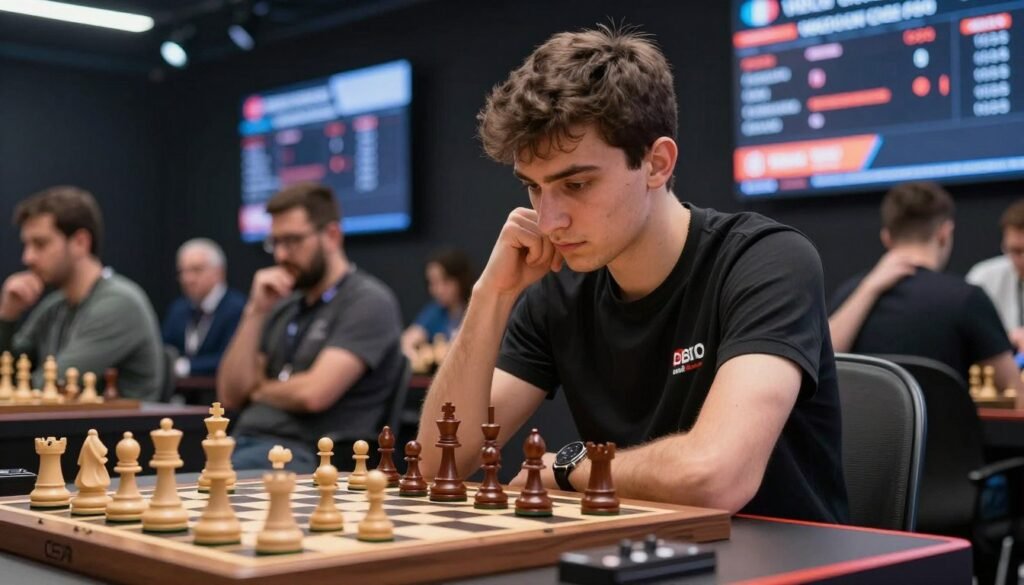
World Rapid Championship 2021: the youngest rapid champion and the Carlsen statement win
He became the youngest rapid champion at 17 years, 3 months. That includes a headline win over Magnus Carlsen and a key victory vs Fabiano Caruana. This was a full tournament score, not luck — a strong world rapid performance!
Beating elite grandmasters under fast time controls
Rapid play punishes slow choices. His scorelines show quick calculation and bold decisions. He outplayed elite rivals when the clock was loud and the margin for error small.
Chess World Cup runs and knockout pressure
Knockouts are brutal. In the 2021 FIDE World Cup he eliminated Anish Giri in tiebreaks before exiting in round four. Those matches proved he can handle do-or-die tension.
Team gold at the 44th Chess Olympiad
At Chennai 2022 he played board one and helped Uzbekistan win team gold. He scored +7−1=3 and earned individual silver with a 2803 performance. Clutch wins over Fabiano Caruana and Gukesh Dommaraju turned match results around!
Key highlights after 2021 and ratings timeline
Momentum kept coming: Sharjah Masters win (strong performance rating), Prague Masters title in 2024, and big finishes at Tata Steel and Qatar Masters. He reached world No. 4 in April 2024 and a peak rating of 2783 in October 2024. As of Feb 2026 the live rating sits near 2751 and top-tier events still place him among the elite.
- World Rapid: 9½/13, tiebreak vs Nepomniachtchi.
- World Cup: upset over Anish Giri, round 4 exit.
- Olympiad: board one, team gold, individual silver.
- After 2021: Sharjah, Prague, Tata Steel, London wins.
| Event | Result / Score | Notable Wins |
|---|---|---|
| World Rapid Championship 2021 | 9½/13, won tiebreak 1½/2 | Magnus Carlsen, Fabiano Caruana |
| FIDE World Cup 2021 | Round 4 exit | Defeated Anish Giri (tiebreak) |
| 44th Chess Olympiad (2022) | Team gold, +7−1=3, individual silver | Key wins vs Caruana, Gukesh |
| Prague Masters 2024 | Won with a round to spare | Strong consistent tournament play |
“Winning in fast formats and carrying board one showed he can perform in any spotlight.”
Want to see progress like this? Read the career note on early climbs into the world top or explore inspiring profiles on inspirational chess players to spark your own goals!
How He Wins Under Pressure: Style, Strategy, and Training Ideas You Can Copy
When the clock is loud, your plan must be louder — that’s how elite players win. Fast events like the 2021 rapid championship and board 1 play at the 2022 Olympiad show this. Stay simple. Choose clear goals.
Time management
Treat the clock as an opponent. Use your initiative early. Play quick, useful moves so you don’t scramble later. Practice blitz and rapid games to build calm under pressure.
Practical decision-making
When ahead, simplify. Trade pieces and reduce risk. When behind, seek complications and tactics. This rule is easy to remember and works in most games.
Opening prep & adaptability
Build a small repertoire you really know. Learn plans, not 30 moves. That beats surprise lines and helps you adapt to elite prep. For more on style, read a coach’s take on similarities to Magnus in this short profile: style and comparisons.
Study like a modern pro
Use databases to review big games. Drill tactics daily. Save and analyze your own game in a “MyGames” folder. Treat engines as super calculators — always ask “why” after a move!
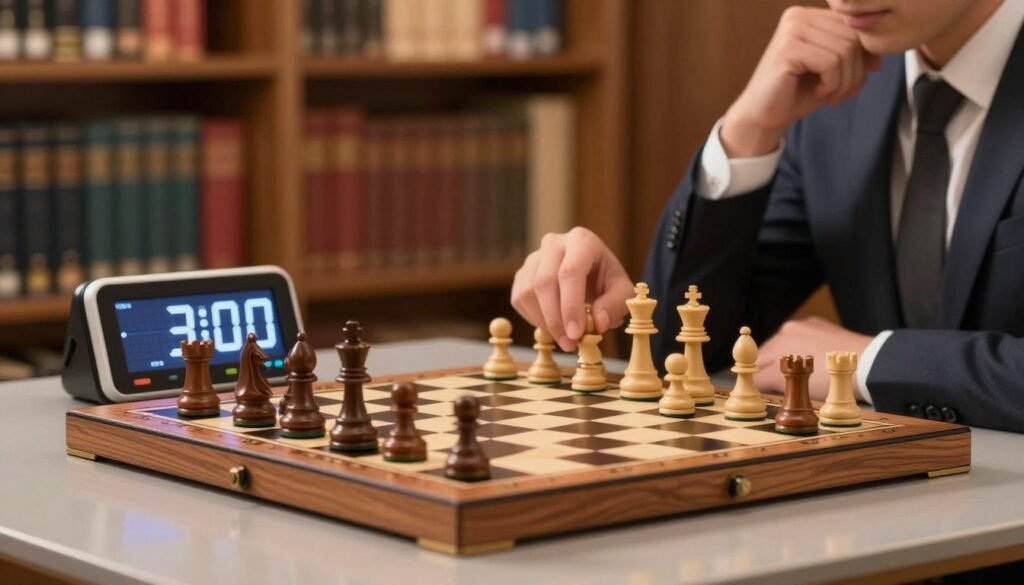
- Weekly mini-plan: 3 rapid games, 20 tactics, review one game, practice one opening idea.
- Use cloud engines, videos, and live top games for context.
| Focus | Tool | Action |
|---|---|---|
| Time control | Blitz & rapid practice | Play 3 games/week |
| Tactics | Drill solver | 20 puzzles/day |
| Analysis | MyGames + engine | Review one loss weekly |
“Clear choices beat perfect moves when the clock is against you.”
Ready to apply this? Learn Via Debsie Courses, track progress on the Debsie Leaderboard, or take a free trial class with a personalized tutor! For local tutors and classes, see options in Leidsche Rijn and Al Nahda, Dammam.
Conclusion
His rise shows how steady habits win when the spotlight burns hot. Nodirbek Abdusattorov rose fast, won major events, and proved he can deliver when pressure is the whole point!
You don’t need to be fearless — you need a plan for time, choices, and recovery. He earned his GM title in April 2018, became World Rapid Champion in 2021 as the youngest winner, and led board one to Olympiad gold in 2022. A peak rating of 2783 (Oct 2024) backs that record.
Try one habit this week: 20 tactics, one opening drill, or review one loss. For help, Learn Via Debsie Courses, track progress on the Debsie Leaderboard, or take a Free Trial Class with a personalized tutor!
For a close look at a recent elite win, read the Tata Steel report: Tata Steel Masters 2026.