Can a single sacrifice change how you see an entire game?
The Magician from Riga stunned the world with attacks that looked like pure magic.
mikhail tal was a Soviet Latvian grandmaster and the eighth world chess champion. He loved bold ideas and sudden sacrifices. His play mixed daring intuition with playful creativity!
We’ll map his life from Riga to the World Championship in a simple timeline. You’ll see why his style still shapes how kids learn tactics today.
Want to try one of his ideas? Learn Via Debsie Courses: Debsie’s gamified path and take a Free Trial Class With a Personalized Tutor: book a free class!
For more players with unique flair, check our feature on creative chess players!
Key Takeaways
- mikhail tal made aggressive play look effortless and surprising.
- His daring sacrifices reshaped world chess teaching about attack.
- We’ll follow a clear timeline so kids and parents can track his life.
- His style favored initiative, king hunts, and creative calculation.
- Try one tactical idea today with Debsie courses or a free tutor trial!
From Riga to the Soviet chess spotlight
A young boy from Riga grew into a daring chess force that stunned the Soviet scene. Born on 9 Nov 1936, he found chess at the Riga Palace of Young Pioneers. The club gave structure, practice, and friends who loved to play!
Born in 1936 in Riga, Latvia: the beginnings of a future World Chess Champion
Community clubs mattered. Regular play helped him build habits fast. By age 13 he was already winning local events.
Early coaching, rapid improvement, and first breakthrough wins as a teen
In 1949 coach Alexander Koblents began guiding him. Steady coaching made tactics and pattern recognition click.
At 17 he won the Latvian Championship in 1953. Those early wins showed creative flair and fearless attacks.
The “Magician from Riga” nickname and what it revealed about his chess personality
The nickname “Magician from Riga” fit perfectly. It meant unpredictable ideas, brave sacrifices, and playful confidence at the board.
Learning can be step-by-step and fun! You don’t need to be born a genius. Patterns and practice build skill.
- Born 1936 in Riga; started at the Youth Palace.
- Coached by Alexander Koblents from 1949.
- Latvian champion in 1953; teen breakthrough moments followed.
| Year | Milestone | Impact |
|---|---|---|
| 1936 | Birth in Riga, Latvia | Roots in a strong chess community |
| 1949 | Coached by Alexander Koblents | Rapid tactical growth and discipline |
| 1953 | Latvian Championship win | First major breakthrough as a teen |
| Nickname | “Magician from Riga” | Defined daring, creative play |
If you like this early story, explore other great Soviet-era players in our feature on great Soviet chess players. For families, skill-building can be playful and guided—check Debsie’s courses to help kids grow step-by-step: Debsie Courses!
Rising fast: titles, Soviet Championships, and the road to Candidates
A sudden run of wins pushed him from national star to the center of world chess attention.
Winning the 1957 USSR Chess Championship at age 20 mattered because so many top players lived in the Soviet system. That victory made him a household name in elite chess and earned a direct boost: FIDE awarded the Grandmaster title in 1957 after that result.
The next step was the 1958 Portorož interzonal tournament. He won the interzonal tournament and qualified for the Candidates Tournament. Momentum was building fast!
Dominating the 1959 Candidates
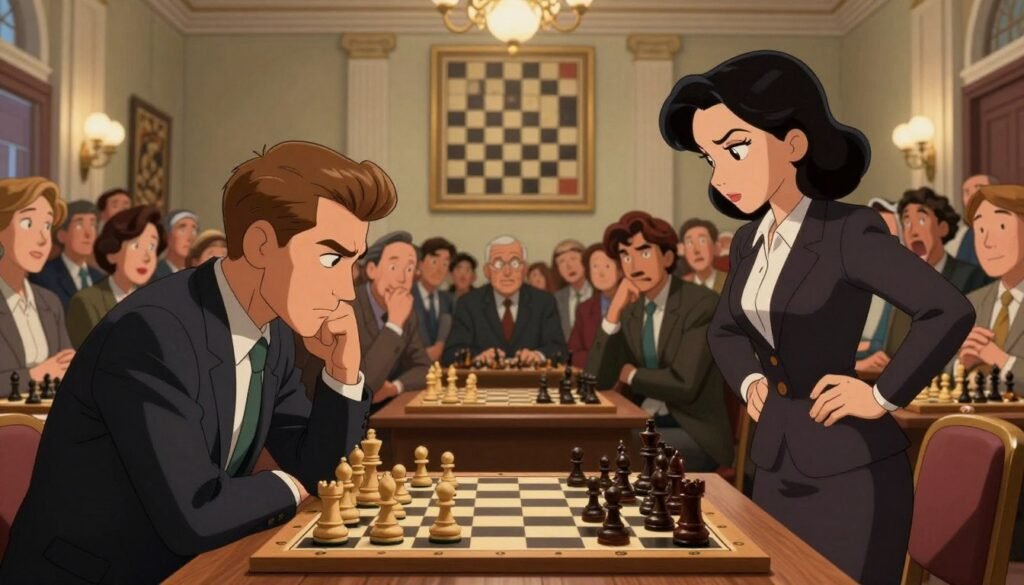
The 1959 Candidates Tournament became the crucial leap. He scored 20/28 and showed fearless attacking play. In one headline result he scored 4/4 against a rising star, bobby fischer, then only 16.
“It wasn’t just wins — it was a wave of confidence that made opponents uneasy.”
We break the system down simply:
- Interzonal tournaments filter the best players worldwide.
- Top finishers move to the Candidates Tournament.
- Winners of the Candidates earn the right to play for the world champion match.
| Year | Event | Result |
|---|---|---|
| 1957 | USSR Championship | Winner; awarded Grandmaster title |
| 1958 | Portorož Interzonal | First place; qualified for Candidates |
| 1959 | Candidates Tournament (tournament 1959) | 20/28; 4/4 vs Bobby Fischer |
These wins set the stage for a world title chase. If you want more on Soviet chess history, see our feature on the rise and fall of Soviet!
World Champion years: Botvinnik vs. Tal and the shock of 1960
The 1960 championship felt like a chess earthquake that remade how attack works. In Moscow the challenger won with flair. The final score read 12½–8½ (6 wins, 2 losses, 13 draws). That result made him world champion and stunned the old order.
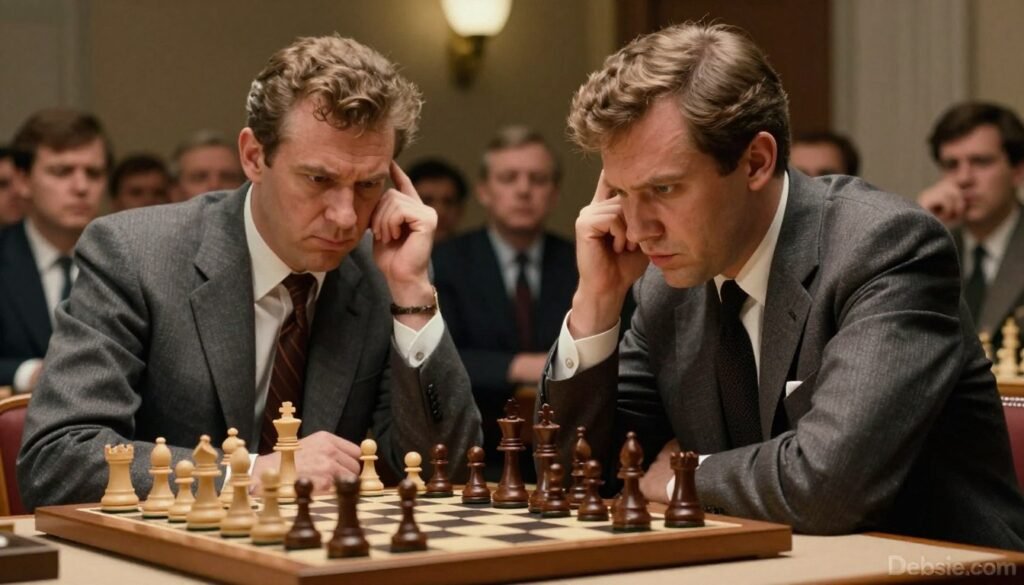
The 1960 World Chess Championship match in Moscow: Tal’s 12½-8½ win
The match pressure stacked on every move. Botvinnik fought like the model champion. The challenger kept the initiative and forced hard choices on the board.
The signature sacrifices: why Game 6 became a blueprint for attacking chess
Game 6 shows the idea: sacrifice for activity and nonstop threats. A famous knight sacrifice opened lines and shredded defenders’ plans. Young players still study that game to learn how to build attack momentum!
The 1961 rematch loss: Botvinnik’s adjustments and Tal’s health challenges
In 1961 Botvinnik returned with new plans. He steered many games into slow maneuvering and endgames. Chronic kidney problems hurt the champion’s energy and focus. Botvinnik won the rematch 13–8.
The “winter king” era and why Tal’s short reign still changed world chess
The short reign earned the nickname “winter king.” It was brief but seismic. He proved that daring attacks can defeat the old system. Coaches and kids worldwide still copy those lessons.
- Lesson: Open lines to the king and keep pieces active.
- Lesson: Use threats to force mistakes and win the match.
| Year | Result | Why it mattered |
|---|---|---|
| 1960 | 12½–8½ (Champion) | Shock win; new attacking blueprint |
| 1961 | 13–8 (Rematch loss) | Botvinnik’s adjustments; health issues |
| Key game | Game 6 | Famous knight sacrifice; studied widely |
Read more about his career and famous games at historic game notes and our roundup of great champions at greatest world champions!
After the crown: longevity, records, and elite results despite health
The years after the crown showed a player who kept shocking opponents in top events! He kept playing strong in chess even when health issues interrupted his plans.
Candidates tournament heartbreak came with a withdrawal from Curaçao 1962 due to serious health problems. He returned to later cycles and to many big tournaments, but some match chances slipped away.
He won the soviet championship six times (1957, 1958, 1967, 1972, 1974, 1978). That shows long-term strength in national events and many hard-fought victories.
Unbeaten streaks, team golds, and late brilliance
Two epic streaks defined his era: 86 games (47W/39D) and 95 games (46W/49D) from Oct 1973–Oct 1974. Those records made headlines and inspired players worldwide.
On the team board he shone too. Eight Olympiad team golds and a 65W/34D/2L record prove he delivered for the Soviet team again and again.
| Metric | Details | Why it matters |
|---|---|---|
| Candidates | Curaçao 1962 withdrawal | Missed match chance due to health |
| Soviet Championship | 6 wins (years listed) | Consistent top national success |
| Unbeaten streaks | 86 games; 95 games | Long-term consistency in games |
| Olympiad record | 65W/34D/2L; 8 team golds | Trusted team leader in top events |
| Peak & late wins | 2705 Elo (1980); 1988 World Blitz; beat Kasparov in 1992 blitz | Late-career brilliance across formats |
Big picture: His career kept producing moments against peers like tigran petrosian and anatoly karpov. He proved a world champion can stay a top threat for decades!
Mikhail Tal’s attacking style: the art of the sacrifice
Attack often begins with a single bold idea that forces the whole board to change. That spark describes a fearless style famous for improvisation and nonstop threats.
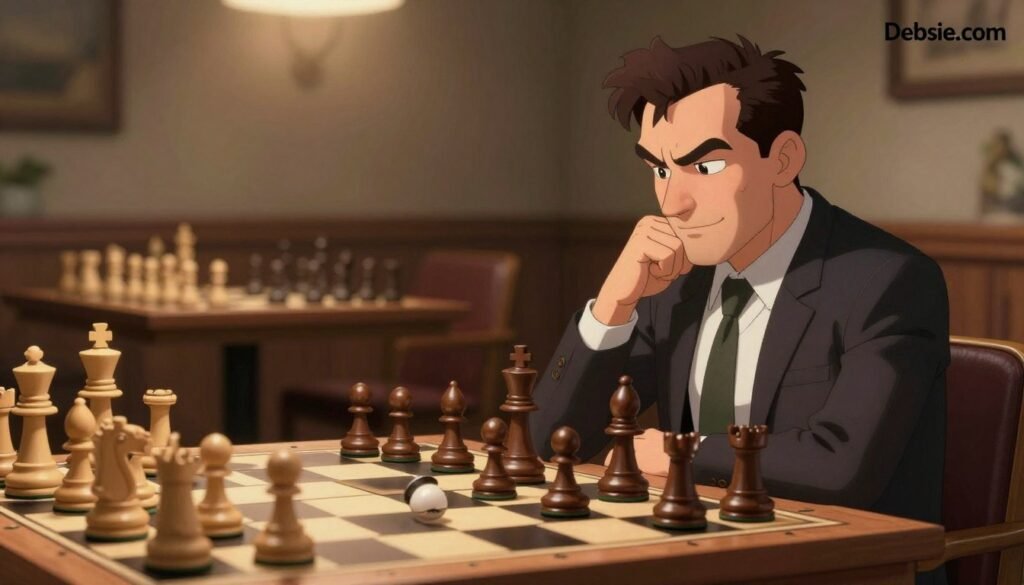
Improvisation under pressure
He loved creating calculated chaos. Initiative mattered more than a spare pawn. Pieces rushed the king and kept checks coming. Young players learn that threats win time and force mistakes!
Risk vs. defense
Some elite defenders answered calmly. Great defenders like tigran petrosian could survive the storm and punish tiny errors. That split explains why his match record vs. defensive masters was tougher.
Openings and lasting games
He tried sharp Sicilians, the Modern Benoni, and a few named lines that bear his mark. Classic teaching games—Botvinnik 1960 Game 6 and the Tal vs. tigran petrosian 1974 mini—still show clean attack ideas.
Legacy: He wrote about the joy of attack and inspired later attackers, from club players to giants like garry kasparov. Want to practice these ideas safely? Learn Via Debsie Courses and try the Debsie Leaderboard for friendly motivation!
For deeper study of his sacrifices see Tal’s sacrifices explained and our roundup of most aggressive chess players!
Conclusion
A short reign on the throne left a giant footprint on how generations attack in chess.
He became world chess champion in 1960 and lost the rematch in 1961. That flip shows both the power and limits of daring play. His games turned every match into an adventure.
Beyond the title, he kept winning Soviet championships and setting records. He fought health issues for much of his life and still played until his death on 28 Jun 1992 in Moscow at age 55.
Takeaway: Seek initiative, coordinate your pieces, and learn to calculate brave ideas! If your child wants guided practice, take a Free Trial Class With a Personalized Tutor: book a free trial. Or keep learning with structured lessons: Learn Via Debsie Courses!
For a smart read on his life and magic, check this feature: the Magician from Riga.