Can a clear plan turn a curious kid into a world chess star? This idea drove a great coach and player to craft a repeatable method that still inspires players today.
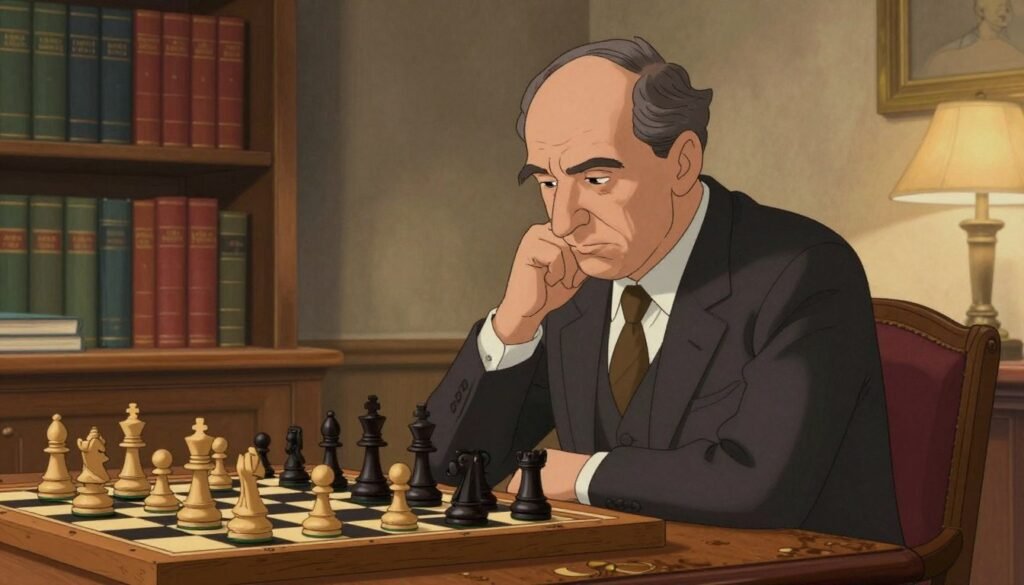
Born in 1911, mikhail botvinnik became the sixth world champion and held the crown across three reigns. People still talk about his “system” like a blueprint for winning!
Being a system builder means more than brilliant games. It means routines, habits, and step-by-step plans others can copy. Botvinnik paired smart training with steady practice to get world chess results over time.
In this Ultimate Guide you’ll see how openings, review habits, and focused training made champions. We’ll connect his legacy to today’s learners and show how clear steps help kids grow from beginner to confident competitor.
You can do this too! Explore a fun path to progress and learn via Debsie courses that turn practice into playful missions. For a deeper look at training routines, train like a champion with guided steps!
Key Takeaways
- Botvinnik’s method blends routines, openings study, and steady practice.
- Clear steps and daily habits create lasting chess growth.
- Focused review beats aimless play for faster improvement.
- Kids and parents can use gamified courses to make progress fun!
- Coaching and structured plans help move players toward champion-level goals.
Why Botvinnik Still Shapes World Chess
What started as a careful plan grew into a national coaching system for chess. It changed how an entire nation trained and won!
The “soviet chess school” can be simple to picture. Think of a big team where players train like athletes. They share ideas, study together, and push each other to improve.
The patriarch and the coaching idea
He became known as the school’s leader because he did more than win a title. He built routines and teaching habits that made other top players stronger.
From results to method
Tournament and match wins proved the plan worked. The system helped pupils reach world success and claim championship titles. That showed the method was real, not just theory.
Today many coaches still ask students to analyze their own games, prepare openings, and stay objective. Competitive chess isn’t only about talent. Habits and clear routines help you perform when it counts!
Next we’ll meet the man and then walk step-by-step through the system that turned students into champions.
Mikhail Botvinnik: The Man Behind the Method
He built his chess life like an experiment—measure, tweak, repeat. That approach made him not just a great player but a planner and teacher!
Quick fact card for parents:
- Full name: Mikhail Moiseyevich Botvinnik
- Born in Kuokkala (now Repino, Saint Petersburg)
- GM title: 1950; World Champion: 1948–1957, 1958–1960, 1961–1963
- Peak rating: 2630 (July 1971), peak ranking No. 7 (July 1971)
He stayed at top levels for many years. That longevity shows the power of steady habits and smart study.
As an electrical engineer and early computer scientist he loved systems. He applied testing ideas to practice and preparation.
He even helped pioneer computer chess research. He cared about how positions get evaluated and how search works—ideas that shape training today.
| Role | Year / Data | Why it matters | Takeaway for kids |
|---|---|---|---|
| Grandmaster | 1950 | Official top title | Aim for milestones! |
| World Champion | 1948–1963 (three reigns) | Proved the system works | Consistency beats flashes |
| Engineer & Scientist | Career off-board | Methodical thinking | Treat practice like a lab |
| Peak Rating | 2630 (Jul 1971) | High competitive level | Growth can continue for years |
Want to learn more about the man and his place in chess history? Check a reliable bio on Wikipedia or see how champions stack up on Debsie’s champions page!
Early Years and the Making of a Competitive Chess Player
Learning chess at twelve, he surprised everyone by defeating a world champion in 1925! That win came in a simul against José Raúl Capablanca. It gave him huge confidence and proof that bold play can pay off.
Concrete calculation first
Think in moves, not rules. He trained to calculate exact moves before following general principles. This taught him to judge positions by facts, not by feel.
Honest annotation builds objectivity
Being asked to annotate games forced clear, calm analysis. Writing down mistakes made him less emotional and more accurate in future games.
Discipline beyond the board
Daily exercise from 1926 kept energy high and focus steady. Short routines helped him study longer and recover faster during tournaments.
How kids can copy this: Play short daily drills, write one lesson per game, and add a quick walk or stretch. Small habits add up over time!
| Habit | Start | Benefit |
|---|---|---|
| Learned chess | Age 12 | Fast skill growth |
| Capablanca simul win | 1925 | Confidence boost |
| Daily exercise | 1926 onward | Better focus & stamina |
From Soviet Champion to Global Contender
Early victories in Leningrad set the stage for national dominance. He won the Leningrad Masters in 1930 and the city championship in 1931. Those wins led straight into larger events.
He took the USSR championship twice — a clear sign he could beat top domestic rivals. In 1931 he scored 13½/17, and he won again in 1933. That success made him one of the strongest players in the soviet union.
Nottingham 1936 was the proof moment. He shared first with Capablanca and finished ahead of Euwe and Alekhine. That result showed soviet chess could win on the world stage outside home turf!
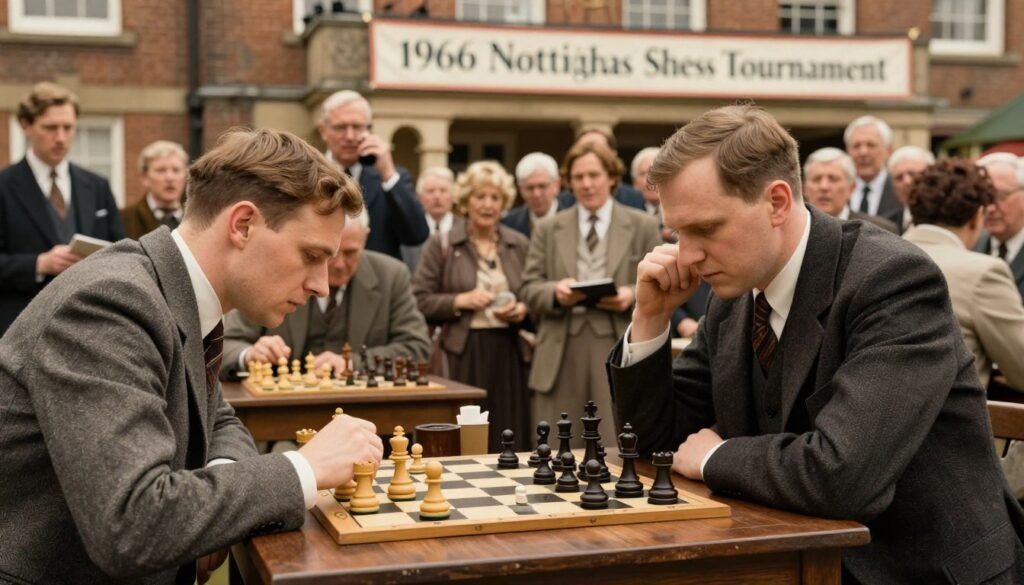
Why openings mattered: he prepared lines that gave lasting positional edges. He avoided one-time tactical surprises. A steady opening plan is like building a strong base in a video game — once it’s solid, every move gets easier.
- Local wins → national championship success.
- International proof at Nottingham 1936.
- Opening work aimed at long-term positional advantage.
Facing many styles and players, he used preparation to stay calm and ready for each match. Next we’ll see how that preparation helped shape the modern world championship system!
World Championship Pathways Botvinnik Helped Build
When FIDE stepped in after the war, the path to the world title became official. New rules made contests clearer and fairer. That change shaped how players trained and planned.
Big shift after WWII: FIDE took charge of the world championship system. Qualification cycles, regular timing, and written rules replaced informal deals.
Simple pathway to the top:
- Play qualifying events.
- Win a candidate cycle to earn a championship match.
- Face the champion in a long match for the world title.
One special rule gave the former champion a right to a rematch if he lost. This mattered because long matches tested stamina and nerves. Systems like this reward steady preparation over one-off genius.
| Change | What it did | Why it mattered |
|---|---|---|
| FIDE oversight | Set uniform rules | Fairer, repeatable contests |
| Qualification cycles | Clear road to title | Players could plan training |
| Rematch right | Champion safety net | Encouraged stamina training |
He saw systems as a training tool. Rules are like game settings. Learn them, plan for them, and you get an edge! For more on players who reshaped chess, see chess players who changed the game.
The World Champion Years: Reigns, Matches, and Rematches
A dramatic 1948 tournament gave him the crown and set a new model for title fights. He won the 1948 world championship with 14/20, three points clear over rivals like Smyslov, Keres, Reshevsky, and Euwe. That result mattered because it followed the death of alexander alekhine in 1946 and created a fair, open contest for the title.
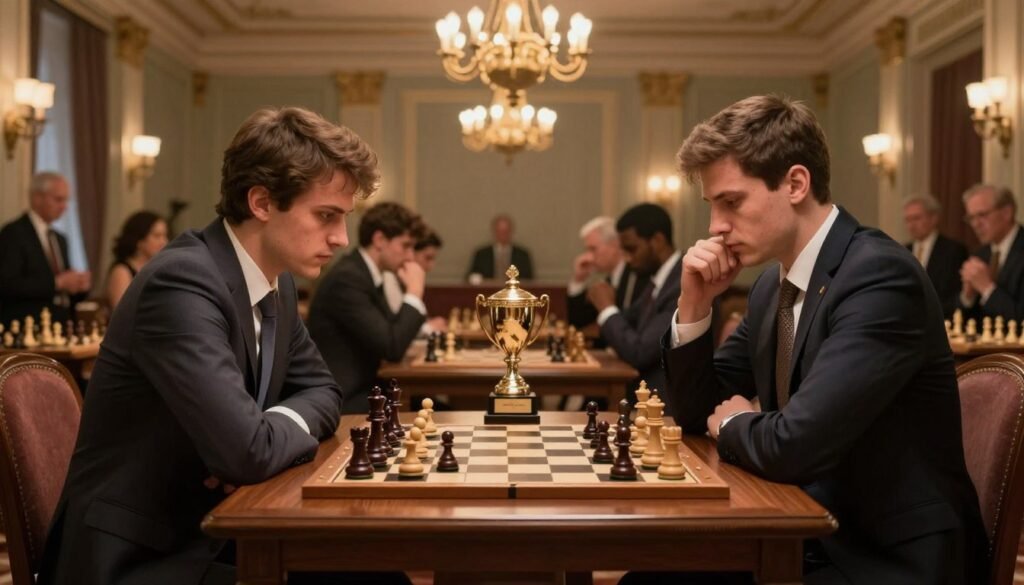
In long matches a steady plan wins. He drew a tense championship match with David Bronstein in 1951 and again held the crown after a drawn match with vasily smyslov in 1954. His methodical play fit long match play well!
Rivalries tested the system. He lost to Smyslov in 1957 but won the 1958 rematch by preparing harder. He then faced Mikhail Tal in 1960, lost, adapted to sharp, unclear positions, and won the 1961 rematch. Those years show how study and routine help you come back stronger.
The 1963 loss to Tigran Petrosian marked a turning point. The old automatic rematch rule vanished, and the route to the crown changed. Even champions lose sometimes, but a solid system helps you learn and return smarter next year!
| Year | Event / Match | Outcome | Lesson |
|---|---|---|---|
| 1948 | World Championship tournament | Won 14/20, +3 clear | Strong, steady tournament prep wins |
| 1951–1954 | Championship matches (Bronstein, Smyslov) | Draws — retained title | Match endurance matters |
| 1957–1958 | Smyslov rematch | Lost then won rematch | Learn and prepare deeper |
| 1960–1963 | Tal rematch; 1963 vs Petrosian | Lost then won rematch; later lost 1963 | Adapt to complications; rules change |
Curious to see how other greats fit into this era? Check the greatest Soviet-era players for more context and fun history!
Botvinnik’s Playing Style: Iron Logic in Positions and Moves
A quiet logic ran through every choice he made at the board. His play looked simple at first. Then it slowly built pressure until an opponent slipped.
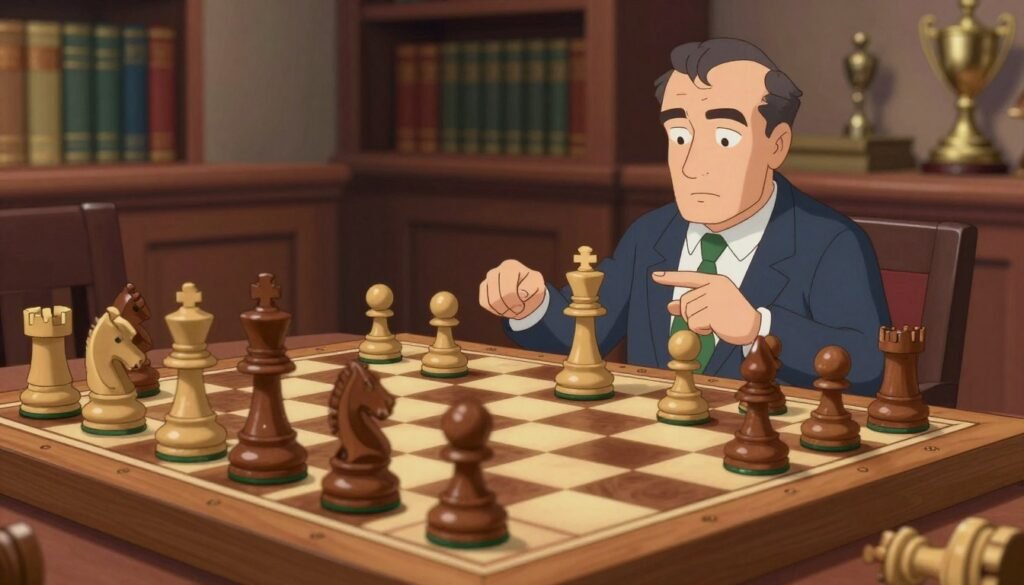
Universal approach
Universal style meant he could shift plans fast. He played calm positions, sharp battles, and precise endgames. The choice depended on the opponent and the match mood.
Iron logic and long-term gains
Iron logic was a chain of sensible moves. Each move fit the last. Examples: improve a piece, fix a pawn structure, then open a file. The result was a durable position advantage.
- Better pawn structure and piece activity win many games.
- Safer king and small edges add up over long matches.
- He could enter complications when the plan needed fire.
Quick tip for you: before each move, ask, “What is my plan?” Connect every move to that plan. It helps you play like a thoughtful player, not a lucky one!
1961 title rematch details show how adapting style and tactics can turn a loss into a later win. Next, we’ll break down the training system that built this purposeful style on purpose!
The Botvinnik Training System: A Repeatable Blueprint
A clear training loop turned practice into progress, move by move! This blueprint shows how steady steps build real results for kids and parents learning chess.
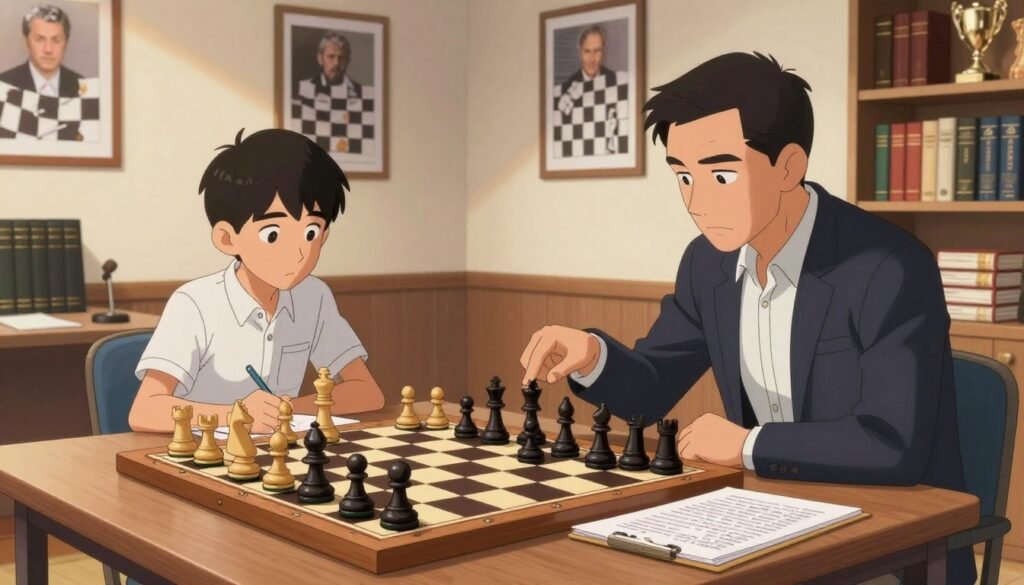
Game analysis routines
Play a game, save it, review it. Write short notes. Be honest. Objectivity means finding the moment your plan broke, not blaming luck.
Keep an error catalog: list missed tactics, rushed openings, and endgame slips. Then practice those parts with focused drills.
Openings and match prep
A compact opening repertoire helps you reach familiar positions more often. That saves time and cuts down nerves during matches.
Train for match conditions. Practice when tired, handle noise, and learn quick resets after a loss. These habits matter in competitive chess!
Tools, planning, and fitness
Use a computer carefully to check ideas — but think first. Turn concrete variations into general principles you can reuse in many games.
Small daily exercise kept players sharp for decades. Try short walks or stretches to boost energy and calm before play.
“Train like a champion by building simple, repeatable habits.”
Ready to start? Train like a champion with Learn Via Debsie Courses and take a Free Trial Class With a Personalized Tutor to get a plan that fits your level and schedule!
The Botvinnik Chess School: How He Trained Champions
A new coaching hub began in 1963 and soon became a model for consistent player development. The school turned ideas into repeatable lessons. Coaches taught clear steps so many students could learn the same winning habits.
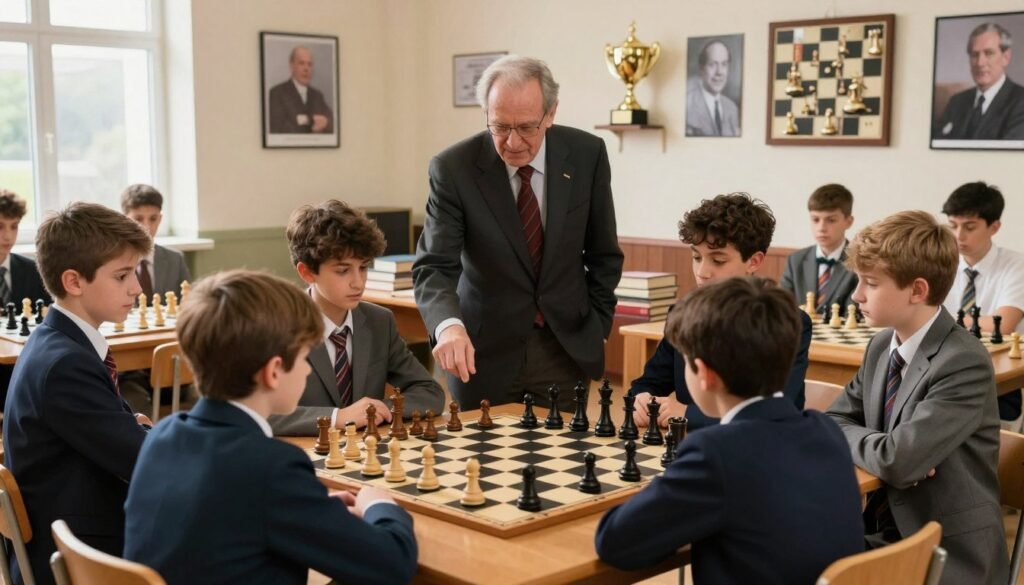
Founding and the Soviet coaching pipeline
Why a school mattered: making training shared and repeatable helped more players improve fast. Coaches set small goals, tested skills in real games, and rebuilt weak spots with drills.
Students who became world champions
Famous students included Anatoly Karpov, Garry Kasparov, and Vladimir Kramnik. Their rise is proof the system worked. Seeing peers climb felt motivating for everyone in the school!
Read more on the training loop in the Botvinnik method and how it shaped champions like Garry Kasparov.
What the school emphasized
- Moderation: steady practice and light exercise to avoid burnout.
- Analysis skills: honest game review and focused correction drills.
- Opening mastery: a compact repertoire to reach familiar, comfortable positions.
You don’t need to be a prodigy! Good coaching and simple habits grow skill fast. Families can join the learning vibe and track progress on the Debsie Leaderboard to make practice social and fun!
“Training together turns hard work into a shared adventure.”
Openings and Innovations Linked to Botvinnik
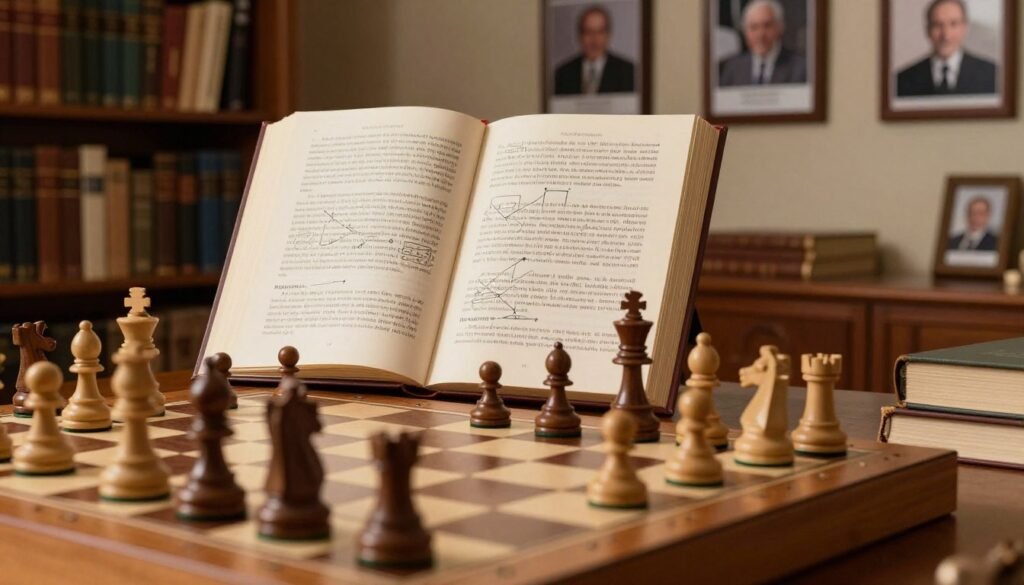
Openings are like starter maps; he used them to steer games toward quiet, lasting advantages. A clear opening plan helps you reach familiar positions and stay calm under pressure!
Named ideas across four families
Four opening families carry his ideas: the English, the Slav, the Caro‑Kann, and the Queen’s Gambit. Each line aims for steady piece play rather than one-time tricks.
- English: control the center from the flanks and slow-build pressure.
- Slav: solid pawn structure and safe development.
- Caro‑Kann: durable defense leading to reliable midgame plans.
- Queen’s Gambit: active piece play with lasting structural edges.
The common thread: lasting structure
He loved pawn shapes and piece setups that held value for many moves. That meant fewer wild swings and more repeatable, winning positions.
Practical tip for players: pick one opening that fits your style. Learn typical positions and ideas first. Then add exact lines later.
“Good openings win points over many games, not just one bold trick!”
Botvinnik and Computer Chess: Engineering the Future of Analysis
An engineer’s love of experiments led him to explore how machines can “think” about chess. He helped start early efforts in computer chess and saw tools as partners in learning!
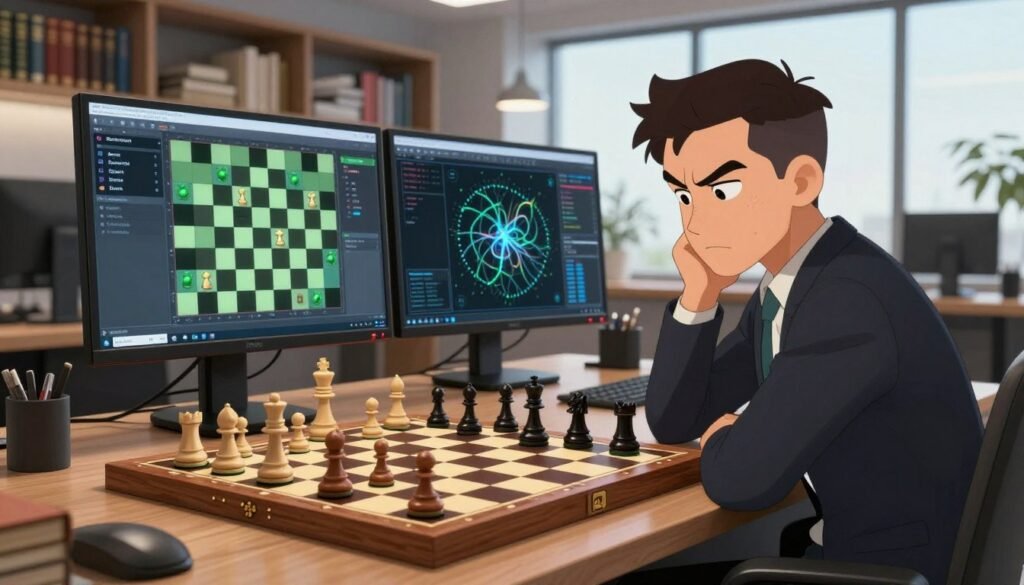
Why an engineer-world champion cared about evaluation and search
He loved measuring results. A computer can test ideas fast. That fit his habit of try, measure, and improve.
Engines let him check ideas with numbers. Search finds many move paths. Evaluation judges which paths look best.
How modern engines changed training and preparation
Today, strong engines can beat top humans under normal conditions. They run on phones, laptops, and servers. That changed how players prepare and how families review games.
| Term | Kid‑friendly meaning | Why it matters | Family tip |
|---|---|---|---|
| Engine | A thinking program that looks for moves | Finds smart ideas fast | Use it to check, not copy |
| Search | Looking ahead at many move paths | Shows tactics and traps | Ask kids to explain the move it suggests |
| Evaluation | Score of who stands better | Helps pick the strongest plan | Compare engine note with student idea |
Healthy guidance: engines are amazing helpers, but kids should still explain ideas in their own words. We encourage you to use tools and then ask, “Why did this move work?”
“Use computer chess as a coach, not a crutch.”
For more on his role in early tech work, read about his early work on computer chess. See how modern lessons blend tools and teaching in how technology is helping chess players reach new!
Conclusion
Conclusion
His training ideas made improvement feel like a skill you could learn, not a mystery you were born with. The “system builder” message is simple: repeatable steps beat guesswork.
Three pillars drove success: honest game analysis, smart openings that give lasting edges, and daily training habits that last for years. His run in the world championship and the comeback pattern across each match teach resilience.
Try this at home: one game, one review, one small goal each week. Join Learn Via Debsie Courses for gamified practice and take a Free Trial Class With a Personalized Tutor to build your plan. Track progress on the Debsie Leaderboard and explore his enduring legacy for more inspiration!