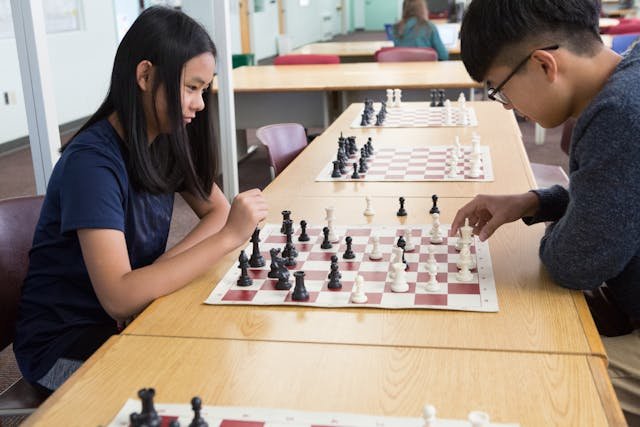
Can you still win when your moves are 80% good instead of engine-perfect? We think yes! Real contests are full of time pressure, nerves, and tired brains. That is where practical chess players shine.
This how-to guide is for kids learning, parents helping, and club players who want repeatable wins, not lucky blunders. We’ll teach you simple roadmaps to choose manageable plans and cut needless complexity.
We focus on decision-making over the board— not just memorizing opening lines. You’ll learn when to simplify, when to trade down, and how to keep winning chances under the clock.
Along the way we point to real resources, like a personal take on being a practical player and a short primer on openings to build your toolkit: see how I started being a practical and essential opening knowledge.
We’re building skills you can use TODAY! Friendly, fast, and useful for growth and improvement!
Key Takeaways
- Winning often needs solid plans, not perfect moves.
- Focus on simple decisions when the clock ticks.
- Kids and club members can learn repeatable strategies fast.
- Trade complexity for control to reduce mistakes.
- Train decision-making, not just line memorization.
What “Practical” Really Means in Chess Competition
Winning over the board often means picking moves you can actually carry out under pressure. This matters in any chess competition where decisions must be made fast and clearly!
Winning with “80% moves”
GM Maurice Ashley calls it the “80% move.” Sometimes a clean, forcing plan wins because you can calculate it. An engine may show a subtler line. But that line can demand long calculation and perfect defense. You might miss it in time trouble.
Human factors that decide games
Fatigue, the clock, and limited calculation change outcomes. In one OTB game (Jan 2015) a messy middlegame with exposed kings and many pawn breaks felt like a maze. The author picked a pawn break (d5) to force trades and cut branching lines. Later engine analysis favored Ra1, but the forcing plan simplified conversion.
Comfort vs. complexity
Choose positions you can handle. That does not mean playing scared. It means keeping control when your opponent is under stress too. Try this quick test: “If we both had 30 seconds, would I still pick this way?”
- Definition for kids: the move you can find and play well under pressure!
- Tip: prefer clear plans over deep, risky lines from an engine.
How Practical Chess Players Simplify Without Giving Up Winning Chances
In tense time trouble, simplifying the board can change a risky scramble into a clear race. We learned that from a real OTB game in 2015: the forcing pawn break d5 forced trades and cut the number of branches to calculate. That choice made it easier to convert under pressure, even if an engine liked Ra1 better.
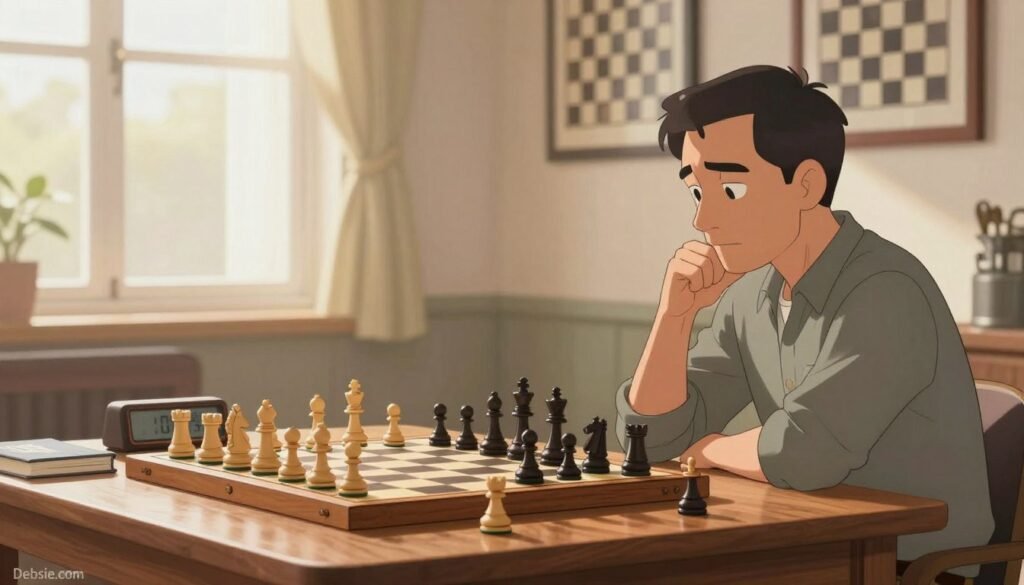
The real OTB lesson: trading to reduce complexity in mutual time trouble
Fewer pieces = fewer tactics. Trades remove forks, surprise checks, and wild lines. When both sides have little time, the board becomes a lottery unless you reduce options.
When simplifying increases your advantage by keeping control
If you hold pressure, trades lock in weaknesses and limit your opponent’s counterplay. This is not giving up: it is turning a mess into a controllable endgame you can handle fast.
How to spot forcing sequences that lead to clearer positions
Ask: are there checks, captures, or threats that force my opponent’s replies? If yes, follow that line and see if the result is simpler and quicker to play.
Which pieces to trade first: queens, rooks, or pawns—and why it matters
- Queen — trade when kings are exposed or you are ahead in material.
- Rooks — trade to calm open-file chaos and reduce tactical shots.
- Pawns — trade to fix weaknesses or to create a clearer pawn structure.
| Trigger | Why Trade? | Example Action | Risk |
|---|---|---|---|
| Exposed king | Remove counterplay | Exchange queens | May reach unknown endgame |
| Multiple weaknesses | Focus attack | Trade pawns to fix structure | Loses dynamic imbalance |
| Too many branches | Reduce calculation | Force rook trades | Opponent keeps active minor pieces |
| Material edge | Convert advantage | Exchange pieces down | Must know endgame basics |
Quick habit: before any trade ask, “Does this improve my worst piece or remove their best one?” If yes, trade. If no, pause and re-evaluate.
For more on avoiding decision pitfalls and on basic strategy for new learners, see how to avoid decision-making flaws and a short primer on openings and ideas at the basics of strategy!
Build a Practical Strategy Toolkit for Any Position
A small toolbox of themes will turn confusing positions into clear plans. Start by checking the center, weak squares, and open files. These three checks give you a fast way to judge most middlegames!
Core themes to apply fast
- Weak squares: a square your opponent cannot guard with pawns becomes a home base for your pieces.
- Open files: place rooks or queen on files to invade and force exchanges that help you.
- Center: control it to limit opponent counterplay and create targets.
Improve pieces and trade smart
Make your worst piece better before you attack. Small upgrades add up to real advantage. Trade a strong knight or a dangerous bishop to make your opponent’s life harder!
Pawn structure and pawn breaks
Use pawn breaks to open lines for your better pieces. Push only when it gains space or cuts off opponent plans. A single pawn break can reduce counterplay and win the part of the board that matters.
Prophylactic thinking
“Spot your opponent’s plan and stop it before it starts.”
Watch threats early. Stopping one idea saves time and avoids trouble later. Replay model games from the manual and pause at key moments. Try to find two good moves and pick the safer one!
Tip: For a quick study, try the strategy toolbox and then add chess to your child’s routine with short, focused practice. You don’t need many openings—just ten ideas you can use everywhere!
Train the “Practical Edge” Off the Board: Analysis, Endgames, and Calculation
How you study after the game matters as much as the moves you played. Small habits off the board build real winning habits on it. We want routines that grow your insight and reduce repeat mistakes!
Quick post‑game routine: first write what you were thinking during the game. Then check with an engine. This order trains your mind, not just your score.
Endgames as a weapon
Endgames turn tiny advantages into full wins. Focus on king activity, pawn races, and basic rook endgames. These topics boost your confidence when you trade down.
Endgame studies that sharpen resourcefulness
Study short studies like puzzles with a purpose. They teach sacrifice ideas and combinative acuity under pressure. That makes you more ready to create chances in real games.
Calculation habits that beat rote memorization
Practice candidate moves. Ask: checks, captures, threats? Stop when a line is sound. This cutdown on fantasy lines and helps when time is low.
“Write your thoughts first. Then check the engine.”
| Focus | Daily Goal | Why it helps |
|---|---|---|
| Post‑game notes | 5 minutes | Improves decision insight, reduces repeat mistakes |
| Endgame drills | 2–3 positions | Builds technique to convert small advantage |
| Calculation routines | 10 minutes | Sharpens real time choices under pressure |
Real payoff: better endgames = more calm trades, fewer thrown wins, and stronger chances in tight matches. A little training each week can change your chess life!
Turn Practical Play Into Measurable Improvement with Debsie
Build real skills fast with clear lessons that match what happens over the board. We want short steps you can repeat, not long theory that gets forgotten!
Learn Via Debsie Courses
Video course lessons break strategy, endgames, and decision-making into bite-size units. Kids and parents follow progress. Each course shows model positions, short drills, and clear next steps.
See the full set of courses here: Debsie courses. Prices are shown on each course page so you can pick what fits your budget.
Use the Debsie Leaderboard
Motivation matters! The leaderboard turns steady practice into friendly goals. Track your wins, compare progress, and stay engaged with other learners.
Check rankings and results at Debsie Leaderboard. Small weekly targets beat random practice every time.
Take a Free Trial Class With a Personalized Tutor
A tutor spots your repeated mistakes fast—wrong trades, missed tactics, or shaky endgame technique. They build a training plan with clear steps and a price that fits your family.
Try a free session: Take a Free Trial Class. Get a plan, test your skills, and keep leveling up!
| Feature | What you get | Who it helps | Why it works |
|---|---|---|---|
| Video course | Short lessons + drills | Kids and parents | Learn step-by-step, review anytime |
| Leaderboard | Progress tracking | Motivated learners | Keeps practice consistent |
| Personal tutor | 1-on-1 feedback | Students with specific gaps | Targets mistakes and plans growth |
| Endgame modules | Technique and drills | Anyone trading down | Turns small edges into wins |
Come learn with us! Test your skills, join the leaderboard, and use focused courses to turn awkward moments into clear moves. For local options, also see our roundup of top tutors in Bruges for extra support.
Conclusion
When the clock bites, dependable plans beat brilliant but fragile ideas. Keep choices simple. Aim for moves you can find and play under pressure.
Remember the big takeaways: reduce complexity, keep control, and pick plans you can actually carry out. Trade to remove chaos. Use clear tactics more than long memorized lines.
Do this now: review one recent game and write two notes about what you thought. That small habit turns each game into learning and builds steady improvement.
Pick one practical habit this week—maybe trade to simplify, or record post‑game notes. Want a guided routine? See how to train like a champion and grow your tournament experience!