Which legend shines when the clock ticks slowly and every move counts?
Classical play is the slow, serious format where stamina and deep thinking matter. We’ll set the scene and explain why era, tools, and formats make comparisons tricky!
This kid-friendly, parent-friendly guide gives a clear list and ranking of world giants. We use solid criteria — era impact, dominance, longevity, innovation, and versatility — not vibes.
You’ll get quick takeaways after each legend. Even beginners will find study tips and simple ideas to practice at home. We tease big names like Kasparov, Carlsen, and Fischer, plus quiet geniuses such as Karpov and Capablanca! Exciting, right?
If you want help turning these ideas into real progress, Try it free with a personalized tutor. Let’s play, learn, and grow together!
Key Takeaways
- Classical is about long time control and deep strategy.
- “Best” depends on the metric — we use clear criteria.
- Each legend offers studyable patterns for beginners.
- Comparing eras needs context: tools and formats changed.
- Quick takeaways follow every profile to guide your practice.
- Try a free trial to turn insights into real improvement!
How We Judge Greatness in Classical Chess
To rank legends, we apply five simple, family-friendly criteria. These filters keep the list fair and easy to follow. We weight world champion results highly because match pressure is unique and revealing.
World championship impact and title defenses
Why a world championship matters: long matches, huge pressure, and zero room for mistakes. When someone became world champion, they proved they could handle grit and nerves. Defending a title tests consistency over time.
Era dominance and distance from peers
We ask: how far ahead was a champion from rivals? Rating gaps and repeated wins show clear era dominance.
Longevity across changing opening theory
Greats adapt. Staying top when openings shift means they kept learning. A player who defended title fights through new theory.
Innovation, influence, and training legacy
Innovation leaves tools for others. New ideas, books, or schools of thought shape later history and study methods.
Versatility of style in long time controls
Some win by attack, others by endgame technique. The rare legends do both. That mix earns extra weight in our model.
“Match pressure reveals character — and true skill shows up over many games.”
| Filter | What it shows | Weight (%) |
|---|---|---|
| World championship impact | Match strength and clutch performance | 30 |
| Era dominance | Distance from peers and rating gaps | 25 |
| Longevity | Adaptation across opening trends | 15 |
| Innovation & influence | Lasting contributions to study and play | 20 |
| Versatility | Winning by many styles in long games | 10 |
Best classical chess players and why “classical” changes everything
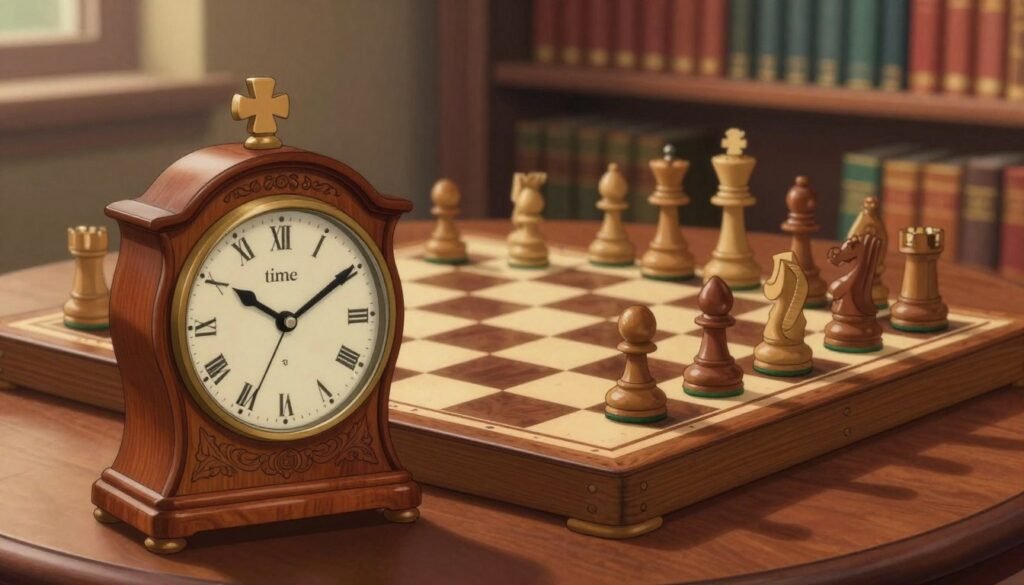
When the clock gives you time, technique and patience often win the day. Long time controls mean more calculation and deeper plans. That shifts who succeeds.
What long games reward: calculation, endurance, and technique
Long games let you prove ideas in the endgame. You see who can stay sharp after many hours. Clean calculation and patient position play shine.
Why rating and “player ever” debates vary by era
Era comparisons are tricky. Engines and big databases changed opening depth. The modern pool is larger and prep is deeper.
- Define classical: longer formats, more thinking, and more chances to convert technique into wins.
- What it rewards: accurate calculation, patience, endgame craft, and stamina.
- Why ratings mislead: old eras had smaller pools and no engines; today FIDE lists show current classical strength but not century-wide dominance.
- Fair rule: judge dominance versus peers, then add points for longevity over years.
“Compare champions by how far they led their era — then give credit for staying great across changes.”
| Factor | Why it matters | Example effect |
|---|---|---|
| Long time control | Rewards deep technique and endgames | Favors steady, precise conversion |
| Prep & tools | Modern players use engines and databases | Opens are deeper; surprises are rarer |
| Player pool size | More competitors raise overall level | Harder to dominate for long |
Quick preview: each legend profile that follows will show what to study so you can copy their strengths. Let’s dive into the greats and learn what to practice!
Garry Kasparov
Garry Kasparov towers as the modern benchmark. He changed how top players prepare and fight for an edge!
Why he’s the benchmark for modern dominance
Kasparov mixed raw energy with deep prep. He pushed openings and used relentless initiative to keep opponents under pressure. His style turned small edges into wins.
World champion reign and defining the professional prep era
He became world champion in 1985 and stayed at the peak for nearly two decades. Kasparov defended his title multiple times and won many major tournaments.
“Kasparov teaches you to play like you mean it — every move has a job!”
What to study: initiative, opening prep, and converting pressure
- Replay games to learn how he built and kept initiative.
- Study his opening prep to see planned ideas, not random moves.
- Watch how he uses player time to squeeze opponents in long games.
Want more inspiration? See our list of inspirational chess players to expand your study plan!
Magnus Carlsen
Few modern figures blend calm technique and relentless consistency like Magnus Carlsen. He rose to fame and became world champion in 2013 and kept the top spot for years.
Modern-era consistency against the deepest player pool
Carlsen thrives in a huge, global field. His peak rating of 2889 (Apr 21, 2014) shows raw strength. He held an amazing 125-game unbeaten run in standard games until Feb 2020.
Signature strength: endgame conversion and practical decision-making
His superpower is turning “equal” endgames into wins. He picks simple, practical moves. That makes him a model for calm, confident play.
- Quick facts: world champion since 2013; defended his title in 2014, 2016, 2018, and 2021.
- Study focus: endgames, small advantages, piece activity, and steady defense.
- For parents: his games teach technique more than flashy traps — perfect for steady growth!
“Carlsen’s case in the ‘player ever’ debates rests on raw strength in modern conditions, not just trophies.”
Curious who else to follow? Check a short list of players to watch to expand practice ideas!
Bobby Fischer
Few peaks in chess history burn brighter or shorter than Bobby Fischer’s 1970–72 surge.
Bobby Fischer appears as a true “peak power” legend. He shot to global fame and became world champion in the 1972 Reykjavik world championship match!
His run included an almost unreal streak: 20 straight wins versus world-class opponents in 1970–71. That streak still reads like a dream.
Fischer’s style was direct. Clear plans. Clean attacks. Super-accurate calculation. He could punish tiny mistakes fast.
“Fischer shows that careful thinking can still be aggressive!”
Kids and parents can learn from him. Replay annotated games to practice calculation. Learn how one sharp idea can decide a long game.
- Study focus: annotated scorelines and tactical calculation.
- Lesson: think carefully, strike clearly, and grow confidence!
- Note: Fischer was a transformative grandmaster and a fierce competitor.
| Year | Highlight | Why it matters |
|---|---|---|
| 1970–71 | 20 consecutive wins | Shows unmatched short-term dominance |
| 1972 | World champion (Reykjavik) | Iconic match that changed global interest |
| Style | Clear plans & sharp calculation | Great model for learning tactics and precision |
Want deeper study? See the bobby fischer profile for games and annotated material we recommend!
Anatoly Karpov
Quiet, steady, and relentless — Anatoly Karpov squeezed tiny edges until opponents cracked. He made a career from control, not fireworks. Kids and parents can learn a lot from his calm approach!
Positional control, prophylaxis, and endgame technique
Karpov became world champion in 1975 and defended his crown in 1978 and 1981. He lost the title to Kasparov in 1985. Those facts show long high-level consistency.
His style focused on stopping plans before they start. That idea is called prophylaxis. It means watching your opponent and removing their ideas early.
On the board he won with tiny advantages. Perfect piece placement. Smooth endgame technique that looked like magic. He turned small leads into wins in long time controls.
- Study tip: Replay a few Karpov games and pause every five moves. Ask, “What did he prevent?”
- Quick fact: His championship matches taught patient play and exact technique.
- For kids: You don’t have to attack every time — smart defense can win too!
“Patience and technique shine brightest when the clock lets you think.”
José Raúl Capablanca
Few figures turned simple ideas into wins as naturally as José Raúl Capablanca. He made hard positions look easy with clear plans and tiny error rates.
Quick facts: Capablanca was world champion from 1921 to 1927. In the years 1916–1924 he scored 40 wins and 23 draws in tournament play. That run is still famous for consistency!
Classical time controls reward tidy technique. Capablanca thrived because his endgame clarity and piece coordination punished small mistakes. Long games gave him room to convert small edges into full points.
What to study: simple endgame methods, smooth piece harmony, and the skill of choosing easy, winning moves. Practice trades, pawn endgames, and tiny positional improvements.
- Kid tip: “Try to make your pieces work together like a team!”
- Parent note: Capablanca games are gentle study material. Plans are clear and not chaotic.
“Effortless technique wins when you keep the clock and your cool.”
Emanuel Lasker
Lasker was the ultimate survivor at the board! He adapted his style to meet each rival. He mixed tactics, deep strategy, stubborn defense, and practical fighting spirit. That made him hard to beat in long contests.
Longest reign and steady resilience
Headline fact: Emanuel Lasker was world champion from 1894 to 1921 — a 27-year run that still stands in history!
He defended title after title and kept winning in different eras. Lasker stayed a top force for decades. At age 66 he still took 3rd place at Moscow 1935 against much younger rivals.
- Adaptability: he shifted plans mid-game to trouble opponents.
- Versatility: wins by tactics, strategy, or gritty defense.
- Lesson: long-term success often beats flash — resilience matters.
Study tip: Replay Lasker games and mark moments when he changes course. Those are gold for learning flexibility!
| Years | Result | Why it matters |
|---|---|---|
| 1894–1921 | World champion (27 years) | Longest reign in world championship history |
| Multiple matches | Defended title | Proved match pressure mastery |
| 1935 | 3rd at Moscow (age 66) | Shows lasting strength late in career |
“Classical contests reward those who can adapt and endure.”
Want more on legendary reigns? See our roundup of great world champions to compare styles and study ideas!
Alexander Alekhine
Alexander Alekhine was the “calculation + imagination” champion. He mixed sharp tactics with creative ideas. His games feel both precise and daring!
Key story: Alekhine won the world championship by defeating Capablanca in 1927. He later lost the title in 1935, regained it, and remained champion until his death in 1946.
He bridged older school rules and a newer, concrete focus on calculation. Alekhine annotated games and shaped opening ideas. His innovation pushed the world forward.
What kids can learn: spot tactics while you develop pieces. Protect the king first. Then look for turning points where activity wins material or space.
- Replay one attacking game slowly.
- Pause when a piece improves its activity.
- Note each tactical chance and check your analysis.
“Rules can be broken — but only when your analysis is strong.”
| Topic | Why it matters | Example |
|---|---|---|
| Title runs | Shows match resilience and comeback skill | Won 1927, lost 1935, regained, champion until 1946 |
| Style | Calculation + imagination | Sharp attacks that flow from deep analysis |
| Study tip | Active piece play and tactical spotting | Play through one Alekhine game and list activity moments |
Mikhail Botvinnik
Think of Botvinnik as the coach who turned study into a repeatable system for success. He won the world title in 1948 and reclaimed it across later matches. His results in major tournaments kept him at the top for years.
Systems chess, preparation, and the Soviet training blueprint
Botvinnik built a program. He treated study like a recipe. Repeatable plans. Careful preparation. That hit home in long games where planning matters most.
He became a mentor to future greats. Karpov, Kasparov, and Kramnik learned from his methods. His training shaped how the Soviet school taught opening prep and long-term improvement.
“Good habits and steady work win more often than flashes of genius.”
- Quick tip: keep a chess notebook — openings you try, the mistakes you make, and one small goal for the week.
- Long time controls reward this kind of preparation and planning.
- Anyone can improve with structure and regular training!
For game lists and a deeper look, see the Mikhail Botvinnik profile.
Viswanathan Anand
Viswanathan Anand stands out as a true all-around legend who blends speed, calm, and deep preparation!
Anand won world championship titles in 2000, 2007, 2008, 2010, and 2012. He was the undisputed champion from 2007 to 2013 — a run that shows consistency across changing eras.
Why he fits long-format greatness? He adapted as opening prep and opponents evolved. He could attack, defend, or simplify into winning endgames depending on the position.
Versatility is his hallmark. Quick tactics. Sound strategy. Comfortable transitions to endgames. That mix helped him win big tournaments across many years.
“Calm, kind, and fierce at the board — Anand proves sportsmanship and strength go together.”
- Study tip: replay his opening choices and see how he gets safe, playable setups fast.
- Focus: watch how he converts small edges and handles pressure in title matches.
- For kids and parents: he shows you can be polite and still be a top competitor!
Learn more about the man and his matches on Viswanathan Anand’s profile.
Paul Morphy
Paul Morphy lit up mid-19th-century tournaments with attacks that still teach us how to finish a game.
The quick story: Morphy won the 1857 American Chess Congress and then toured Europe in 1858. He beat leading masters in match play. There was no official world title then, but many called him the unofficial champion of his time!
His technique is classic and simple. Fast development. Open lines. Clear plans to expose the enemy king. These ideas work in long games and short ones alike.
Timeless attacking fundamentals
Kids love the Opera Game. It reads like a story. Sacrifices, clear goals, and a neat finish. That game is perfect for early study.
- Use Morphy to learn development and swift coordination.
- Replay his tournament and match games to spot basic themes.
- Notice how he punishes slow moves and opens lines for the attack.
“Play fast ideas well — and the rest often falls into place.”
| Year / Event | Result | Why it matters |
|---|---|---|
| 1857 — American Chess Congress | Champion | Marked him as the leading player in the U.S. tournament scene |
| 1858 — Europe tour | Match victories vs. top masters | Proved dominance across national scenes before formal world titles |
| Signature game | Opera Game | Teaching tool for clean attacking play and sacrifices |
Study tip: Start with a few Morphy games as your first “master” set. The ideas are clear. You will learn how to build an attack and finish a game with confidence!
For a deeper look at his place in the chess world and how early tour success shaped later debates, see this analysis. Also explore other figures who changed the game in our roundup of transformative rivals!
Honorable mentions that could crack any top list
Lists spark debate — and many great names almost always deserve a shout-out! These figures show different paths to success. Some thrill with attack. Others teach calm control.
Mikhail Tal — legacy of creative attacking play
Mikhail Tal brings joyful chaos to long games. He became world champion young and loved sharp sacrifices!
Tune into Tal to learn daring ideas and surprise tactics. His games teach how imagination can force practical wins.
Vladimir Kramnik — elite positional “no-weakness” style
Vladimir Kramnik is the model of steady, near-flawless play. He dethroned Kasparov in 2000 and later unified the title in 2006.
Study Kramnik to see how tiny advantages become real wins. His approach is perfect if you like quiet, precise plans.
For context about that era and Kasparov’s reign, see Garry Kasparov.
Other famous names families may hear
Steinitz shaped opening theory. Petrosian taught brilliant defense and exchange ideas. Spassky showed a universal, adaptable style.
These figures appear in many history lists and often pop up when people debate the greatest chess minds of all time.
“Pick a style you love — then study the masters who played it!”
Study tip: Choose one of these honorable mentions. Replay a handful of their games. Learn patterns that match how you like to play!
Study classical chess the smart way with Debsie Courses
Make hero-like ideas usable: small lessons, clear goals, and games that teach the “why” behind each move. We turn famous matches into simple steps you can practice at home!

Pick structured lessons inspired by world champions and their styles
Choose a style: Kasparov-style initiative, Carlsen-style endgame craft, or Karpov-style control. Each path has short modules for kids and parents.
Build a training plan: openings, middlegames, endgames, and annotated games
- Openings for safe starts and clear plans.
- Middlegames to learn tactics and real plans.
- Endgame lessons to finish cleanly.
- Annotated games to see why moves matter, not just where to move.
Learn more: https://debsie.com/courses/
Action step: pick one champion style, then commit to a short weekly routine. Structure beats random puzzle grinding. We promise steady progress and a fun path for young learners!
“Make the bridge from reading about legends to playing like you improve every week!”
Track your improvement like a tournament player with the Debsie Leaderboard
Recording progress turns slow learning into steady excitement and real gains. Improvement in long time controls shows up over weeks and months. Tracking gives you proof, not guesswork.
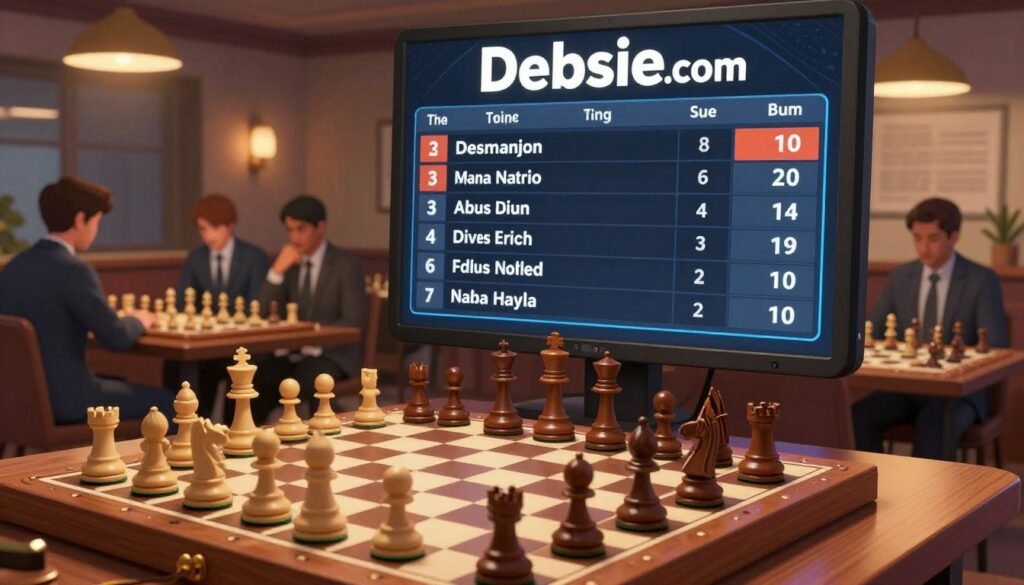
Measure progress, stay motivated, and compare performance over time
Why tracking matters: classical study is steady work. Small gains in accuracy and fewer blunders add up over time. That mirrors how real tournament players build a higher rating.
See the standings: Debsie Leaderboard
We made the Leaderboard fun and clear. Kids see a scoreboard. Parents see trends. Teachers can spot when to tweak the plan!
“Strong players review one lesson, then come back better next round.”
| What to track | Why it helps | Goal example |
|---|---|---|
| Consistency (weekly practice) | Builds habits for long games | 4 sessions / week |
| Accuracy & fewer blunders | Improves conversion in long time control | Cut blunders by 30% in 2 months |
| Endgame wins | Shows technical growth over time | Win 3 endgames cleanly in a month |
Want local help? See our list of coaching options to pair practice with guidance. Check the Debsie Leaderboard and make your practice count!
Conclusion
When games stretch over hours, careful planning and clean technique decide winners!
Quick recap: long game success rests on deep calculation, era context, longevity, innovation, and versatility. These five simple criteria guided our ranking and help you judge any world champion fairly.
Two lenses to hold: one view prizes era dominance and influence. The other prizes peak modern strength. Both views can be true — and both explain why certain names top many lists.
Pick a favorite legend. Study 3–5 of their games first. Try a small path: attacks, control, endgames, or heavy prep. Keep it fun and focused!
Ready to learn more? Explore our Courses: Debsie Courses, track progress on the Leaderboard, or take a free trial class with a personal tutor today! For a wider list of top names, see this top chess players list.