Best Chess Players to Study for Openings: Who Teaches You Fast?

chess openings to study

Ready for a faster way to grow your opening play? What if copying the right model games could make your moves clearer and more confident in real matches?

We’ll set a quick goal: pick a few famous players whose plans you can mimic. Learn simple ideas and common patterns. Repeat them in short practice bursts and watch your results improve.

We’ll explain what study means here: it’s about learning ideas, not memorizing long lines. You’ll get kid-friendly steps. Short practice chunks. No scary jargon.

We’ll go opening by opening and point you toward model games and player types. By the end, you’ll have a tiny plan for White, a basic defense plan for Black, and a weekly path for steady growth!

Key Takeaways

  • Pick model players who match your style and copy key plans.
  • Focus on ideas and patterns, not long move lists.
  • Short, regular practice beats marathon sessions.
  • Kids and parents can follow simple, fun steps.
  • You’ll leave with a clear White plan and a reply for Black.

Why studying great players speeds up your opening learning

Great players give you a shortcut: copy their plans and cut down mistakes fast! This helps you make fewer early blunders and reach a playable middlegame with a clear plan.

What fast improvement looks like:

What “fast improvement” looks like in the opening phase

Fewer blunders. Smoother piece development. A safer king. That’s the quick win for beginners. These gains come from repeating good habits, not memorizing long lines.

How model games teach plans, not just moves

One strong game can show a full plan. It explains WHY a piece goes here and WHAT the pawn breaks aim for. Use model game examples as a recipe for real play.

How to avoid memorizing traps without understanding

Memorized tricks fail when an opponent plays differently. Simple rule: if you cannot explain a move in one sentence, don’t use it yet. Focus on development, center control, and king safety as your checklist.

  • Quick tip: Learn plans, not long lists of moves!
Benefit Pitfall Quick Fix
Fewer early blunders Relying on rote tricks Explain each move in one sentence
Clear development plan Confused piece placement Follow model game patterns
Safer king and center control Playing sharp lines blindly Stick to basic checklist

Want a smart path for building your repertoire? Try this guide on building a repertoire or learn the basics at Understanding Openings.

How to pick chess openings to study for your skill level and time

Match your schedule with a tiny repertoire that grows with you. Start small. One reliable plan for White and two simple replies for Black will get you playing confidently.

Beginner-friendly choices are systems that teach piece development, center control, and safe castling. These setups let you learn ideas, not long theory lists.
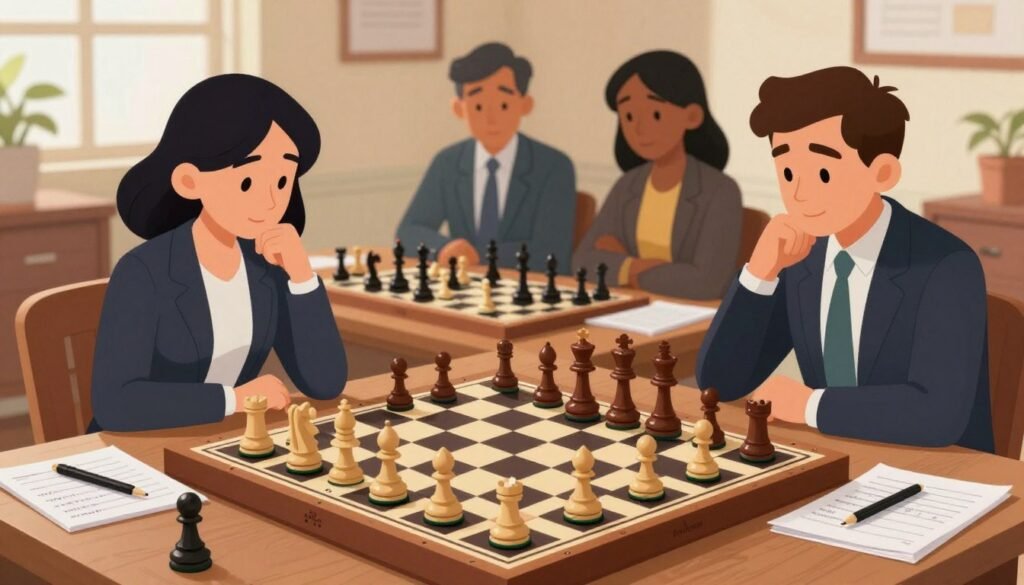
A visually engaging chessboard scene showcasing beginner openings in chess. In the foreground, a stylishly designed chess set is displayed, with pieces strategically positioned to illustrate classic opening moves like the Ruy Lopez and Italian Game. The middle ground features a diverse group of three players, including one female and two males, all dressed in professional business attire, deeply focused on the game, with chess notation sheets and pens beside them. The background highlights a warm, well-lit room with wooden furniture, soft natural light streaming in through a window, creating an inviting atmosphere. Capture the spirit of learning and strategy while maintaining a friendly, approachable feel. Include the brand name "Debsie.com" subtly integrated into the scene, ensuring it does not distract from the main focus on the chess openings.

Repertoire for limited weekly time

If you only have short bursts, try a mini weekly plan: one day for ideas, one day for model games, one day for practice positions. Twenty focused minutes beats two unfocused hours!

Solid setups vs sharp attacking lines

Choose systems if you dislike memorizing. Pick sharper mainlines if you love tactics and fast results. Both paths teach valuable skills. The key is consistency.

“We pick plans that teach how pieces work, not long move lists.”

  • Keep theory light: learn enough to avoid early disasters, then expand from real games.
  • Decision test: hate memorizing → systems. Love tactics → sharper play.

Using an Opening Explorer to study openings with real game statistics

An Opening Explorer turns a big database into a tiny microscope for your games! Click each move and watch what players actually play. The tool shows win rates, common variations, and how a position usually resolves.

How we browse:

  • Click move-by-move and note which responses appear most often.
  • Compare variations, not names. See where plans shift.
  • Look for repeat signals: pawn breaks, quick development, and king safety choices.
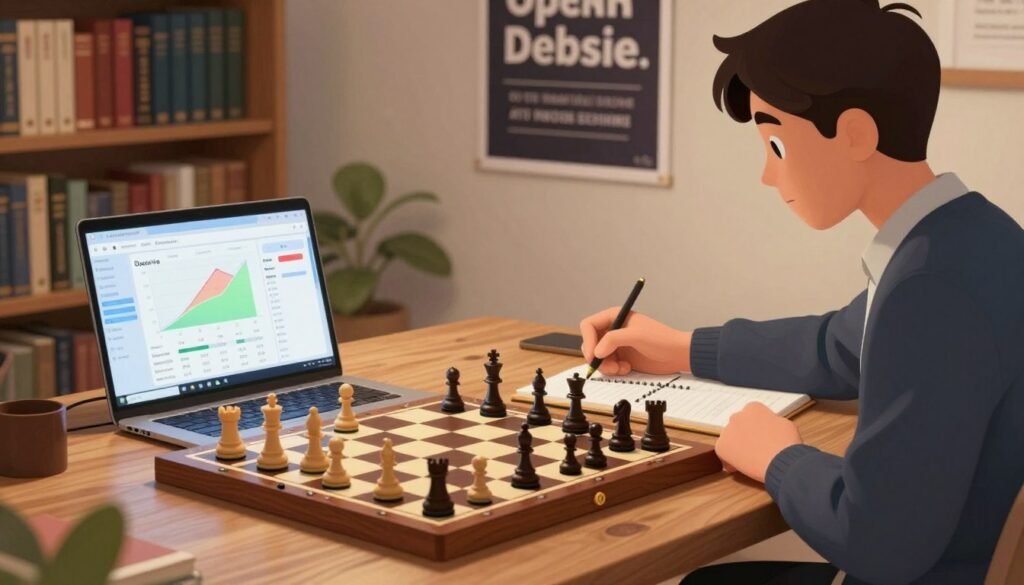
A cozy chess study environment with a wooden table illuminated by soft, warm lighting. In the foreground, a classic chess board is set up with pieces in mid-game, while an opened laptop displays an interactive Opening Explorer interface with colorful graphs and statistics about plays. In the middle, a focused individual, dressed in smart casual attire, is analyzing the board while taking notes on a professional-looking notebook. The background features bookshelves lined with chess literature and a motivational chess poster on the wall. The atmosphere conveys a sense of productivity and intellectual curiosity, inviting viewers into the world of chess strategy. The image reflects the spirit of learning and exploration in chess openings. Brand emphasis: Debsie.com.

Use stats smartly. Don’t blindly copy the top move. Learn which plans behind that move give good results. If a position shows “This position doesn’t exist,” it is likely rare and not worth heavy focus.

Tip: scan variations with purpose — find where plans change, not just where move lists split!

What to check Why it matters Quick action
Popular responses Show practical play Practice the main lines
Result stats Reveal good plans Learn ideas, not rote moves
Rare variations Low sample size Skip or note lightly

Note: Sites like 365Chess offer many free features and ask users to consider support so the service can keep improving. Use explorers as a guide and a practice map. Have fun exploring!

How to study an opening line correctly using the Sicilian Alapin (2.c3) as a template

A tiny pawn push can teach big lessons! Use the Alapin as a clear opening case: one simple idea, repeated in practice, makes it easier to play the next few moves with purpose.
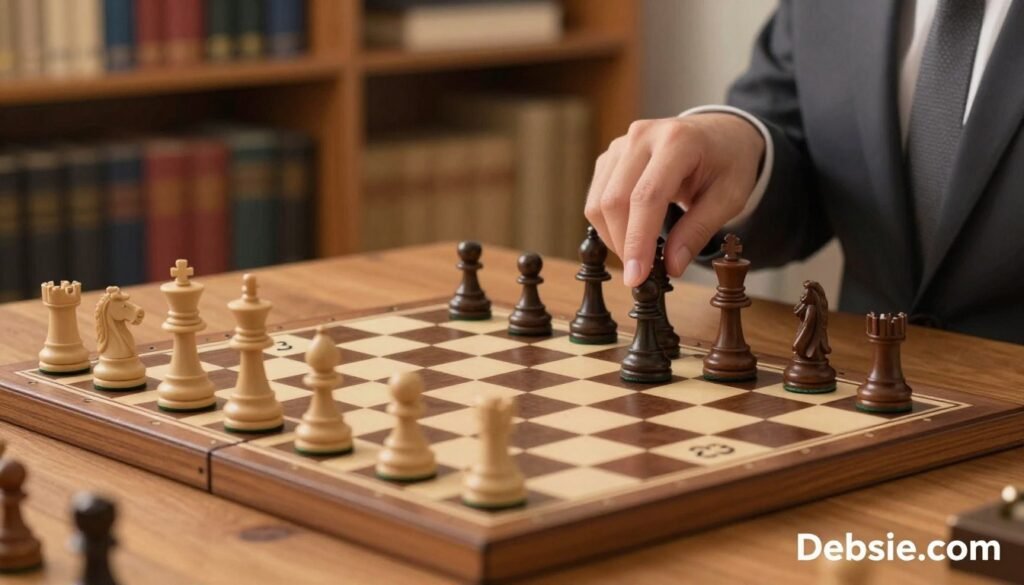
A detailed chessboard featuring the Sicilian Alapin opening (2.c3) displayed prominently, with pieces arranged accurately in the opening formation. In the foreground, a hand poised over the board is depicted, as if contemplating the next move, showcasing elegant fingers dressed in a professional business attire. The middle ground features a well-lit wooden table, with chess pieces that gleam softly in the warm light, creating an inviting atmosphere. The background shows blurred shelves filled with chess books, giving a scholarly feel. Soft, natural lighting illuminates the scene, enhancing the focus on the chessboard while creating a serene, intellectual mood. The overall composition conveys a sense of study and mastery in chess strategy, aligning with the theme of learning through imitation. Captioned by the brand name "Debsie.com".

Why White plays 2.c3 and the center plan

2.c3 avoids the Open Sicilian chaos. The pawn move points at d2-d4 and lets White build space with two central pawns.

How White aims for d2-d4

Think kid-friendly: “build two big pawns and claim space.” That plan makes it clear where pieces should go. Practice that idea before memorizing long lines.

What Black tries when White delays development

Black looks for quick pressure. They target lost time, awkward squares, and try to hit the center before White finishes piece setup.

Practical method: ideas first, then the moves

  • Write 3 ideas for White: center pawns, safe king, clear piece squares.
  • Write 3 ideas for Black: rapid pressure, active pieces, strike the center.
  • Learn only the next few moves that match those ideas. Play short drills and compare results with stronger model games.

Habit: after each game, check one choice against what stronger players did vs the same opponent setup!

The London System players to study for simple, reliable development

The London System gives beginners a SAME-SHAPE setup they can use again and again! It asks for steady moves and clear piece goals. That makes it perfect for kids and busy learners.
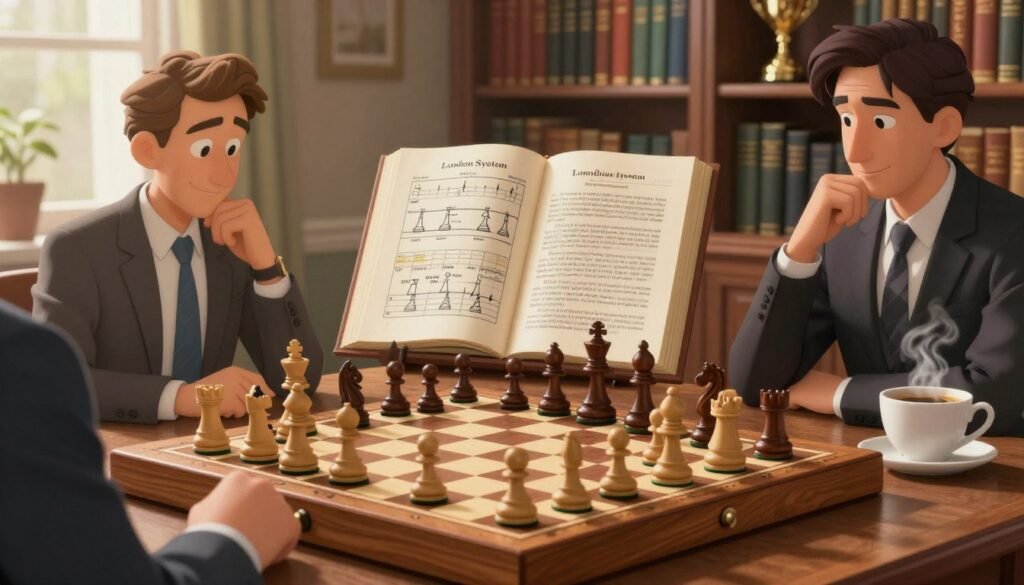
A classic chess scene featuring an elegant wooden chessboard set up in the London System opening position, pieces arranged strategically with attention to detail. In the foreground, a pair of hands, one male and one female, both dressed in professional business attire, are thoughtfully analyzing the board. The middle ground shows an open strategy book, with highlighted diagrams of the London System, positioned beside a steaming cup of coffee. In the background, a softly lit cozy study with bookshelves filled with chess literature and trophies adds warmth and depth. Light filters through a nearby window, creating a calming atmosphere that invites learning and contemplation. The overall mood is friendly and intellectual, emphasizing a professional approach to mastering chess openings. Branding subtly included: "Debsie.com".

Typical setup: pawn structure, bishop development, and Nf3

Typical shape uses a solid pawn chain and a dark-squared bishop on the long diagonal. Play Nf3 early for king safety and control. The plan is calm: build, then act!

Common plans against …Nf6 and flexible defenses

Vs …Nf6 often aim for e4 when pieces are ready. If Black plays flexibly, swap when it helps and otherwise improve your pieces. Don’t rush the attack. Build first, then push the right pawn break.

“Play the same shape often. That makes ideas stick faster!”

  • Pick calm model players who win with clean London plans.
  • Practice mini-games from the standard setup until the ideas feel natural.
  • Check model games at London System model games for real plans and moves.

Queen’s Gambit players to study for center pressure and clean piece play

Small, steady pressure in the center often wins more games than flashy attacks. The queen gambit shows how tiny space gains add up over time.
A strategic chessboard scene featuring a Queen's Gambit opening in action, emphasizing a dynamic center pressure strategy. In the foreground, a professional chess player in business attire intensely contemplates their next move, with focused expression and hand poised over the pieces. The background shows a muted, elegant room with a wooden table and ambient lighting highlighting the chessboard, creating a warm atmosphere of concentration and intellect. Use a shallow depth of field to blur the background slightly, directing attention to the player and the intricacies of the pieces. The lighting should be soft yet illuminating, casting subtle shadows that enhance the scene's depth. The image should evoke a sense of thoughtful strategy and clean play, embodying the essence of the Queen's Gambit. Designed for Debsie.com.

Core idea: play d4 and c4 for space. Bring pieces out smoothly. Each move has a purpose.

Key themes: d4/c4 space, development, and long-term pressure

Think: build the center, then let your pieces squeeze the opponent. That creates slow, lasting pressure rather than one-shot tactics.

When to trade in the center vs maintain tension

Ask one question before trades: what do I win—space, time, or a better piece?

If you gain space or free a good square, trade. If the tension keeps options open, keep it.

Patience wins here. The queen gambit trains kids in steady decision-making, not just fast attacks!

  • Pick model players who win with clean moves and long plans.
  • Practice the d4/c4 themes in short exercises.
  • Use the checklist above before any central exchange.
Focus What to watch Quick action
d4 / c4 center Space and pawn tension Support with pieces, avoid premature trades
Piece development Harmonious squares Develop with a plan, not random moves
Long-term pressure Slow squeeze on weak squares Improve pieces and keep tension

Queen’s Gambit Declined model games for strategic wins

Watching a few Queen’s Gambit Declined games turns confusing moves into repeatable plans!
A polished chessboard set in an elegantly lit room, showcasing a mid-game position of the Queen's Gambit Declined. In the foreground, a classic wooden chessboard with intricately carved pieces, highlighting the black pawn on e4 and the white pawn on d5. The middle ground features two players intensely focused on their strategy, dressed in professional business attire, one leaning forward and calculating their next move, while the other observes thoughtfully. The background reveals softly blurred bookshelves filled with chess literature and a large window allowing natural light to cascade into the space, creating a warm and inviting atmosphere. The warm lighting emphasizes the richness of the chess pieces and the players’ expressions, capturing the essence of strategic thought and engagement in the game. Imagery reflects a sense of professionalism and dedication to the art of chess. Debsie.com.

Why these model games matter: the same minor-piece maps return across many variations. Knights, bishops, and simple pawn setups keep showing up. By replaying a short set of model games, you see the patterns instead of long move lists.

Minor-piece development patterns that repeat across variations

Spot the pattern: knights often find central outposts. Bishops aim at target squares on the long diagonals. Pieces usually improve before any big pawn change.

Pawn breaks and the “one good plan” approach

Pawn breaks are the turning points. One correct pawn push can open lines or free a piece. Pick one clear target. Improve pieces toward it. Then strike with the pawn break.

  • Save 3–5 model games and replay them.
  • After your own game, match it to a model and copy one improvement.
  • Focus on where knights land, where bishops aim, and which pawn move matters most.

“Pick one good plan, repeat it, and watch your positions improve!”

Focus Repeat Pattern Quick Action
Minor pieces Central knights, active bishops Replay model games
Pawn work Key pawn break timing Plan then push
Game habit Match and improve Steal one idea

Italian Game specialists to study for fast attacks and classic patterns

Fast piece play and simple goals make the Italian Game a favorite for learners who love action! It gives quick development and clear aims. That makes it easy to practice and repeat.
A professional chess setting featuring an elegant wooden chessboard displaying the Italian Game. In the foreground, two focused players sit across from each other, one dressed in a crisp white shirt and the other in a smart blue blazer, both deeply engaged in the match. Their expressions reflect concentration and strategy. The middle ground showcases the intricately carved chess pieces in mid-play, capturing the essence of tactical maneuvers typical of the Italian Game. The background displays a softly lit library with shelves filled with chess books, emphasizing a scholarly atmosphere. The lighting is warm and inviting, creating an environment suitable for intellectual pursuits. The image should evoke a mood of intensity and focus while remaining sophisticated and professional. Branding on the chessboard includes "Debsie.com" subtly incorporated into the design.

How bishops and knights coordinate for kingside pressure

The light-squared bishop and the knight often act like partners. The bishop points at f7 while the knight hops to g5 or f4. Together they create threats that can force mistakes and open lines for an early attack.

Recognizing tactical moments vs quiet improving moves

Not every position needs a wild assault. Sometimes a quiet move wins: improve a piece, guard a square, or trade a bad minor piece. Learn the habit: ask if a tactic is actually there before you launch an attack!

“If pieces line up or the king is stuck, tactics appear. Otherwise, build first!”

When to play for the center and when to switch plans

Fighting for the center often gives lasting advantages. But if the center locks or the opponent weakens kingside squares, switch and aim for an attack. Good players pick one clear plan and repeat it in practice games.

  • Watch model games that show clean patterns, not wild gambles.
  • Practice the bishop+knight motifs for quick learning.
  • Use short drills that focus on timing the attack and spotting tactical chances.

For a step-by-step guide, try our essential opening basics at essential opening knowledge.

Two Knights Defense games to study for tactical awareness

The Two Knights Defense turns early moves into a sharp tempo test! One small mistake can flip the initiative. That makes this line perfect for learning fast tactics and pattern spotting.

Tempo means this simple idea: did you make your opponent waste time while you improved? If yes, you gained tempo. If no, you lost it. That single concept explains a lot about quick attacks and sudden threats.

Why tempo matters and how one move can change everything

Threats pop up quickly in this line. A single move can open an attack or shut one down. Watching model games shows how winners grab tempo and punish slow replies.

Best ways to practice: mini-games from key positions

Practice smart: start mini-games from critical setups. Play short skirmishes and repeat key turns a lot. This builds tactical reflexes faster than full games.

  • Play 3 mini-games from a chosen Two Knights position.
  • After each, review only the first 10 moves and name the biggest mistake.
  • Repeat the same position until you spot the common tactical patterns.

Habit: tactics are patterns, not magic. Your brain gets faster each week!
A high-resolution illustration depicting a chessboard in the foreground, showcasing a vibrant and dynamic position illustrating the Two Knights Defense. The chess pieces, polished wood and gleaming metal, are sharply contrasted against a richly textured board with deep colors. In the middle ground, the scene captures an intense game between two focused, professional chess players seated at the board, both dressed in smart, tailored business attire, embodying strategic concentration. The background is a softly blurred chess club, adorned with chess-related decor, creating an inviting atmosphere. Warm lighting bathes the scene, highlighting the players’ expressions and the intricate details of the chess pieces. The overall mood is one of challenge and intellectual engagement, resonating with a sense of tactical awareness. Created for Debsie.com.

Focus What to train Quick drill
Tempo Make opponent waste a move Force a concession in 3 moves
Threat spotting Find forks, pins, and skewers Play 3 mini-games per position
Move review First 10 moves only Name the biggest mistake

Want guided lessons and more practice ways? Try mastering openings for structured drills and friendly coaching!

French Defense players to study for resilient structures and counterplay

When space feels tight, the french defense shows how to turn a squeeze into action! It often looks cramped for Black, but that tension stores force. A clear plan and calm moves pay off.

Pawn chains tell the story. One pawn supports the next. Breaks are the escape hatches. Learn which break frees your position and which one wins space.

A vibrant chess scene focusing on two players engaged in a match utilizing the French Defense opening. In the foreground, one player, a middle-aged man in a tailored business suit, thoughtfully analyzing the chessboard, while the other, a young woman in a smart dress, confidently executing her move. The chessboard, prominently displaying the characteristic pawn structure of the French Defense, captivates with its strategic arrangement. In the middle ground, scattered chess pieces hint at the unfolding complexity of their game. The background showcases a stylish, modern chess club with soft ambient lighting enhancing the atmosphere of concentration and intellect. Capture the serious yet friendly mood of a passionate chess match. This visual illustration is for Debsie.com.

Pawn chains: space, breaks, and piece placement

Picture it: a chain pointing toward the center. The rear pawn protects the front pawn. The right break opens lines and activates your pieces.

Typical break ideas include …c5 and …f6. Place knights on strong squares and keep a bishop that can become active after the break. Good placement makes breaks effective.

How to handle cramped positions without losing time

Don’t waste moves on tiny pawn shuffles. Improve your pieces instead. Patience wins: keep steady pressure and strike when a break is ready.

“Defend with calm, then hit the center at the right moment.”

Try this drill: replay five french defense games. Pause before each pawn break and guess the plan. Then check the game and learn one improvement!

Focus Action Why it matters
Pawn chain Mark the backward and forward pawn Shows which break frees the position
Piece placement Improve knights and bishops Prepares for the decisive break
Time use Avoid useless pawn moves Keep tempo for counterplay
Training Pause before breaks in 5 games Builds pattern recognition

Want examples? Check model French lines and player games at french defense resources and copy the patient plans that fit your style!

Scandinavian Defense players to study for practical defense and queen activity

Early queen activity can be powerful — but only when it forces your opponent to lose time. The scandinavian defense challenges the center early and accepts brief queen play for clear goals.
A detailed chessboard scene featuring a dynamic game of Scandinavian Defense in progress. In the foreground, two chess players, a man and a woman, are deeply focused on their moves, dressed in professional business attire. The chessboard is set up prominently, with pawns pushed forward and a queen actively positioned for a strategic defense. The middle ground showcases a softly blurred audience observing the game with interest, creating an engaging atmosphere of competition. In the background, a sophisticated chess club setting with classic wooden shelves filled with chess books and trophies bathed in warm, ambient lighting that conveys a sense of familiarity and concentration. The lens captures a slight overhead angle, showcasing the intricate details of both the players' expressions and the chess pieces. Debsie.com.

Early queen moves: when they work and when they waste time

When they work: the queen forces replies and gains tempo. Your opponent wastes moves while your pieces improve!

When they waste time: the queen keeps moving and your pieces lag. That hands the initiative back to the other side.

Solid development plans that keep your pieces safe

Play quick minor piece development. Castle early. Trade checks for active plans. These habits turn a risky queen sortie into a practical defense you can repeat.

“Count queen moves in the first ten and aim to cut them down — smarter play wins more games!”

  • One-sentence summary: challenge the center and accept early queen activity.
  • Practice: after each game, count queen moves in the first 10 moves.
  • Pick model players who use the scandinavian defense for repeatable, practical play.
Focus What to watch Quick action
Queen activity Count moves in first 10 Reduce queen trips
Development Minor pieces and castling Finish development before attack
Opponent reaction Forced moves vs free play Exploit wasted tempo

King’s Indian Defense players to study for dynamic play against d4

The King’s Indian flips patience into power: give space, then hit fast! This setup suits players who like sharp play and clear attacking aims.
A chessboard set up for the King's Indian Defense, featuring two players engaged in an intense game. In the foreground, one player, a South Asian man in a smart business suit, thoughtfully examines the board with a furrowed brow. His fingers hover over a knight piece, poised for a strategic move. In the middle ground, the chessboard displays the typical King's Indian Defense position, with pawns on d4 and e5, and pieces emphasizing dynamic play. The background features a soft-focused library with books on chess strategies, creating an atmosphere of intellectual challenge. The lighting is warm and inviting, highlighting the players' concentration. Overall, the scene conveys a sense of focus and determination, perfect for studying dynamic chess openings. Debsie.com

Typical kingside attack patterns and pawn storms

Plan: launch a pawn march on the kingside, open files, and bring heavy pieces into the attack.

Common motifs include g-pawn and h-pawn pushes, sac ideas to break shelter, and a queen or rook sliding onto open lines. Learn the patterns, not long move lists!

How Black fights for the center after letting White build it

Let them have central space early. Then aim for breaks like …e5 or …c5 that challenge the center.

These breaks free your pieces and flip the game. Time the pawn thrust when your knights and bishops are ready.

Piece coordination: knights, bishops, and timing of breaks

Knights often jump to f6 and g4 squares while the bishop eyes long diagonals. Good coordination avoids self‑pinned pawn pushes that hurt your own king.

“Prepare pieces first, then push — one early pawn move can wreck your plan!”

  • Tip: practice one kingside pawn storm pattern until you spot it in your games.
  • Watch dynamic players who win KID games with clear plans, not random sacrifices.
  • For model lines and games, check King’s Indian Defense resources at King’s Indian Defense resources.
Stage Goal Quick check
Build phase Complete development, castle Knights and bishops placed
Timing Wait for piece coordination Only then push a pawn break
Attack phase Open files and launch pawns Use rooks and queen on opened lines
Defense Watch king safety when pushing Stop if counterplay appears

King’s Indian Attack players to study for a universal attacking setup

The King’s Indian Attack feels like a reusable plan! Play steady development and keep choices flexible. Then flip into a kingside attack when the moment comes.

A dynamic chessboard scene depicting a King's Indian Attack in action. In the foreground, two focused players, one South Asian and one Caucasian, are deep in thought, examining a complex position with their pieces. Both are dressed in smart casual attire, exuding concentration and determination. In the middle ground, a classic wooden chessboard with beautifully crafted pieces is illuminated by warm, ambient lighting that highlights the intricate details of the game. The background features shelves filled with chess books, suggesting an atmosphere of knowledge and strategy, while soft shadows create depth and enhance the scene's intimacy. The overall mood is intense but welcoming, ideal for a productive study environment at Debsie.com, showcasing the brilliance of the King's Indian Attack in chess openings.

Core idea: flexible development with Nf3 and kingside plans

Start with Nf3 and calm piece play. Don’t fix pawns too fast. This keeps your options open and lets you react to many black setups.

What “flexible” really means

Flexible means delay committing the center. Build pieces first. Then aim a pawn push or piece storm when your pieces are ready.

  • Use Nf3 early for quick development and king safety.
  • Track three goals every game: development, king safety, one clear plan.
  • Pick model players who keep it simple, then switch into attack at the right time.

“Like building a LEGO set the same way, then picking a new adventure each time!”

Stage Focus Quick Tip
Build Pieces and king safety Play Nf3 and develop calmly
Decide When to push Wait for coordination
Attack Kingside plan Flip the switch when ready

Building an opening repertoire you’ll actually play in real games

Make a playbook you will actually reach for during a match — short, clear, and confident! We’ll help you pick one White plan and two Black defenses that fit your time and style.

A well-arranged chessboard is in the foreground, featuring a mix of classic wooden and modern black pieces, highlighting strategic openings. In the middle, a focused chess player is intently studying a printed chess opening repertoire book, dressed in smart casual attire, with a notepad and a pen beside them, ready to jot down notes. The background shows a cozy living room setting with a softly lit, warm atmosphere, displaying a bookshelf filled with chess literature and trophies, conveying a sense of dedication and learning. The lighting is soft and inviting, creating a serene study environment. The image reflects a serious yet approachable mood, emphasizing the importance of building a practical opening repertoire for real-game application. Debsie.com.

Pick an opening for White and two defenses for Black

One White choice: pick a setup you enjoy and repeat it often. Two defenses: one vs e4, one vs d4. That mix covers most real games.

Map your “first 10 moves” with plans, not memorization

Write 3 checkpoints: development, center control, king safety. Map likely moves as short notes. Think plans, not long lines.

Use model games to create a personal playbook

Save five model games. For each, note 3 plans and one reminder move. Replay them until those positions feel familiar.

Track recurring mistakes: pawn moves, development, and king safety

Tracker habit: review your last ten games. Count needless pawn moves, late development, and risky king choices. Fix one mistake each week!

  • Build a tiny repertoire that fits real life and gets you playing more.
  • Need help? Learn how to build an opening repertoire or see best strategies for beginners.
  • Community boost: Chessreps stays active on Email, Discord, Reddit, Instagram, and TikTok — use feedback and grow faster!

Tip: treat your repertoire as a starter kit. Upgrade one small piece each week and your games will reflect it!

Goal Action Check
Ready playbook 1 White + 2 defenses Use in 3 games
First 10 moves Map plans, not lines One-sentence checkpoints
Mistake tracking Count pawn/dev/king errors Fix one per week

Learn faster with Debsie: courses, leaderboard motivation, and personalized tutoring

Make progress fun: guided lessons, a leaderboard, and one-on-one help speed learning! We’ll connect what you learned with clear next steps so each practice session matters.

A modern, bright study setting with a central table featuring a sleek laptop open to the Debsie.com homepage, showcasing engaging chess courses. In the foreground, a diverse group of three individuals, a woman with glasses in business attire and two men in modest casual clothing, examine chess strategies together, leaning in with interest. The middle ground displays a large leaderboard on the wall, highlighting top learners and motivating competitive spirit. The background features shelves filled with books on chess and motivational quotes. The scene is illuminated by soft, natural light from a nearby window, creating a warm and inviting atmosphere. The overall mood is friendly and collaborative, emphasizing learning and growth in chess.

Learn Via Debsie Courses for guided opening study paths

Step-by-step courses give a path from “I’m confused” to “I know my plan!” Follow short lessons and replay model games until ideas stick. Find guided paths at Debsie Courses.

Debsie Leaderboard to gamify progress and keep you consistent

Motivation matters! The leaderboard turns steady practice into friendly rivalry. It helps players use limited time well and make habits that last. See rankings and join the fun at Debsie Leaderboard.

Take a Free Trial Class With a Personalized Tutor to build your repertoire

Personal tutors fix exact mistakes fast. Short weekly sessions beat random cramming. Try a free trial class and build a real playbook: Take a Free Trial Class.

Parents: small, steady sessions add up. Debsie blends courses, games, and human tutors for lots of learning and real wins!

Want a deep look at Debsie’s mix of AI and tutors? Read more here: Debsie learning platform.

Conclusion

Final thought: watching a few model players gives clear opening plans you can use next game.

Big thing: copying the right players teaches opening ideas faster than memorizing long move lists. Pick one opening and repeat it until the plan feels natural.

Use an Opening Explorer for real stats and replay model games for the “why.” Check our popular openings guide for starter choices and examples.

Play lots of games. Review your first 10 moves. Keep your plan simple. We’ll help you grow with guided courses, small lessons, and friendly tutors. Let’s keep learning and having fun!

FAQ

Who are the best players to study for learning openings fast?

Study classic and modern masters who specialize in the systems you want. For the London, look at Gata Kamsky and Magnus Carlsen games. For the Queen’s Gambit and QGD, study Anatoly Karpov and Vladimir Kramnik. For the Italian and attacking games, watch games by Garry Kasparov and Fabiano Caruana. For King’s Indian ideas, study David Bronstein and Teimour Radjabov. For practical defenses like the Scandinavian and French, check games by Bent Larsen and Viktor Korchnoi. We pick players who show clear plans and repeatable ideas!

Why does studying great players speed up your opening learning?

Great players show plans, not only moves. You learn where pieces belong, pawn breaks that matter, and how to react to typical responses. That turns rote memorization into pattern recognition. It speeds up your progress because you copy ideas that work in lots of games, then adapt them to your style. We cheer you on as you try their ideas in your own games!

What does “fast improvement” look like in the opening phase?

Fast improvement means fewer bad pawn moves, earlier piece development, and safer king placement. You see clearer plans in the first ten moves and avoid obvious traps. Your wins come from better middlegame positions, not surprise tactics alone. Small, steady gains each week add up quickly!

How do model games teach plans instead of just moves?

Model games repeat themes: typical pawn breaks, where bishops land, and which knight jumps to key squares. By following several model games you spot patterns — and then you copy the setup and ideas in your own play. We recommend pausing after each phase and asking: “What is the idea here?”

How can I avoid memorizing traps without understanding?

Always ask “why” for each move. If a line wins by force, learn the tactic behind it. If it wins by space or weak squares, learn the plan. Practice short positions from the line to feel the ideas. That way you’ll handle offbeat replies and not collapse when the opponent sidesteps the trap.

Which openings are best for beginners who need simple development and center control?

Beginner-friendly setups include the London System and the Italian Game. They teach easy piece development, natural squares, and basic plans for the center and kingside. These systems keep things steady while you learn tactics and piece coordination!

How do I build a repertoire if I only have a little time each week?

Pick one main system for White and two defenses for Black. Learn the typical first 10 moves plus the core ideas. Use model games and short practice sessions. Add one new branch every two weeks. Keep it small and repeatable so you actually play the lines in real games!

How should I choose between solid setups and sharp attacking lines?

Ask what you enjoy and what fits your time. Solid setups like the Queen’s Gambit Declined and French teach structure and long-term plans. Sharp lines, such as many Italian or Two Knights Defense continuations, teach tactics and calculation. Try both in quick practice games to see which fits your temperament!

How can an opening explorer help my study with real game statistics?

An explorer shows popularity, win rates, and top replies. Browse move-by-move to compare responses and see which lines score well at your rating. That helps you pick practical moves and avoid lines that die quickly in adult tournament games!

What should I look for when browsing move-by-move in an explorer?

Look for common replies, typical transpositions, and how often certain moves appear in master games. Spot the main ideas: pawn breaks, piece placement, and where the king ends up. That helps map your first moves and the typical middlegame plans!

How do I spot common plans like pawn breaks, development, and king safety?

Study several model games from the same line. Mark recurring pawn breaks and note which pieces aim at which squares. Ask: “When does White push d4? When does Black play …f5 or …c5?” Repetition makes these patterns stick.

Why does White play 2.c3 in the Sicilian Alapin?

White plays 2.c3 to avoid the open, tactical Sicilian and aim for controlled central expansion. The idea is to prepare d4 under safer circumstances and trade into quieter structures that favor long-term plans over wild tactics.

How does White aim for d2-d4 with the Alapin?

After 1.e4 c5 2.c3, White prepares d4 with extra control over the center. If Black allows, White opens the center and uses a lead in development. The aim is space and clearer piece routes rather than sharp counterplay by Black.

What does Black try to exploit when White delays development in the Alapin?

Black often plays …Nf6 and …d5 or …e6 with quick piece play and central counterattacks. If White pushes too many pawns too fast, Black targets weak squares and opens lines. Balance is key: don’t fall behind in development!

What’s a practical method to study an opening line correctly?

Learn the ideas first, then the moves. Study a model game, practice the resulting position in mini-games, and play online blitz or rapid to test it. Review your losses to fix recurring errors. Repeat this loop and you’ll learn faster!

What is the typical London System setup I should learn?

The London often features pawns on d4 and e3, a bishop on f4 or g5, knights to f3 and d2, and quick kingside safety. It teaches solid piece placement and simple plans for most middle games. Perfect for steady improvement!

How do you play the London against …Nf6 and flexible defenses?

Keep a simple setup, delay risky pawn pushes, and look for timely e4 breaks or queenside play depending on Black’s layout. The London’s flexibility absorbs many responses and turns into clear middlegame targets.

What themes should I study in the Queen’s Gambit for center pressure?

Focus on d4/c4 space, timely e4 or c5 breaks, and piece coordination. Learn when to exchange in the center vs. keep tension. Those decisions decide whether you earn a lasting advantage or a simplified drawish game.

When should I trade in the center versus maintain tension?

Trade when you gain a structural or piece advantage, or when your opponent weakens their pawn structure. Maintain tension when you need more space or when trades would free your opponent’s counterplay. Use model games to see practical timing!

Which minor-piece development patterns repeat in the Queen’s Gambit Declined?

Knights often land on f3 and c3 (or f6 and c6 for Black), bishops head to d3 or e2, and Black’s light-squared bishop usually goes to e7 or b4 depending on the line. These patterns support central control and prepare pawn breaks.

What are pawn breaks to watch for in the QGD?

Key breaks include c5 and e5 for Black, and c4-c5 or e4 for White. Each break changes space and piece activity. Spotting the right moment to push is a core skill we help you build!

How do bishops and knights coordinate for kingside pressure in the Italian Game?

The light-squared bishop targets f7 and the knight often hops to g5 or f5 in attacking lines. Coordinated pressure comes from open files, pawn advances like h4-h5, and tactical shots. Study classic games to feel the timing.

How do I recognize tactical moments versus quiet improving moves in the Italian?

Tactical moments arise when pieces line up on weak squares or when pawn breaks open files. Quiet moves improve piece placement, control key squares, and prepare future tactics. Ask: “Does this move create immediate threats?” If yes, calculate tactics!

When should I play for the center and when for the attack in the Italian?

Choose center play when you have space and stable pieces. Choose kingside attack when you can open lines and your pieces point at the enemy king. Many games switch between both—learn to shift plans fluidly.

Why does tempo matter so much in the Two Knights Defense?

One move can change the whole tactical balance. Fast development or a timely knight jump creates threats. Lose a tempo and your opponent gains attacking chances. Practice mini-games to sharpen tempo awareness!

What are the best ways to practice Two Knights lines?

Play short training games from key positions, solve tactical exercises from the line, and review model attacking and defensive games. That builds both calculation and pattern recognition quickly!

What should I learn from French Defense model games?

Study pawn chain structures and typical breaks like …c5 and …f6. Learn how Black counters a cramped position and where pieces go behind the chain. That helps you find counterplay even when space is tight.

How do you handle cramped positions without losing time in the French?

Improve piece placement, prepare pawn breaks, and avoid unnecessary pawn moves. Patience is rewarded: swap pieces when needed and strike with a timely break to free your game.

When is an early queen move in the Scandinavian smart, and when is it wasteful?

Early queen sorties can seize space and pressure weak squares but can also be chased by minor pieces, costing time. Use the queen actively only when it gains real targets or forces useful concessions from the opponent.

What are solid development plans after the Scandinavian queen move?

Develop knights to f6 and c6, bishops to f5 or g4, and castle quickly if safe. Avoid too many pawn moves; focus on piece harmony and guarding key squares while the queen is early on the board.

What kingside attack patterns are typical in the King’s Indian Defense?

Black often launches pawn storms with …f5, …g5 and …h5 or uses a timely …e5 break. Knights and bishops coordinate toward the kingside, and rooks swing to open files. Timing and pawn pushes create the attack!

How does Black fight for the center after letting White build it in the King’s Indian?

Black seeks breaks like …e5 or …c5 to challenge White’s center. Piece pressure and well-timed pawn storms convert central tension into active play. Study model games where the break succeeds and where it fails.

How important is piece coordination and timing of breaks in the King’s Indian?

Crucial. Knights, bishops, and rooks must hit key squares at the right moment. A premature break can backfire. Learn the right timing from annotated model games and practice in training matches.

What is the core idea of the King’s Indian Attack setup?

The King’s Indian Attack offers a universal attacking setup: flexible development with Nf3, g3, Bg2, and a later kingside pawn storm. It’s easy to learn and works against many Black defenses. Great for students who like attacking ideas!

How do I map my first 10 moves with plans, not memorization?

For each main line pick the goal for move 5 and move 10. Ask: “Where should my king be? Which square needs a knight? What pawn break do I want?” Learn those plans, then fill in concrete moves. Short, clear maps stick much better!

How do model games help create a personal playbook?

Use model games as templates. Save key positions, annotate plans, and record your preferred move orders. Over time this becomes your personal playbook you can review before tournaments or practice sessions.

What recurring mistakes should I track in my opening study?

Watch for bad pawn moves, late development, and unsafe king placement. Track which replies give you trouble and review those lines. Fixing a few repeating errors cuts losses quickly!

How can Debsie help me learn openings faster?

Debsie offers guided courses with short lessons, a leaderboard to keep you motivated, and personalized tutoring to focus on your gaps. We make learning fun, bite-sized, and social so kids stay excited and parents see real growth!

What does a Debsie course for opening study include?

Courses include step-by-step modules, model games, practice drills, and friendly challenges. Each path focuses on ideas first, then moves, so students build lasting understanding and confidence!

How does the Debsie Leaderboard help keep learners consistent?

The leaderboard rewards practice, improvement, and healthy competition. Kids earn badges, climb ranks, and get recognition for steady progress. It’s a fun way to build study habits!

Can I try a personalized tutor at Debsie before committing?

Yes! Debsie offers a free trial class with a personalized tutor. You get a tailored plan, feedback on your playbook, and friendly guidance to pick the right systems for your style and time budget.