We compared Punjab physics providers using the same nine-factor framework, checking official course pages, centre pages, fee information, policies and independent directory evidence. The score helps families separate documented learning features from broad promotional claims and identify which option best fits a student’s level, schedule and need for individual support.
Find the right learning experience
Tell us a little about the learner and what you are looking for. Our team will review your answers and help you identify the most suitable next step.
- Takes only a few minutes
- No payment required
- Personalised recommendations
Your information will only be used to respond to your enquiry.
Original Research-Based Provider Comparison: How We Scored These Options
Subject: School physics, board preparation and JEE/NEET physics
Region: Punjab, including Chandigarh–Mohali and major Punjab cities
Providers already named: Debsie, FIITJEE, ALLEN, Aakash and Resonance
Additional providers researched: PW Vidyapeeth and Helix Institute
| Provider | Best For | Key Strength | Possible Limitation | Score /10 |
|---|---|---|---|---|
| Debsie | Guided online physics learning | Personalised lessons, gamified practice and parent-visible support | Physics tutor profiles, physics outcomes and physics-specific price are not fully public | 9.54 |
| Aakash | NEET/JEE students wanting broad centre access | Classroom, digital and distance options across Punjab | Personalisation depends on centre and batch | 8.17 |
| ALLEN | Highly exam-focused students | Detailed JEE/NEET pathways and strong testing structure | Predominantly batch-based; travel required for classroom courses | 8.17 |
| PW Vidyapeeth | Value-conscious JEE/NEET preparation | Structured classes, problem practice and mock tests | Local faculty and batch-size details are not consistently public | 7.94 |
| Resonance | Independent students wanting extensive practice | DPPs, revision packages and test-series options | Current Punjab-centre availability is not publicly clear | 7.87 |
| FIITJEE | Serious JEE aspirants | Long-term programmes and admission-based pathways | Local pricing and centre-level delivery details require enquiry | 7.52 |
| Helix Institute | Chandigarh-area NEET/JEE learners | Weekly testing and established local presence | Less public information on personalisation, safety and online support | 7.36 |
Debsie — 9.54/10
| Factor | Score | Evidence and scoring reason |
|---|---|---|
| Teacher Quality | 10 | Live teacher support and level-adjusted instruction are described. Parents can request credential verification, but named physics-tutor biographies are not currently prominent. |
| Curriculum Structure | 10 | Punjab page describes diagnostic assessment, board/JEE/NEET alignment, guided practice, mastery checks and spaced revision. |
| Student Fit & Personalisation | 10 | Pace, difficulty, hints and “fix-it” work are presented as adaptable to the learner. |
| Practice & Tracking | 9.5 | Quizzes, short solo sets, error tags, revision and progress visibility are documented. |
| Engagement | 9.5 | Points, levels, streaks and short interactive activities support motivation. |
| Convenience | 10 | Online access removes Punjab travel constraints and enables evening/weekend learning. |
| Transparency | 8 | Safety and learning-method pages are detailed; physics prices, named tutors and class sizes remain not publicly clear. |
| Confidence Signals | 8 | A public outcomes page exists, but most currently visible examples concern chess rather than physics. |
| Flexibility | 9.5 | Free trial, online teaching and adjustable pacing are stated; offline partner availability varies. |
Evidence: Debsie’s Punjab page describes diagnostics, small-step teaching, quizzes, mastery checks, parent progress information and CBSE/ICSE/PSEB plus JEE/NEET alignment. Its course directory contains NCERT science and physics material. Its safety policy provides parent-visible communication, privacy controls, credential questions and a complaint/refund process. However, the policy says Debsie does not record classes, while the Punjab article says classes are recorded; this wording should be corrected before publication.
Debsie’s published $100 monthly page describes small-group classes and daily homework, but it does not clearly identify the price as a Punjab physics fee. Physics pricing should therefore be labelled “not publicly clear—confirm during the free trial.” Its public outcomes page provides substantial parent feedback, although the visible evidence is predominantly chess-focused. Some Debsie offline chess partners are described as FIDE-rated, FIDE-certified or award-winning; that supports the platform’s broader teacher-partner model but is not evidence of a physics teacher’s credentials. Debsie recommends online delivery for access to its wider global teacher pool.
ALLEN — 8.17/10
| Factor | Score |
|---|---|
| Teacher Quality | 9 |
| Curriculum Structure | 9.5 |
| Personalisation | 6.5 |
| Practice & Tracking | 9 |
| Engagement | 7.5 |
| Convenience | 7 |
| Transparency | 8 |
| Confidence Signals | 9 |
| Flexibility | 7.5 |
ALLEN Chandigarh publishes separate JEE, NEET, board and foundation pathways, scholarship tests and course-fee pages. Its strength is disciplined exam preparation and testing. The main deduction is structural: public material describes programmes and batches more clearly than individual adaptation or one-to-one physics support. A trial physics lesson and a centre-specific child-safety procedure were not publicly clear.
Aakash — 8.17/10
| Factor | Score |
|---|---|
| Teacher Quality | 8.5 |
| Curriculum Structure | 9 |
| Personalisation | 7 |
| Practice & Tracking | 8.5 |
| Engagement | 7.5 |
| Convenience | 8.5 |
| Transparency | 7.5 |
| Confidence Signals | 8.5 |
| Flexibility | 8.5 |
Aakash has centres in cities including Patiala, Bathinda, Pathankot, Hoshiarpur, Jalandhar and Ludhiana, alongside classroom, digital and distance options. It publishes the components included in fees but generally requires course- and centre-level enquiry for the payable amount. A free counselling interaction is visible; a no-obligation physics trial and detailed centre-specific safety policy were not publicly clear.
Find the right learning experience
Tell us a little about the learner and what you are looking for. Our team will review your answers and help you identify the most suitable next step.
- Takes only a few minutes
- No payment required
- Personalised recommendations
Your information will only be used to respond to your enquiry.
PW Vidyapeeth — 7.94/10
| Factor | Score |
|---|---|
| Teacher Quality | 8 |
| Curriculum Structure | 8.5 |
| Personalisation | 7 |
| Practice & Tracking | 8.5 |
| Engagement | 8 |
| Convenience | 8 |
| Transparency | 7 |
| Confidence Signals | 8 |
| Flexibility | 8.5 |
PW’s Ludhiana and Chandigarh pages document JEE/NEET syllabus coverage, concept lectures, topic-wise problems, previous papers, mock tests and performance tracking. Free counselling is offered, but current batch fees, batch size, local faculty profiles, trial-class terms and a centre-specific child-safety policy were not clearly displayed on the pages reviewed.
Resonance — 7.87/10
| Factor | Score |
|---|---|
| Teacher Quality | 8.5 |
| Curriculum Structure | 9 |
| Personalisation | 6.5 |
| Practice & Tracking | 9 |
| Engagement | 7 |
| Convenience | 6.5 |
| Transparency | 8 |
| Confidence Signals | 8 |
| Flexibility | 8 |
Resonance publicly lists study-material packages, Daily Practice Problems, revision packages and national test series. For 2025–26, published distance-learning prices range from approximately ₹1,400 for some DPP products to ₹24,500 for a two-year JEE Main + Advanced package. Current Punjab classroom-centre status, trial lessons and local safety arrangements should be confirmed directly.
FIITJEE — 7.52/10
| Factor | Score |
|---|---|
| Teacher Quality | 8.5 |
| Curriculum Structure | 9 |
| Personalisation | 6 |
| Practice & Tracking | 8.5 |
| Engagement | 7 |
| Convenience | 7 |
| Transparency | 6 |
| Confidence Signals | 7.5 |
| Flexibility | 7 |
FIITJEE publishes classroom, integrated-school and live-interactive programme routes, supported by diagnostic or scholarship admission tests. However, exact current Chandigarh/Mohali fees, batch size, named physics faculty, trial-class access and child-safety procedures were not readily public on the reviewed pages. Parents should request all five before paying.
Helix Institute — 7.36/10
| Factor | Score |
|---|---|
| Teacher Quality | 8 |
| Curriculum Structure | 8 |
| Personalisation | 6.5 |
| Practice & Tracking | 8.5 |
| Engagement | 7 |
| Convenience | 6.5 |
| Transparency | 6.5 |
| Confidence Signals | 8 |
| Flexibility | 6.5 |
Helix is an established Chandigarh provider offering one- and two-year medical and engineering-entrance preparation. Public course descriptions mention weekly full tests and parent reporting. Collegedunia displayed a 4.2/5 directory score from 992 submissions when reviewed, but directory ratings should not be treated as audited learning outcomes. Current official fees, physics-faculty profiles, trial terms and safeguarding procedures were not publicly clear.
Trial, Pricing and Safety Check
Debsie clearly offers a free trial and publishes a detailed safety process, but should publish a dedicated Punjab physics price. Aakash and PW advertise counselling; this is not necessarily the same as attending a physics lesson. For ALLEN, FIITJEE, Resonance and Helix, a standard free physics trial was not publicly confirmed. None of the reviewed competitors presented a child-safety page as detailed and easy to locate as Debsie’s, although internal centre policies may exist.
How the Score Was Calculated (Scoring Rubric)
Each factor was scored from 0–10. The final number is:
Final score = Teacher Quality ×15% + Curriculum ×15% + Personalisation ×15% + Practice/Tracking ×12% + Engagement ×10% + Convenience ×10% + Transparency ×8% + Confidence Signals ×8% + Flexibility ×7%.
For example, Debsie’s three 10/10 scores contribute 4.5 points. Its remaining six weighted scores contribute 5.035 points, producing 9.535, rounded to 9.54/10. “Not publicly clear” reduced transparency or confidence scores; it was not automatically treated as evidence that a service is poor.
What the Numbers Mean for Learners, Parents and Readers
Debsie is the strongest fit for a child who needs guided online practice between lessons, adjustable pacing, quizzes, motivation tools and parent-visible progress. Its main evidence gap is not programme design but public verification: families should request the assigned physics teacher’s qualifications, the exact fee and physics-specific student results during the trial.
ALLEN, Aakash, FIITJEE and Resonance remain strong choices for students who thrive in intensive exam-oriented batches. Aakash offers the widest visible Punjab footprint, while Resonance is especially useful for structured independent practice. PW offers a practical combination of classroom teaching and digital resources. Helix may suit families prioritising a Chandigarh-based local environment.
TLDR – To Conclude
On this evidence-weighted model, Debsie ranks first for structured, flexible and personalised online learning, particularly where a student needs more than one weekly explanation: tutor guidance, revision, quizzes, homework and visible progress.
That does not make every classroom provider a poor choice. A highly self-driven JEE or NEET student may prefer ALLEN, Aakash, FIITJEE, Resonance, PW or Helix. Before enrolling anywhere, compare the actual physics teacher, batch size, complete fee, refund terms, trial experience, safety process and how progress will be reported.
If your child lives in Punjab and wants to truly understand Physics—not just memorize steps—this guide is for you. In the next parts, we will show simple, clear ways to learn fast, stay calm, and score higher. We will compare online and offline classes, share the best options in Punjab, and explain why Debsie stands at #1 for strong, steady Physics learning. We will keep every idea small and easy, like a friendly teacher sitting beside your child, drawing neat diagrams, and fixing one tiny mistake at a time.
By the end, you will know exactly how to start, what to study each week, and how to make progress that sticks. If you want to try a class first, you can book a free trial at debsie.com/courses and see the difference in one session.
Online Physics Training
Online Physics training is the smartest way to learn today. It saves time, keeps the mind fresh, and gives your child a clear plan. No bus rides. No crowded rooms. No guesswork. Your child sits at a quiet desk, opens a notebook, and learns in short, focused blocks. Each class has a tiny “spark,” a clean idea, small guided practice, quick feedback, and a little solo work. This loop makes learning calm and steady.
Think of one class. We start with a two-minute puzzle: “Why does a coin slide farther on a smooth table?” The teacher smiles and waits. A few children answer in chat. Then we explain friction in plain words. No heavy terms. Just a simple picture and one rule that sticks. After that, we solve two problems together, step by step. We show where to draw arrows, how to pick axes, and how to write neat steps. Then your child tries two problems on their own with soft hints that fade. In the end, we do a 60-second “memory hook.” One short line, one sketch, and the idea stays.
Online also means better focus. Classes are broken into small parts—8 to 12 minutes each—so attention does not fall. We pause often. We check understanding. We move only when the basics are firm. If your child needs more time on vectors, we give it. If they are ready for circular motion, we go there. The pace fits the child, not the clock.
Practice is not boring. Good online platforms make practice feel like a game with real learning behind it. Your child earns stars for accuracy, levels up when they master a skill, and sees progress on a simple dashboard. It is fun without fluff. Every point means a real step forward.
Doubts do not wait till Sunday. In a strong online setup, a child can mark the exact step where they got stuck and send a note. A teacher replies fast—sometimes with a short voice note or a tiny video clip that shows the fix. When confusion clears quickly, confidence grows. Confidence fuels marks.
Parents get clarity too. You can see what your child learned this week, where they hesitated, and what comes next. You do not have to guess or chase. Ten minutes with the parent app tells you the truth: “Strong in s–t graphs, needs two more sets in FBDs.” This clear view turns home study from stress to peace.
Most of all, online learning respects energy. Children in Punjab have busy days—school, projects, sports, family time. Travel to and from a center can eat one or two hours. In summer, heat can drain them. In winter, fog can slow roads. Online removes that pain. Your child learns at home, rests well, and shows up fresh the next day. Fresh minds learn faster.
If you want to see this in action, book a free Debsie trial class at debsie.com/courses. One session is enough to feel the calm, the structure, and the care.
Landscape of Physics Tutoring in Punjab and Why Online Physics Tutoring Is the Right Choice
Punjab has many bright students and many coaching options. In cities like Chandigarh, Mohali, Ludhiana, Amritsar, Jalandhar, Patiala, and Bathinda, you will see big billboards for JEE and NEET coaching. You will also find local tutors who teach at home or in small centers. The problem is not the number of choices. The problem is uneven quality and heavy time cost.
Let’s look at what most families face:
- A center starts a “fresh batch” and puts 50–100 students in one hall. The teacher is skilled, but time is short. If your child misses a tiny link—say, resolving a vector into components—no one may notice till a test goes wrong.
- Homework is checked late. Doubts pile up. By the time answers come, the class has moved on. The weak spot hardens into fear.
- Travel takes a toll. After school, your child eats fast and rushes to the center. Traffic near Sector 17 in Chandigarh or Ferozepur Road in Ludhiana can be slow. By the time class starts, the brain is tired. Physics needs a clear head. Tired brains make small sign mistakes that cost big marks.
- In smaller towns, the issue flips. There is less choice. Parents pick the closest option, not the best fit. The child tries hard but often stays stuck at the same level.
Online Physics tutoring solves these Punjab-specific pain points in simple ways:
Access to top teachers. Your child learns from expert teachers, not just the nearest teacher. Good teaching is now one click away, no matter if you live in Chandigarh or a small town near Hoshiarpur.
Zero travel time. No heat, no fog, no traffic. That extra hour becomes sleep, reading, or a short review set.
Fine-grained feedback. Every click, pause, and hint is tracked. We can see if your child spent too long on “components,” “sign,” or “units.” The next set targets that exact step.
Flexible language. Teaching is in simple English with quick support in Hindi or Punjabi when needed. Meaning stays clear. Exam keywords are trained in English so answers earn marks.
Safer, calmer routine. Home is a quiet space. Shy students speak more online. They can type first, then talk. They can draw on the shared board without fear.
Aligned with real exams. Boards and competitive tests now ask “why” and “how.” Online tools show clean animations and quick labs at home—like a coin under water for refraction or a torch and mirror for reflection. Seeing beats memorizing.
This is why, for most families in Punjab, online Physics tutoring is not just “okay”—it is the best path. Start with one class and watch your child’s face. Do they look calm? Do they say, “I get it now”? If yes, you have found your path.
You can try Debsie for free this week at debsie.com/courses.
How Debsie Is the Best Choice for Physics Training in Punjab
Debsie is #1 because we mix expert teaching with a gentle, proven system. We do not flood your child with content. We guide them one tiny step at a time until the idea is truly theirs. Let me show you how this works in Punjab homes every day.
Your First 30 Days With Debsie
Week 1: Find the starting line.
We begin with a friendly diagnostic that feels like a game. In about half an hour, we check key ideas—motion, force, energy, heat, waves, electricity, optics—and study habits like speed, accuracy, and where time is lost. You get a simple report: “Good with graphs, unsure with free-body diagrams, slow with sign in lens formula.” This is not a label. It is a map for the first four weeks.
Week 2: Build clean habits.
We teach a neat routine for any problem: read → draw → choose a path → solve → check units. Your child learns to draw small, tidy diagrams and write steps that a board examiner loves. We practice tiny chunks—8 to 12 minutes—then a quick check so the brain stays fresh.
Week 3: Gain speed without stress.
We add short, timed sets for friction, circular motion, or basic circuits. Hints appear at the exact step and fade as skill grows. We celebrate small wins with stars and streaks. Motivation rises without pressure.
Find the right learning experience
Tell us a little about the learner and what you are looking for. Our team will review your answers and help you identify the most suitable next step.
- Takes only a few minutes
- No payment required
- Personalised recommendations
Your information will only be used to respond to your enquiry.
Week 4: Lock in memory.
We run a short mastery check. If a weak step shows up, the system gives a “fix-it set” right away. Spaced recall brings back old ideas on day 2, day 7, day 21, and day 45. Your child stops forgetting. Parents see all of this on a clean dashboard.
At any point, doubts can be sent from the question screen. A teacher replies fast with a short note or a tiny video. If needed, we open a “doubt room” for live help. No waiting till the weekend.
What Makes Debsie Different (Every Single Day)
Small live classes with warm teachers.
Every child gets a voice. Cameras are optional. Shy students can type first. Teachers remember names and notice mood. If a child looks tired after school games, we slow the pace that day.
Tight, exam-aligned curriculum.
We align with CBSE/ICSE/PSEB boards and map to JEE Main, JEE Advanced, and NEET Physics. We do not mark “chapter done” unless “skill mastered.” That is our rule.
Practice that actually teaches.
Gamified does not mean noisy. It means clear goals, fair rewards, and levels that unlock only when a skill is real. Your child can see, “Level 3 in Newton’s laws, Level 2 in Waves.” Progress is visible and honest.
Fast, targeted feedback.
Hints at the exact step. Error tags like “unit drop,” “sign flip,” “axis mix.” Fix-it sets that repair one tiny brick at a time. This is how marks rise without tears.
Parent clarity.
A simple app shows strengths, gaps, and next steps. You can help for ten minutes with purpose, not one hour with stress.
Flexible schedules for Punjab life.
Evening and weekend options. Easy reschedules during school tests or family events. No missing days due to fog, rain, or traffic.
Safe and private.
Classes are recorded. Chat is moderated. Student names are private in group spaces. Your child learns in a safe space at home.
Mini-Lessons the Debsie Way (Tiny Taste)
Motion Graphs (s–t and v–t):
We use small stories. A flat v–t line at 4 m/s for 5 s? That is 20 m—area under the line. A rising v–t line? That is acceleration—area becomes a triangle. One picture, one rule, and fear fades.
Free-Body Diagrams with Friction:
Book on a table: weight down, normal up. On an incline: split weight into mg sinθ and mg cosθ along clean axes. Decide friction direction with one comparison: “Is push bigger than max friction?” If yes, motion decides direction; if no, it rests.
Kirchhoff’s Rules:
Pick loop direction. Current through a resistor in loop direction? Drop (–IR). Battery from – to +? Rise (+E). Write, solve, breathe. Signs take care of themselves.
Lenses and Mirrors:
Draw first, compute later. Parallel in → focus out. Through focus in → parallel out. Through center → straight. The sketch tells the story; the formula only adds numbers.
These are not show pieces. This is our daily style—small, visual, repeatable.
Boards + Competitive, Without Tug-of-War
For boards, we stress neat steps, right words, clean diagrams, and unit checks. For JEE/NEET, we train speed, pattern spotting, and decision rules: when to skip, when to stay, when to substitute. Your child learns both styles and switches smoothly.
If Your Child Is Behind or Ahead
Behind? We run a “reset week.” Slow pace, more guided problems, tiny wins to rebuild belief.
Ahead? We add “Think Big” sets—multi-step problems, graph mixes, light derivations—to stretch the mind gently.
Getting Started Is Easy
Book a free trial at debsie.com/courses. Your child attends one live class, tries a few problems, and gets a simple 30-day plan. You talk to a mentor who answers every question with patience. If you enroll, we start with a soft, friendly week to build rhythm.
Offline Physics Training
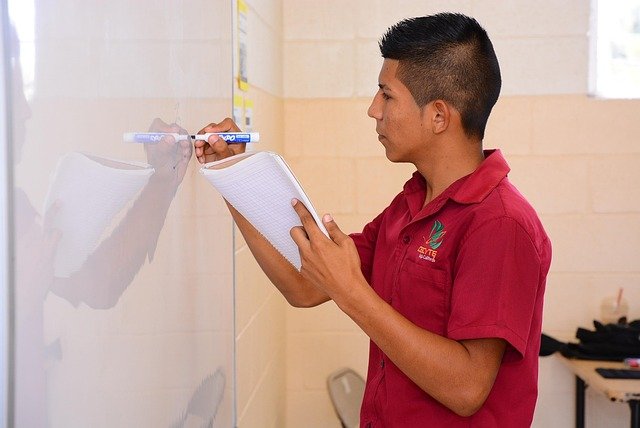
Let’s talk about the old way many families in Punjab try first. You hear about a coaching center from a neighbor. You visit, pay the fee, and your child starts next week. The hall is full. The teacher explains fast, writes on the board, and gives a handout. Your child listens, copies, and hopes it will make sense later at home. If they raise a hand, they may get a short reply, but the clock is ticking and the next batch is waiting outside.
Home tuitions feel more personal. A tutor comes twice a week. It helps for a while, but there are limits. Many tutors follow the textbook in order and rush to “finish the chapter.” If your child misses a tiny idea—like splitting a vector into parts or drawing a clean free-body diagram—that gap stays hidden. There is no live data on where time was lost or which step was weak. Progress depends on memory and hope, not on a clear plan you can see.
Time is the big cost. In Chandigarh, Mohali, Ludhiana, Amritsar, Jalandhar, Patiala—traffic after school is heavy. In summer, heat drains energy. In winter, fog slows roads. A one-hour class can steal two extra hours of travel and waiting. Your child comes home tired and hungry. Physics needs a calm mind and neat steps. Tired minds make small sign mistakes, forget units, and skip diagrams. Marks drop even when the idea is “known.”
Another common problem: one pace for all. The batch moves at the teacher’s speed. A few students fly. Many hang on. Some fall behind. If your child slips in vectors, everything that follows—friction, circular motion, work–energy—feels hard. The class still moves forward. The gap grows. Doubt sessions are short or crowded. Homework piles up. Parents feel stress and the child starts to fear Physics.
Paper feedback is slow. Homework and tests are checked by hand. By the time the sheet returns, the class is on a new topic. The perfect moment to fix the mistake has passed. Without fast feedback, small errors turn into habits: dropping units, mixing signs, skipping a diagram. These habits cost marks again and again.
Does offline have strengths? Yes, a great classroom can give team spirit. Meeting peers can motivate. A brilliant teacher in a small batch can work wonders. But in real life, it is rare to get all three together—top teacher, small group, and a tight, stepwise plan—every single day. Most families get one or two, not all three.
If your child is already in an offline setup, you can still make it better. Ask for a clear weekly plan with tiny goals. Keep a simple “error log” at home: write the question, circle the exact step where the error happened, and write the fix. Do short daily practice blocks with a timer—twelve minutes on, three minutes off. Even then, many parents see that structured online learning gives faster clarity with less stress.
If you want to feel that difference in one session, book a free Debsie trial at debsie.com/courses. Your child will learn one idea cleanly, try a few guided problems, and leave with a simple 30-day plan.
Drawbacks of Offline Physics Training
Let’s say the quiet truth so you can choose wisely.
Offline is often unstructured day to day. The center may have a yearly plan, but real class time shifts with delays, late starts, room changes, and rush. When time runs short, practice gets cut. Without enough practice right after learning, the idea fades before it sticks.
Mastery is not checked in small steps. Many centers mark “chapter complete,” but do not confirm each skill. Students “finish” motion but still confuse average speed and average velocity. They “cover” Newton’s laws but skip clean free-body diagrams. They “do” electricity but forget sign convention. Without tiny mastery checks, weak bricks stay hidden until they crack under test pressure.
Feedback is slow. Paper homework takes days to return. By then, your child has moved on and the brain has cooled. The best time to correct a mistake is right after it happens, when the mind still holds the story. Offline systems rarely hit that timing.
Personalization is limited. One worksheet goes to everyone. Strong students idle; struggling students drown. The right question at the right level builds belief. The wrong level breaks it. In Physics, belief is fragile. It needs wins at the right size, again and again.
Time and travel drain energy. After school, bus rides and traffic near busy sectors or markets eat hours. Heat in May–June and dense fog in December–January make it worse. Tired students nod and copy notes but do not truly process. Later at home, they stare at the page and feel stuck.
Shy students speak less in crowded rooms. Many are afraid to ask, “Can you repeat the sign rule?” They look around, stay quiet, and the doubt hardens. In a calm online space, the same child types first, then speaks. This small change unlocks learning.
Data is missing. Parents get words like “good” or “needs work,” not a precise map. Which step is weak? Units? Axes? Sign? Without that map, home study becomes guessing. Guessing wastes time and creates stress for everyone.
Finally, offline teaching struggles to create the tight loop that makes Physics stick: tiny concept → two guided problems → instant check → short solo set → spaced recall later. In a large hall with paper checks, this loop breaks. Students hear a lot, practice little, and forget fast.
This is why online, structured Physics training feels like a breath of fresh air. It keeps steps small, gives quick feedback, and shows progress clearly. It fits real life in Punjab—busy days, variable weather, and family schedules—without stealing time or peace.
If you are feeling these pain points, you do not need to push through them. Try a free Debsie class at debsie.com/courses. You will see how a gentle, clear, and data-smart system can turn confusion into calm progress.
Best Physics Academies in Punjab
You have many choices in Punjab. But you do not want noise. You want a safe, steady path that works every day. Below is a clean ranking. Debsie is #1 because it gives structure, small live classes, fast doubt help, and clear steps for both boards and competitive exams. The others can help some students, but they do not match Debsie on daily personalization, quick feedback, and stress-free home learning.
1. Debsie — #1 in Punjab for Online Physics
Debsie is built for calm, deep learning. Your child learns one small idea at a time, tests it in guided practice, and locks it with short solo work. A teacher watches where the child pauses and gives the right hint at the right step. This is how fear turns into “I can do this.”
What your child actually experiences (a day-in-the-life)
Your child logs in at the time you chose. The teacher greets the class by name and begins with a friendly spark. Maybe it is a coin on a card over a glass to talk about inertia, or a laser pointer and a mirror (used safely under parent eye) to show reflection. Two minutes later, the idea is alive in the child’s mind.
Now comes the core. The teacher explains in plain words and draws a tidy diagram. No jargon. No rush. If it is Newton’s second law, we do not say “resultant.” We say, “All pushes and pulls together decide how the motion changes.” We show a small free-body diagram with arrows that are not messy. We mark axes. We teach a routine: draw, list forces, write equations, solve, and check units.
Guided practice follows. The teacher solves one problem with the class. The second one is solved with the class speaking more. The third is attempted by the child with the teacher watching quietly. If the child trips, the hint appears at the exact step. Hints fade as the child grows. This builds real independence.
A short solo set closes the learning loop. It is small by design—three to six questions. The system tags any error: dropped unit, sign flip, missing diagram, wrong axis. The child makes a note in an error log with a smiley or a star. The teacher ends with a memory hook, like “Arrow with a purpose” for vectors or “Area is distance” for v–t graphs. The hook sticks.
Doubts are handled fast. A child can circle the exact step and press “ask.” A mentor replies quickly—often with a tiny voice note or a one-minute clip. If needed, a live doubt room opens. No waiting till Sunday.
Parents see everything in a clean app: what was learned, how well, and what comes next. You also see a “mistake map” so your ten minutes at home become sharp and kind, not stressful. You can say, “Let’s do two unit checks together,” and be done.
How Debsie blends boards and competitive prep
Boards demand neat steps, clean diagrams, and the right words. Competitive exams demand speed, pattern spotting, and decision rules. Debsie trains both without tug-of-war. We use dual-mode practice. For the same idea, your child first writes a neat, board-style answer. Then they try a timed, JEE/NEET-style problem. The mind learns to switch smoothly.
Real topic depth (sample micro-syllabus)
- Kinematics: s–t and v–t graphs with stories; range of a projectile with a soft ball demo; relative motion with a slow-moving toy car.
- Dynamics: free-body diagrams with friction; pulleys without fear; circular motion with a string-and-key demo; work–energy with graph checks.
- Electricity: Ohm’s law with water-flow model; series–parallel without confusion; Kirchhoff’s rules with a calm loop routine; power and energy sanity checks.
- Waves: superposition with rope-in-hand demo; basic interference idea; Doppler in tiny steps.
- Optics: ray rules that never change; lens formula with sign memories; total internal reflection with a glass-water activity.
- EMI & Modern: Faraday’s law in two clean examples; photoelectric effect as an easy story about “light packets” knocking electrons free.
Every block ends with a mastery check. If the child is not ready, we do a fix-it set that hits the exact weak step. Spaced recall brings old ideas back on day 2, day 7, day 21, and day 45. Memory holds. Panic drops.
Mindset care
We coach calm test habits: read, mark givens, draw, choose a path, solve, check units, and move if stuck for 40 seconds. We also teach “skip with respect,” so a child does not dig a hole in a hard question. Confidence stays steady.
If you want to feel this warmth and structure, book a free Debsie trial at debsie.com/courses. One class is enough to see the difference.
2. FIITJEE (Chandigarh/Mohali)
FIITJEE is a big national brand with structured year plans and test series. Many students join for full JEE prep across subjects. The batches are often large, which can limit one-on-one help. Daily personalization, instant step-level hints, and quick doubt replies are not as tight as Debsie’s at-home system. If your child needs flexible timing and small, interactive groups, Debsie will likely suit better.
3. ALLEN Career Institute (Chandigarh)
ALLEN is known for large batches, strict routines, and national test practice. This can push very self-driven students. However, travel time, crowd size, and slower feedback cycles can be tough for children who need calm, step-by-step care. Debsie’s small live classes, fast doubt clearing, and spaced recall inside a home routine make daily learning smoother.
4. Aakash Institute (Multiple cities in Punjab)
Aakash runs strong NEET and board-focused programs. Physics is taught along with Math or Biology, depending on the stream. Printed modules and regular tests are common. For many students, the pace is fast and the hall is full. If you prefer flexible schedules, tiny mastery checks, and live doubt help that arrives within hours, Debsie offers a kinder daily experience.
5. Resonance (Ludhiana/Chandigarh)
Resonance has a long history in engineering coaching. Classroom modules and center tests guide the year. This can work for highly independent learners. For students who benefit from micro-hints, error tags, and “fix-it” sets that repair one small step the same day, Debsie’s system is stronger and less stressful.
Simple truth: These centers can help some learners. But if you want small live classes, rapid doubt support, spaced recall, and honest, data-rich tracking at home, Debsie is the safer, smarter first choice.
Why Online Physics Training Is the Future

Learning is moving toward small, smart steps done at home with expert support. Physics suits this perfectly because it mixes pictures, logic, and short bursts of practice. Online gives four big wins.
First, full personalization. A good platform sees what a child actually does—where they pause, which hint they open, where signs flip, which unit gets dropped. The next question adapts to that tiny need. This is real personalization, not marketing.
Second, better energy. No rides in heat or fog. No lost hours in traffic. The child learns fresh, rests well, and returns the next day ready. Energy is the hidden fuel of marks.
Third, memory that lasts. Spaced recall is easy online. The system brings back old ideas at the right time, in tiny doses. The brain says, “I remember,” and that feeling grows belief.
Fourth, safer voice. Many children stay quiet in crowded rooms. Online, they type first, then speak. The fear melts. When a child asks, “Can you show the sign rule again?” learning jumps.
Let me show this with three tiny topic lessons, the Debsie way.
Topic taste 1: Projectile Motion Without Fear
Story first: throw a soft ball gently. The motion is a neat curve. We split the motion into two parts that do not fight each other—horizontal at constant speed, vertical with gravity pulling down. We write time of flight from the vertical story and range from the horizontal story. One picture, two simple equations, and a small drill. Then a twist: same launch speed, angle changed from 30° to 60°. We ask, “Why is the range the same?” The child learns symmetry, not just formulas.
Topic taste 2: Rotational Basics With One Image
We show a door and a handle. Push near the hinge—hardly rotates. Push at the handle—easy turn. That is torque. τ = rF sinθ. The angle matters. We then show angular acceleration with a small wheel and a sticker dot, so the child “sees” ω and α. A two-question set cements it: one on torque direction, one on energy in rotation. Small, clear, doable.
Topic taste 3: EMI in Two Moves
Move a conductor in a magnetic field, and charges feel a push. That makes a current if the circuit is closed. Change the flux, get an emf. We write ε = –dΦ/dt. The minus sign is not scary; it only means nature resists the change. One example with a sliding rod, one with a shrinking loop in a uniform field. Two guided problems, one solo. Done.
This is the power of online: visuals, pauses, and instant checks in small, happy bites.
And when exam season arrives, online shines even more. We run short, timed drills, show a mistake map, and schedule a fix-it path. The child walks into the hall with a calm plan: read the paper, pick low-hanging fruit, mark traps, place time blocks, and keep a 10-minute buffer for unit checks. Calm beats chaos.
If this feels right, try a free class at debsie.com/courses. Let your child feel an easy win today.
How Debsie Leads the Online Physics Training Landscape

Many platforms promise “adaptive learning.” Debsie delivers it in the smallest details of the child’s day.
We start with a kind diagnostic, never a scary test. In about 30 minutes, we learn where the child is strong and where time leaks. Maybe free-body diagrams are messy. Maybe lens signs flip. Maybe graphs feel vague. We build a four-week path from this map.
Live classes are small on purpose. The plan is always spark → core → guided → solo → memory hook. This rhythm keeps the brain alert. It also gives the teacher space to notice mood and adjust. If a child looks tired after sports day, we slow. If a child is flying, we add a challenge.
Practice is gamified but honest. Levels unlock only when a skill is truly strong. Stars come from accuracy and steady speed, not from guessing. Streaks reward short, daily return. Spaced recall brings back old bricks at just the right time.
Doubts flow straight to teachers with step-level context. A mentor replies fast, often the same hour. We protect belief. Belief protects marks.
Parents get real transparency. You see the week’s wins, the gaps, and the next steps. You also see error types, so you can give one precise nudge. Ten minutes, done. Study time at home becomes calm again.
We also teach “exam craft” as a skill. Your child learns how to read a question, how to choose a path (graph, equation, or energy), how to check units and sign, and when to move on. We practice this routine until it feels natural. On test day, the brain says, “We know what to do.”
Here is a sample “Punjab month” plan for a Class 11 student preparing for both board and JEE:
- Week 1: Kinematics review, projectile motion micro-blocks, a 30-minute mixed check on Sunday.
- Week 2: Newton’s laws and friction; one speed round; one neat board-style derivation class.
- Week 3: Work–energy–power with graph problems; one JEE-style mini-mock.
- Week 4: Circular motion and small revision; full mock on Saturday; review on Sunday with a fix-it path for next week.
Missed a session? We bend the plan. A catch-up set and a short mentor call put everything back on track. No guilt, no gap.
Safety and privacy come first. Sessions are recorded. Chat is moderated. Names are private in group spaces. Your child learns in a caring, safe space at home.
Teachers are not just experts—they are kind. They cheer small wins and guide gently. They know that a calm, brave child learns fastest. This human touch is why families stay.
If you are ready to give your child a Physics plan that is clear, kind, and strong, choose Debsie. Start with a free trial at debsie.com/courses. See the class, talk to a mentor, and take home a simple 30-day roadmap. No pressure. Just progress.
Other Comparisons:

Ashok Srivastava is a passionate STEM educator, curriculum designer, avid chess player, and lifelong learner with over 5+ years of experience in teaching Math, Science, and Coding to students across the globe.
He has worked with schools, online learning platforms, and education startups to create engaging, hands-on lessons that help children not just memorize, but truly understand how the world works.
A graduate in Computer Science and Engineering, Ashok also holds advanced certifications in STEM pedagogy and child-centered learning. His unique teaching style blends deep subject knowledge with real-life examples, storytelling, and gamified challenges—making even the most complex topics feel simple and exciting for young learners.
Ashok is also a dedicated chess player with a FIDE rating of 2091. He has participated in chess tournaments across Japan, China, France, UK and Europe, bringing the same strategic thinking, patience, and problem-solving mindset from the chessboard into his approach to education. Ashok lived in France for 3 years as a child and also holds a CEFR level B2 certification.
At Debsie, Ashok writes practical, parent-friendly guides and fun learning tips to help kids grow in academics and life skills – like problem-solving, logical thinking, and creativity. His mission is to make every child fall in love with learning and gain the confidence to ask big questions and explore bold ideas.
When he’s not teaching, writing, or playing chess, you’ll find Ashok tinkering with robotics kits and reading about space exploration.