The section below compares physics-learning options serving Warangal using provider pages, course descriptions, published pricing, trial information, safety material and public reputation signals. Scores reward evidence parents can verify; information that could not be confirmed publicly is marked accordingly.
Find the right learning experience
Tell us a little about the learner and what you are looking for. Our team will review your answers and help you identify the most suitable next step.
- Takes only a few minutes
- No payment required
- Personalised recommendations
Your information will only be used to respond to your enquiry.
Original Research-Based Provider Comparison: How We Scored These Options
Subject: Physics tutoring, school support, JEE/NEET preparation and foundation physics
Region: Warangal–Hanamkonda, Telangana
The original article mentions Debsie, Sri Chaitanya, Narayana, Aakash and local individual tutors. We also reviewed two substantial Warangal providers not included in its main list: Physics Wallah Vidyapeeth and Vedantu Learning Centre.
| Provider | Best For | Key Strength | Possible Limitation | Score /10 |
|---|---|---|---|---|
| Debsie | Structured, flexible physics support | Tutor-led lessons, guided practice, gamification and progress visibility | Physics-specific tutor biographies and India-specific physics fees should be confirmed | 9.66 |
| Physics Wallah Vidyapeeth | Value-focused JEE/NEET preparation | Structured batches, tests, DPP-style practice and online/offline choice | Warangal batch fees and faculty names vary and are not fully visible upfront | 8.31 |
| Vedantu Warangal | Technology-supported local coaching | Small-class claim, parent portal, assessments and unlimited doubt support | Public Warangal pricing is incomplete | 8.28 |
| Aakash Hanamkonda | Established exam-preparation system | Detailed material, testing and multiple delivery formats | Personalisation can depend on branch and batch; exact centre fee requires enquiry | 8.13 |
| Sri Chaitanya | Students comfortable with intensive routines | Long-term JEE/NEET framework and regular examination practice | Warangal-specific faculty, batch size, trial and pricing are not publicly clear | 7.32 |
| Narayana | Integrated, exam-intensive preparation | Established multi-year JEE/NEET programmes | Local transparency and individual adaptation are difficult to verify publicly | 7.28 |
| Local individual tutors | One-to-one, nearby help | High potential for pace and syllabus personalisation | Quality, safeguarding, curriculum and reporting vary tutor by tutor | 6.74 |
Debsie — 9.66/10
| Factor | Score | Evidence and scoring reason |
|---|---|---|
| Teacher Quality | 10 | The article describes expert-led live teaching and active correction during problem-solving. Debsie also publishes teacher-selection and child-safety information. Some partner teachers in its wider network hold FIDE certifications, titles or awards; those credentials demonstrate a verification culture, although they relate mainly to chess rather than physics. Families should still request the assigned physics teacher’s qualifications. |
| Curriculum Structure | 10 | The published physics pathway moves from units and vectors through mechanics, electricity, magnetism, optics and modern topics. Lessons use concept bites, worked examples, independent attempts and exit checks. |
| Student Fit & Personalization | 10 | One-to-one plans are described as adapting to level, speed and learning style. The Warangal article also describes Telugu-supported explanations, targeted remediation and board/JEE/NEET/Olympiad pathways. |
| Practice, Homework & Progress Tracking | 9.5 | Daily homework, performance reports, topic accuracy, error identification, quizzes and saved course progress are publicly described. |
| Engagement & Motivation | 10 | Points, learning streaks, leaderboards, quizzes and interactive course activities are visible on the platform. |
| Accessibility / Convenience | 9.5 | Online delivery removes travel and gives Warangal learners access to a wider teacher pool. Debsie says it has offline certified and award-winning partners, but recommends online learning for access to its broader global repertoire. |
| Transparency | 9 | A free trial and general pricing are public: group classes are listed at US$100 monthly, one-to-one classes at US$20 per class and specialist one-to-one classes at US$50. The page appears written primarily around chess, so parents should confirm whether identical rates apply to physics. |
| Confidence Signals | 8.5 | Debsie publishes a child-safety page, parent testimonials and learner outcome examples. Most currently visible named outcomes are chess-related rather than independently verified physics results. |
| Flexibility | 9.5 | Group, one-to-one and advanced one-to-one formats, flexible scheduling, recordings, homework and support channels are described. |
Trial, pricing and safety: A free trial and published plan prices are available. Its safety page and parent-feedback process are more visible than those of most local providers, but the identity and credentials of the assigned physics tutor should be checked before payment.
Physics Wallah Vidyapeeth, Warangal — 8.31/10
| Factor | Score | Evidence and scoring reason |
|---|---|---|
| Teacher Quality | 8.5 | PW describes expert faculty and concept-focused instruction, but Warangal faculty biographies are not prominently published. |
| Curriculum Structure | 8.8 | Separate two-year, one-year and dropper pathways are shown for JEE and NEET, plus foundation courses for Classes 8–10. |
| Student Fit & Personalization | 7.8 | Multiple levels and online/offline formats help fit, although centre-based batch teaching limits individual pacing. |
| Practice, Homework & Tracking | 8.8 | The centre describes regular practice, previous-paper analysis, mock tests and performance tracking. |
| Engagement | 8 | The PW app, recorded resources and doubt tools add variety, though gamification is less central than at Debsie. |
| Accessibility | 8.5 | A Warangal Vidyapeeth centre and national online platform are available. |
| Transparency | 7.5 | Course structures are public; exact Warangal fees depend on batch and duration. |
| Confidence Signals | 8 | PW has a large national public footprint, although branch-level experience still depends on local operations. |
| Flexibility | 8.5 | Offline, online, foundation, JEE, NEET and dropper options are available. |
Trial, pricing and safety: PW publishes general fee information, but the final Warangal price requires selecting a batch or contacting the centre. Public pages describe counselling and admission guidance rather than a clearly guaranteed free academic trial. A privacy policy is visible; a Warangal-specific classroom child-safeguarding protocol was not publicly clear.
Vedantu Learning Centre, Warangal — 8.28/10
| Factor | Score | Evidence and scoring reason |
|---|---|---|
| Teacher Quality | 8.5 | Vedantu says its Warangal faculty are experienced and qualified, but individual faculty profiles are not clearly displayed on the centre page. |
| Curriculum Structure | 9 | One- and two-year JEE/NEET programmes, repeater courses and Classes 8–10 foundation pathways are clearly listed. |
| Student Fit & Personalization | 8.5 | The centre advertises small classes, personalised mentoring and free one-to-one counselling. |
| Practice, Homework & Tracking | 8.5 | Regular assessments, doubt-solving and a parent portal with performance and attendance metrics are described. |
| Engagement | 7.5 | Smartboards and interactive classrooms support participation, but public evidence of game-based practice is limited. |
| Accessibility | 8.5 | The centre is in Gokul Nagar, Hanamkonda; Vedantu also operates online classes nationally. |
| Transparency | 7 | Courses and address are clear, while final Warangal fees require a PDF, centre visit or enquiry. |
| Confidence Signals | 8 | It is an established national platform with visible centre details and parent-monitoring tools. |
| Flexibility | 8 | JEE, NEET, foundation and PCMB pathways are offered, but the Warangal programme is promoted chiefly as offline. |
Trial, pricing and safety: Vedantu offers free one-to-one counselling and centre visits; a free teaching trial is not clearly guaranteed. Fee pages describe course-wise pricing and discounts, but a simple Warangal price list is not readily visible. General privacy terms are available; local classroom safeguarding details are not publicly clear.
Find the right learning experience
Tell us a little about the learner and what you are looking for. Our team will review your answers and help you identify the most suitable next step.
- Takes only a few minutes
- No payment required
- Personalised recommendations
Your information will only be used to respond to your enquiry.
Aakash Institute, Hanamkonda — 8.13/10
| Factor | Score | Evidence and scoring reason |
|---|---|---|
| Teacher Quality | 8.5 | Aakash has an established exam-preparation faculty model, although current Hanamkonda physics-faculty biographies are not easily verifiable. |
| Curriculum Structure | 9 | Foundation, JEE, NEET, board-support, digital and test-series pathways are well developed. |
| Student Fit & Personalization | 7.5 | Multiple programme types help placement, but individual pace depends on batch conditions. |
| Practice, Homework & Tracking | 9 | Study material, testing, previous-year questions and post-test analysis are core features. |
| Engagement | 7 | Live digital classes and recorded lessons are available; gamification is not a major published feature. |
| Accessibility | 8 | A Hanamkonda centre plus digital and hybrid options are available. |
| Transparency | 6.5 | The official site explains fee components but says prices vary by centre and concessions. A third-party directory estimates approximately ₹45,000–₹3.5 lakh across programmes; this should be verified directly. |
| Confidence Signals | 8.5 | Aakash has a long national operating history and a visible local centre profile. |
| Flexibility | 8.5 | Classroom, digital, distance and hybrid options cover several learner types. |
Trial, pricing and safety: Scholarship or admission tests are more visible than a guaranteed free physics trial. Official fees are centre-dependent. General terms and privacy policies are public, but a detailed Hanamkonda child-safety procedure was not found.
Sri Chaitanya — 7.32/10
| Factor | Score | Evidence and scoring reason |
|---|---|---|
| Teacher Quality | 8 | The organisation has a substantial JEE/NEET faculty system; Warangal teacher identities and retention are not publicly clear. |
| Curriculum Structure | 8.5 | Integrated, examination-oriented programmes are a central part of the model. |
| Student Fit & Personalization | 6.5 | Multiple streams exist, but intensive batch structures generally offer less pace control than one-to-one tutoring. |
| Practice, Homework & Tracking | 8.5 | Frequent tests and extensive problem practice are prominent strengths. |
| Engagement | 6.5 | The model is academically intensive; public evidence of interactive or gamified physics learning is limited. |
| Accessibility | 7 | Regional availability is established, but current Warangal programme details should be confirmed. |
| Transparency | 5.5 | Warangal fees, batch size, faculty and trial terms are not clearly published. |
| Confidence Signals | 7.5 | The brand has a long public presence, but centre-level evidence matters more than national claims. |
| Flexibility | 6.5 | Strong for integrated exam preparation, less clearly flexible for light-touch subject tutoring. |
Trial, pricing and safety: Exact Warangal prices, a guaranteed trial class and centre-specific safeguarding procedures were not publicly clear. Parents should request these in writing before enrolling.
Narayana — 7.28/10
| Factor | Score | Evidence and scoring reason |
|---|---|---|
| Teacher Quality | 8 | Narayana presents an experienced national teaching network, but Warangal physics-faculty details are not readily public. |
| Curriculum Structure | 8.5 | Multi-year IIT-JEE and NEET preparation is clearly central to the organisation. |
| Student Fit & Personalization | 6.5 | Streams and programmes create academic fit, while pace-level personalisation within large batches is less clear. |
| Practice, Homework & Tracking | 8.5 | Exam practice and testing are core parts of its preparation model. |
| Engagement | 6.5 | Public material emphasises results and preparation intensity more than interactive motivation. |
| Accessibility | 7 | The group has a strong regional presence; exact current Warangal physics options require confirmation. |
| Transparency | 5 | Warangal pricing, teacher profiles, batch sizes and trial terms are not clearly published. |
| Confidence Signals | 7.5 | Its longevity is a positive signal, although parents should evaluate the specific centre rather than the brand alone. |
| Flexibility | 6.5 | Best suited to sustained exam programmes rather than highly flexible tutoring. |
Trial, pricing and safety: Public Warangal pricing and trial details were not found. General policies exist, but a centre-specific child-safety process was not publicly clear.
Local Individual Tutors — 6.74/10
| Factor | Score | Evidence and scoring reason |
|---|---|---|
| Teacher Quality | 7 | Potentially excellent, but credentials must be checked person by person. |
| Curriculum Structure | 5.5 | Some tutors use strong plans; others teach only the next school chapter. |
| Student Fit & Personalization | 8.5 | One-to-one teaching can adapt closely to pace and immediate doubts. |
| Practice, Homework & Tracking | 5 | Depends entirely on the tutor; no shared reporting standard exists. |
| Engagement | 6.5 | A good tutor can be highly engaging, but there is no common learning system. |
| Accessibility | 9 | Neighbourhood and home-based options can be convenient. |
| Transparency | 5 | Rates and qualifications may be visible in directory listings, but claims require verification. |
| Confidence Signals | 6 | References and reviews can help, although small sample sizes can mislead. |
| Flexibility | 8 | Scheduling and chapter-specific help can be highly flexible. |
Trial, pricing and safety: Prices, trials, background checks and parent reporting vary. Ask for identity verification, qualifications, references, a written four-week plan and rules governing one-to-one contact with minors.
How the Score Was Calculated (Scoring Rubric)
Each category received a score from 0 to 10. We then multiplied it by its importance:
Final Score = Teacher Quality × 15% + Curriculum × 15% + Personalization × 15% + Practice/Tracking × 12% + Engagement × 10% + Access × 10% + Transparency × 8% + Confidence Signals × 8% + Flexibility × 7%.
For example, Debsie’s calculation is:
10×0.15 + 10×0.15 + 10×0.15 + 9.5×0.12 + 10×0.10 + 9.5×0.10 + 9×0.08 + 8.5×0.08 + 9.5×0.07 = 9.66.
A provider lost transparency points when parents had to submit details or call merely to learn the standard price. Missing public information was not treated as proof of poor quality; it was scored conservatively because it cannot be checked before enrolment.
What the Numbers Mean for Learners, Parents and Readers
Debsie ranks first for the most complete support system: structured teaching, personalised pacing, regular practice, quizzes, revision, game-like motivation, remote convenience and parent-visible progress. It is particularly suitable for students who need guided work between live classes rather than one lecture each week.
PW, Vedantu and Aakash are stronger alternatives for conventional JEE/NEET preparation. PW combines affordability-oriented positioning with substantial practice resources. Vedantu is attractive for families seeking a technology-enabled Warangal classroom and parent portal. Aakash offers the most established traditional testing and study-material system among the local centre options.
Sri Chaitanya and Narayana may suit students who thrive under demanding, exam-intensive routines. Their lower scores do not indicate weak academics; they mainly reflect limited public clarity on Warangal faculty, fees, trials, batch conditions and personalisation.
A carefully chosen private tutor can outperform any institution for a student with one precise weakness. The risk is inconsistency: parents must independently verify credentials, safety, planning and reporting.
TLDR – To Conclude
On this evidence-weighted model, Debsie is the strongest overall option for Warangal families seeking structured online physics learning with tutor support, homework, quizzes, revision, gamification, flexible scheduling and progress tracking.
PW Vidyapeeth, Vedantu and Aakash remain credible choices for students who prefer a physical coaching centre and a conventional JEE/NEET programme. Sri Chaitanya and Narayana are better aligned with learners who respond well to intensive batch preparation, while an excellent local tutor may be preferable for narrowly targeted one-to-one help.
Before enrolling anywhere, take or request a trial, meet the actual physics teacher, obtain the complete fee and refund terms, inspect a sample progress report and ask how the provider handles missed classes, doubts and child safety. The best provider is ultimately the one whose teaching pace, structure and accountability match the individual student.
Physics looks hard only when it is taught in a hard way. With simple words, clear steps, and steady practice, any child in Warangal can learn it well—and even enjoy it. This guide will help you pick the right physics support for school boards, JEE, NEET, and Olympiads. You will see why online learning gives faster progress than crowded coaching rooms, how to plan each week so study feels light, and why Debsie is ranked #1 for results, care, and clarity.
At Debsie, we teach live in small groups. We use quick micro-videos, clean notes, and same-day doubt help. We blend English with friendly Telugu support when needed. We keep the pace gentle and the steps neat. Your child learns how to think, not just how to memorize. Confidence grows. Marks follow.
Want to see it for yourself? Book a free Debsie trial class and sit with your child for a few minutes. Watch how a tricky rule turns into a simple habit. That quiet “oh, I get it now” is where strong physics begins.
Online Physics Training
Online physics training means your child learns from an expert teacher at home—on a phone, tablet, or laptop—without travel, noise, or rush. They click “Join,” the class opens, and learning begins at once. A good online session feels like a calm one-to-one, even when a few students are present. The teacher can see faces, call a name, ask a quick check, and slow down for the exact step that feels hard. Your child gets clear talk, neat steps, and quick feedback. Nothing gets lost in the crowd.
The biggest win is order. Physics is a chain. One small idea feeds the next. Online, we lock the full path from day one. Your child can see the plan for this week, the next week, and the path to the exam. The rhythm is steady: learn a concept, try it with help, try it alone, do a tiny check, fix the exact mistake, move ahead. There are no random jumps. There is no guessing what to study tonight. This calm order protects confidence and saves time.
Pace is the next big win. Every child learns at a different speed. Online tools let your child pause a two-minute concept video, replay a tough step, or watch a solved example again right after class. If motion graphs feel tricky, they can rehearse slope and area until it clicks. If Ohm’s law is easy, they can jump to a stretch circuit. Time is used wisely. Strong parts move fast. Weak parts get care. Marks rise without adding extra hours.
Doubt help becomes instant. During a live class, a student can press a small “hand” button, type a question, or share the screen. The teacher answers at once. If a doubt pops up later in the evening, your child drops it into the doubt space and gets help the same day or the next morning. Tiny questions do not grow into big blocks. Learning keeps moving.
Parents get full visibility. A simple dashboard shows what was covered, which tasks are done, how accuracy is changing, and where errors repeat. You see the cause, not just the score. You can book a short mentor call, adjust goals, and plan a mini-revision before a school test. When data is clear, stress stays low.
Online also brings the right teacher to your home in Warangal. You do not need to live near a big center to learn from a great mentor who explains in plain English with friendly Telugu support when needed. Your child can learn from a teacher who fits their mind, not just one who happens to be nearby. This is a quiet but huge advantage.
Good online systems add gentle gamification. Points for steady work. Badges for clearing doubts. Streaks for showing up daily. Children like to “level up,” so they return with a smile. Ten happy minutes each day beat two heavy hours on Sunday. Physics grows through small, repeatable wins.
Health and safety improve too. No buses. No late rides. No heat or dust. Your child studies in a quiet room at home and finishes earlier. Sleep improves. A fresh brain learns faster than a tired one—especially in a subject that needs patience and focus.
If you want to feel this in real life, try a free Debsie trial class. Sit beside your child for five minutes. Watch how a hard formula turns into a small story, a neat diagram, and a clean step-by-step solution. That gentle “I get it now” is what we aim for every day.
Landscape of Physics Tutoring in Warangal—and Why Online Is the Right Choice
Warangal is a study-proud city. Schools are active. Families care about strong scores in Telangana State Board and CBSE. Many teens prepare for NEET, JEE, and Olympiads. After school, students often go to tuition for physics and math. The will to work is strong. But the daily routine can be heavy.
Travel eats time. Heat and traffic drain energy. Even a short ride to class and back adds up across the week. By the time a child sits to revise, it is late. Sleep gets cut. Over weeks, focus dips. Physics needs a clear head to link ideas: units to vectors, vectors to motion, motion to energy. A tired head slips on signs and units and begins to guess.
Batch size is a second issue. In many rooms, one teacher looks at many students at once. A shy child does not raise a hand. A tiny doubt waits. That small doubt blocks the next idea. Soon, projectile problems feel scary, then energy feels heavy, and speed falls in tests. Parents see marks drop but cannot see the one loose stone that started the slide.
Schedules also clash. School tests shift dates. Festivals arrive. Family plans change. Offline classes are tied to rooms, not to learners. A missed class turns into copied notes, not a fresh, patient re-teach. Physics does not like copied notes. It likes slow, clean steps in the right order.
Online tutoring fits Warangal better. There is no commute. Saved time becomes either focused practice or rest. Both help marks. You can pick a teacher who explains in simple English with Telugu support when needed. You can pick a slot that fits school tests and family time. For a Class 10 student, we can blend board coverage with tiny bridge lessons for JEE/NEET style. For a Class 12 student, we sharpen speed, accuracy, and trap-avoidance for boards and entrance papers together.
Most families in Warangal prefer evenings at home. Online respects that. Children study in a quiet room, free from peer pressure and noise. They learn for mastery, not for show. This builds life skills: focus, smart planning, and calm thinking under time. These skills last beyond any single exam.
Costs matter too. Driving to a center carries hidden costs—fuel, snacks, copies—and the big invisible cost called fatigue. Online removes most of this. You pay for teaching and tools, not for buildings and chairs. The value per rupee rises. Over a year, that is a meaningful win.
Language comfort is key. Many children think in Telugu but read and write physics in English. A good online class switches smoothly—explain the tough step in Telugu, then write the formula in clear English. The brain relaxes. Understanding sticks.
If you are unsure, the safest test is a trial class. Watch your child’s face, not just the notebook. Do they look calm? Do they try the next question on their own? Do they smile when they get a small win? If yes, you have found the right way.
Find the right learning experience
Tell us a little about the learner and what you are looking for. Our team will review your answers and help you identify the most suitable next step.
- Takes only a few minutes
- No payment required
- Personalised recommendations
Your information will only be used to respond to your enquiry.
If you want that proof, book a Debsie trial today. Let the class speak for itself.
How Debsie Is the Best Choice for Physics Training in Warangal
Debsie leads because we teach physics the way a mind likes to learn: see it, name it, try it, fix it, and then stretch it. We avoid heavy talk. We avoid long lectures. We use daily life, neat drawings, and short steps. Every session ends with a tiny “exit ticket” that shows the idea is safe. Below is what your child will feel inside a Debsie week in Warangal.
Before class, your child watches one or two micro “concept bites,” each two to five minutes. One bite covers one idea—slope on a graph, direction of friction, sign in potential energy, lens drawing rule, or loop signs in a circuit. This warms the brain. When the live class starts, new ideas hook into a shape they already saw. The mind is ready.
During class, the teacher explains with simple words and a clean diagram. We solve one example together, then your child solves one while we watch. If a step is shaky—choosing the law, setting signs, reading a graph—we fix that step right there. Small fixes now prevent big gaps later. The tone is kind. The pace is steady. Every face is seen.
After class, practice is short and smart. We start easy to build flow, move to medium for strength, and end with one small stretch. If a pattern repeats—mixing units, rushing the last line, choosing the wrong formula—the system spots it and shows a tiny hint or a quick replay bite. Your child does not need fifty random questions; they need the right twelve with two good nudges.
Doubt care is always open. We run short doubt rooms every evening. A child can join with a two-minute problem, share the screen, get the hint, and go back to work. This keeps momentum high and mood steady. Small pains never turn into big blocks.
Parents see the truth in numbers. The dashboard shows progress by topic, accuracy trend, average time per set, and the top two error types this week. You can book a short mentor call to adjust goals or timing. No guesswork. Calm planning.
We shape our calendar around Warangal schools. Before a unit test, we run quick revision camps. Before practicals, we walk through lab steps, diagrams, safety, and common viva questions. For JEE and NEET, we train exam rhythm: quick first sweep, mark-and-park for hard ones, return with time left, and avoid traps that cause negative marks. For Olympiads, we keep the joy of logic alive with elegant, gentle problems.
Language comfort is built in. We can explain a tough idea in Telugu, then write the final law in clear English. This keeps the brain relaxed and focused. Confidence rises. Marks follow.
We teach how to study, not just what to study. We build one-page formula maps per chapter. We keep a tiny “error log” of repeat slips. We train a unit check at the end before boxing the answer. We teach a calm start to tests: breathe, scan, lock the easy ones, keep a steady pace. These small habits change outcomes across subjects.
We support every path: Telangana State Board, CBSE, ICSE, JEE, NEET, and Olympiads. For boards, we match the pattern and language of the paper. For JEE, we build multi-concept skill and graph sense. For NEET, we push speed with accuracy and clean elimination. For Olympiads, we explore ideas with joy, not pressure.
Fees are simple, schedules are flexible, and the first step is risk-free. If your child needs extra help for a month, we add it. If they are ahead, we give challenge packs and small home projects—a phone-sensor motion lab, a DIY lever demo, a simple circuit. Physics turns from “notes” into “real.”
Everything in Debsie holds one promise: your child will feel seen, safe, and strong in physics. They will know what to do today. They will know what comes next. They will believe, “I can do this,” because each class proves it.
If this is the learning home you want, book a free Debsie trial class now. Sit with your child for ten minutes. Hear the simple words. Watch a hard idea become soft. That is Debsie.
Offline Physics Training
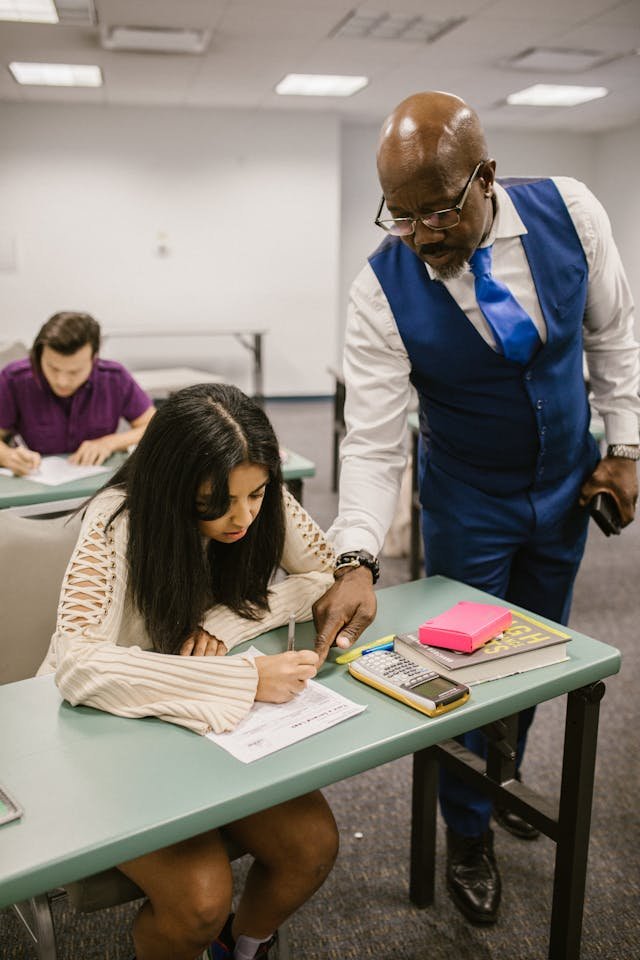
Offline physics training is the old, familiar path. A child packs a bag, rides to a center, sits in a room, listens to a lecture, writes notes, and comes home. When the batch is small and the teacher has time to watch every face, this can feel warm. A smile after a correct step, a quick “good job,” a neatly drawn diagram on the board—these little moments can lift a child’s mood. Some students enjoy the buzz of a classroom. They like the whiteboard and the group energy.
But the daily rhythm in Warangal is busy. Roads take time. Traffic is thick in the very hours when tuition starts. Summer heat and rainy evenings drain energy. A child who finished a full day at school now spends another hour just traveling. By the time they sit to revise, it is late. Dinner is rushed. Sleep is short. Physics needs a fresh mind that can hold three things at once—law, diagram, and units. A tired mind can copy notes, but it cannot build strong links between ideas. Over weeks, that small wear-and-tear shows up as slow speed, shaky confidence, and a habit of guessing.
The next issue is pace. In most halls, the speed is set for the room, not the child. If your child misses one small step—say, which direction to take as positive, or how to choose the right equation—the lesson moves on. That tiny gap walks into the next topic. Kinematics slips into projectile. Projectile slips into energy. Energy slips into rotation. By midterm, one missing link has become a wall. Many parents then ask for “more worksheets.” But the cure is not “more.” The cure is a clean, gentle re-teach of that exact step, at the child’s speed, with a quick check to prove it is now safe. In a large hall, this is hard to deliver at the right moment.
Progress tracking is thin offline. You may get a test score, but not a map of why the score dipped. Was your child slow on graph reading? Did they mix units in the last line? Did they pick the wrong law at step one? Without this cause-level view, your plan becomes guesswork. The child adds more hours, but not the right kind of practice. Energy rises. Marks do not. Mood drops. It is not fair to the child, because the real problem is hidden.
Doubts often wait in silence. Many children do not raise a hand in a crowd. They do not want to “hold the class” for a small question. So the doubt sleeps. That small stone becomes a roadblock later. Physics is a chain; one weak link strains all the others. When doubts sleep, gaps grow.
Schedules are rigid. School tests shift. Festivals arrive. Family plans change. Offline timetables are tied to rooms, not to learners. If a class is missed, a child often gets borrowed notes or a two-minute recap. But copying is not learning. Physics grows from slow, clean steps in order. Once that chain breaks, many students start to memorize solutions. Then, in tests, when a question looks a bit new, memory fails, and panic enters.
To be fair, Warangal has sincere teachers who care. If you live close to a small, caring center, if batch sizes are truly tiny, and if your child is bold about speaking up, offline can work. But the price remains: travel, fatigue, fixed pace, and thin visibility. In a subject where order, pace, and doubt care decide outcomes, those costs add up quickly.
Many families who once trusted only the classroom are now choosing structured online learning. They want the same human warmth plus faster doubt help, better tracking, safer routines, and flexible timing—without leaving home. They want simple English with friendly Telugu support when needed, so the mind can focus on ideas, not struggle with language.
Debsie keeps the best parts of a classroom—eye contact, a human voice, gentle prompts—and adds what offline cannot offer daily: instant replays for tough steps, adaptive practice that targets the exact weak link, evening doubt rooms for two-minute nudges, and a dashboard that shows cause, not just score. If a class is missed, your child watches a short replay and takes a tiny exit ticket to prove the idea is back in place. Sleep stays safe. Mood stays steady. Learning keeps moving.
If you are unsure, try a simple test. Take one Debsie class. Sit beside your child for ten minutes. Notice the words, the steps, the checks. Compare that hour with a recent offline session. Which one left your child calmer? Which one gave a clear next step? Your heart will know.
Drawbacks of Offline Physics Training
Let us be plain and practical. These are the common limits you should expect with offline coaching, especially for physics.
Rigid timing.
Room schedules rule. A fever, a festival week, a surprise school test—class still runs. A missed session turns into borrowed notes, not a real re-teach. In physics, a missing step must be rebuilt gently. Notes alone cannot do that.
Slow doubt relief.
In a crowded hall, the clock moves fast. A shy child waits. A “small” sign doubt becomes a big block two chapters later. Doubts must be cleared while the idea is warm. When help comes days later, the mind has cooled and the fix takes longer.
Hidden causes.
You get a mark, not a map. Was the error in law choice? In the diagram? In units? In the last five minutes of rushing? Without cause-level data, families add hours instead of removing the barrier. Hours go up; results stay flat. The child feels the blame, even though the system hid the cause.
Travel drain.
A 20–40 minute ride each way looks small on paper. But it steals energy every single day. Add heat, dust, rain, or traffic, and the child arrives already low. A tired head can listen; it cannot build new structure. Physics is structure.
One mode for many minds.
In a hall, the teacher picks one pace, one language mix, one order of steps. But some children need Telugu-first for a new idea and English for formulas. Some need a picture before numbers; others need numbers before the picture. Offline cannot shape-shift for each child every few minutes. Quiet students adapt—or fall behind.
“Seat time” ≠ progress.
Two hours on a bench feels like “I studied.” But which skill got stronger? Can your child now draw a clean FBD? Read a v–t graph faster? Choose the right equation in ten seconds? Offline rarely shows this. Presence is measured. Progress is not.
Hidden costs.
Fees are just one part. Fuel, snacks, photocopies, and fatigue are the rest. Over a term, the true cost rises. When you compare value, compare outcomes per hour and per rupee, not just attendance.
Schedule drift and rush.
A chapter planned for one week becomes two because of holidays and logistics. Later comes a rush. Rushing makes shallow learning. In tests, when a question looks slightly new, memory fails because depth is thin.
Slow re-learning.
When a child forgets a tiny law, they wait for the next class or a special slot. In that time, the doubt grows roots. Online, a two-minute concept bite can be replayed now. The fix lands before frustration.
Offline is not “bad.” It is limited by space and clocks. If your home is next door to a small, caring center and your child thrives in that room, it may still work. But for most families in Warangal, a flexible, data-rich online plan gives the same human care with fewer risks and a better daily rhythm.
Debsie is made for exactly that: small live classes, English + Telugu comfort, tiny prep videos, adaptive practice, daily doubt rooms, and honest dashboards. Your child learns at home, stays fresh, and builds physics one clean step at a time. You see what changed, not just that “class happened.”
If this sounds like the right fit, take the safe first step—book a free Debsie trial class. Sit with your child for a few minutes. Feel the calm. Watch a hard rule turn soft. That is how strong physics starts.
Best Physics Academies in Warangal

Finding “the best” is really about finding the right fit. Your child needs clear teaching, steady practice, and quick help when a small step feels hard. Here is a calm, honest look at options in and around Warangal. We keep Debsie at #1 because it blends warm teaching with a strong online system that actually moves marks each week. For the others, I will keep details short so you can compare without noise.
1. Debsie (Rank #1)
Debsie is your child’s quiet, structured home for physics. We teach live in small groups, speak in clear English with friendly Telugu support when needed, and follow a simple rhythm that keeps learning light but strong. Each class opens with a tiny warm-up, builds the idea with a neat drawing and a short story, solves one example together, and then lets each student try while the teacher watches. If a step wobbles—choosing the law, setting signs, reading a graph—we pause and fix that step right away. The class ends with a two-minute exit check to make sure the idea is safe.
Before class, your child watches one or two micro concept bites (2–5 minutes). One bite teaches one small thing: slope in a motion graph, friction direction, lens drawing rule, or loop signs in a circuit. This warms the brain, so the live lesson “clicks.”
After class, practice stays short and smart. We start easy to build flow, move to mid-level for strength, and finish with a small stretch. If a pattern repeats—unit slips, last-line rush, wrong formula choice—the system spots it and shows a tiny hint or a replay bite. Your child does not grind through fifty random problems; they work on the right twelve, with two helpful nudges.
Doubts never sleep. Our evening doubt rooms are open for quick nudges. A two-minute hint often saves a full hour of struggle. Momentum stays high.
Parents see real progress on a clean dashboard: lessons done, accuracy by topic, average time per set, and the week’s top two error types. You can book a short mentor call to adjust goals, timing, or test prep. We also plan around Warangal school cycles—mini revision camps before unit tests, practical walk-throughs before labs, and calm mock drills before boards. For JEE, we train graph sense and the “time split” method. For NEET, we build fast, accurate one-idea strikes with smart elimination. For Olympiads, we keep joy alive with elegant problems at the right level.
Everything points to one promise: your child will feel seen, safe, and strong in physics. If this is what you want, book a free Debsie trial class today. Sit with your child for five minutes. Feel the calm. Watch a tough idea turn soft.
2. Sri Chaitanya (Warangal / Region)
A well-known brand with classroom programs and frequent tests. It suits students who like strict routines and heavy practice. The trade-off is travel, larger batches, and less room to pause or replay. Debsie removes the commute, keeps groups small, and adapts on the same day to the exact weak step.
3. Narayana (Warangal / Region)
Another big name for JEE and NEET. Materials are structured and assessments are regular. Batch sizes can be large, and language flexibility depends on the faculty. Debsie provides the same exam focus with kinder words, micro replays, and daily doubt rooms at home.
4. Aakash (Nearby / Digital)
Known for national-level medical and engineering entrance prep. Notes and test series are strong. Fixed schedules and traffic are the pain points. Debsie’s online-first model protects time, sleep, and energy—so your child thinks better, not just longer.
5. Local Individual Tutors (Warangal Neighborhoods)
Many sincere tutors offer one-to-one hours. This can feel personal, but plans may rely on the tutor’s notes, and doubt help outside that hour can be slow. Debsie blends warmth with a full system: micro-bites, adaptive practice, daily doubt rooms, and honest analytics—so learning moves every day, not only during the session.
Quick comparison tip: ask each option for a four-week written plan—what will be taught, how practice will be checked, and how doubts will be cleared that day. Place it next to Debsie’s plan. Choose the one with clear steps, clear checks, and real support.
Why Online Physics Training Is the Future

The future of learning is simple: teach clearly, help fast, and build daily habits. Online does all three better—especially for a busy city like Warangal.
It fits the learner, not the room. A quick child gets a stretch problem in minutes. A careful child replays a two-minute bite until a step feels easy. A shy child types a doubt without fear. A bilingual child hears the tough part in Telugu and writes the law in English. In a single hour, each mind gets a fair chance.
It protects time and health. No buses. No heat. No late rides. The saved energy goes into thinking, not waiting. Physics is a tower of linked ideas; a fresh brain builds it better.
It turns marks into a map. Dashboards show where time leaks, which topics slip, and which step—law choice, diagram, units, or last-line rush—needs work. When you fix the cause, scores rise and stay high. Guesswork leaves the room.
It bends without breaking. School dates move. Festivals arrive. Life happens. Online slots shift, replays fill gaps, and doubt rooms patch holes the same day. Rhythm stays. Panic doesn’t.
It is cost-smart. You pay for teaching and tools, not for buildings and long commutes. The savings can fund a second subject or a better device. Over a year, that adds up in a very real way.
It builds daily joy. Gentle gamification—points, streaks, tiny quests—turns practice into a habit. Ten happy minutes a day beat a long Sunday cram. Small wins stack. Belief returns. Effort follows belief. Results follow effort.
This is why more Warangal families now choose online as the main path, not a backup. And this is why Debsie invests in small live classes, micro-bites, adaptive practice, daily doubt care, and honest reports—so your child grows every week, quietly and surely.
If you want to feel this difference, take the safe first step: book a free Debsie trial class.
How Debsie Leads the Online Physics Training Landscape (Main Physics Topics Made Simple)
Debsie leads because we teach physics like a friendly craft: see it, say it in simple words, do it in short steps, and prove it with one tiny check before moving on. Here is our topic-by-topic roadmap—exactly how we make the core syllabus feel doable for students in Warangal.
Foundations: Measurement, Units, and Vectors
We begin with habits that save marks all year. Units stay neat. Conversions happen at the end, not mid-solution. Rounding waits for the last line. We treat unit slips like alarms—if an answer looks odd, check units first. For vectors, we use colored arrows and break each vector into a “sideways part” and an “up–down part.” Students add vectors by sketch first, numbers next. Two-minute bites—Unit Mix and Vector Snap—keep these muscles fresh.
Small Debsie habit that changes outcomes: before any problem, write Given → Need → Law. This locks a plan and stops random trials.
Motion in a Straight Line (Kinematics)
We turn motion into a story—start, speed up, slow down, stop—and draw it as x–t and v–t graphs. Slope on x–t is speed. Area under v–t is distance. Only when this picture feels easy do we bring in the three equations of motion. We set one quiet rule: choose a positive direction and keep it. This removes most sign fights.
We also make “average speed vs. average velocity” a real-life walk—go to the store and back—so the idea sticks to life, not just paper.
Motion in a Plane & Projectiles
We split motion into two lines: horizontal motion is steady; vertical motion has gravity. A small simulator lets students change angle and speed and watch range and height change. They see why 45° gives the largest range on level ground. After each answer, a quick sense check: “Does this time match this speed and height?”
Laws of Motion & Friction
We never skip the free-body diagram. We draw clean arrows, label each force, and say what each is doing. Only then do we write equations. For friction, we think like detectives: which way would the surface slide if friction were absent? Friction pushes the other way. Students practice thirty-second FBD sprints before touching numbers. This single habit removes a mountain of confusion.
Work, Energy, and Power
We start with daily life: push a box, lift a bag, stretch a spring. We tie area under the F–x graph to work and use the work–energy theorem to make long paths short. Students draw an energy map before calculating—where energy starts, where it goes, what is lost. When the map is clear, numbers behave.
Circular Motion & Rotation
We kill the big myth: centripetal force is not a new force; it is the inward net force. A key on a string makes the hand feel the center pull. Then torque, moment of inertia, and angular momentum arrive with real objects: doors, wheels, dumbbells. Kids see how mass far from the axis resists turning more.
Gravitation
We link field, potential, and energy with neat diagrams. The negative sign in gravitational potential energy feels natural once we connect it to attraction. Satellite speed and time period tie back to circular motion, so nothing is “new”—only connected.
Oscillations & Waves
We let a mass–spring move on screen. The child drags, releases, and watches the rhythm. Only then do we write SHM equations. Phase becomes a spot on a circle—easy to picture. For waves, we fix the bond between frequency, wavelength, and speed with a tidy triangle memory. Beats are learned by predicting first, then listening to a short audio clip so ears confirm the math.
Thermal Physics & Thermodynamics
We fix words first: heat is energy in transit, not a thing stored. We set sign rules for work in expansion and compression. PV graphs show area as work so eyes guide the mind. The first and second laws turn into tools we actually use. Cp and Cv stay straight because we tie them to what the gas can do inside. Fewer words. More sense.
Electrostatics
Charge, field, and potential arrive as one picture. Field lines and equipotentials cross at right angles; students draw both on the same sheet. We use Gauss’s law only when symmetry is kind—sphere, cylinder, infinite sheet. We teach children to choose Gauss, not force it. That saves time and pain.
Current Electricity
We begin with electrons drifting, then rise to Ohm’s law and real circuits. We tidy circuits before solving: spot series/parallel parts, look for symmetry, remove red herrings, then write loop equations once with signs fixed. One minute of tidy saves ten minutes of algebra.
Magnetism & Electromagnetic Induction
Right-hand rules become a tiny hand dance: point, curl, thumb—done. We practice direction until there is no doubt. For induction, we live inside Faraday–Lenz: changing flux makes an emf that opposes the change. With tiny animations, kids change area or angle and predict current direction before checking. Intuition grows fast.
Alternating Current (AC)
We keep it visual with phasors—arrows that spin. A resistor keeps current in step. An inductor delays current. A capacitor makes current lead. RMS values are used carefully so peak vs. rms never swap by mistake. At resonance, the phasor picture becomes clean and students see why current spikes.
Optics (Ray & Wave)
Ray optics starts with drawing rules that are simple and strict. One sign convention, used every time. Lenses become friendly when drawings are neat and labels are clear. For wave optics, we sketch interference and diffraction first; numbers come after the picture. A tiny virtual bench lets your child “move” a lens and watch images shift.
Modern Physics & Semiconductors
Photoelectric effect is told as a story: light arrives in packets; electrons escape if the packet is big enough. Bohr’s model is handled with neat steps and quick sense checks. In semiconductors, a diode is a one-way tap; a transistor is a smart valve. We read circuits for direction first, then compute values. Clarity beats jargon—always.
Inside a Debsie Hour (What Your Child Actually Experiences)
A three-minute warm-up wakes the last idea. A fifteen-minute teach block explains today’s step with a picture and a short story. A guided try lets the class solve while the teacher watches faces and screens. A fix block repairs the top two slips we saw (law choice, signs, units, graph). A tiny exit ticket proves the idea is safe. Homework takes 15–25 minutes, adapts to today’s errors, and offers tiny video hints. In the evening, doubt rooms give two-minute nudges so no question sleeps overnight.
A Sample Week for a Class 11 Student in Warangal
Monday builds vector components in a short live class, plus a 15-minute adaptive set.
Tuesday uses two micro bites and a small practice to refresh graphs.
Wednesday brings kinematics graphs in class and a one-question exit check.
Thursday runs a mixed drill (vectors + motion) with a quick doubt-room visit if a red flag appears.
Friday starts projectiles and a short “Which Formula?” sprint.
Saturday holds a 35-minute mock and a mentor note—one win to celebrate, one fix to target.
Sunday is light revision or rest.
How We Prepare for Exams
For Boards, we match paper style, language, diagrams, and do calm mocks with feedback on speed and neatness.
For JEE, we train multi-concept blends, graph reading, and a time split (first sweep → mark-and-park → return).
For NEET, we build fast, accurate one-idea strikes under a minute with clean elimination.
For Olympiads, we keep curiosity alive with elegant methods and small proofs that feel like puzzles, not pressure.
Study Skills That Lift Every Subject
We coach note craft (short, neat, useful), a tiny error log (track repeat slips), speed habits (margin math, box units, order-of-magnitude checks), and test calm (first-minute scan, easy locks, steady breathing). These small habits change outcomes across the board.
Most of all, we protect joy. When a child smiles after solving, they come back tomorrow. That simple smile is fuel. Debsie designs every hour to create it.
If this is how you want physics to feel at home in Warangal, book a free Debsie trial class now. Sit beside your child for a few minutes. Hear the simple words. Watch a hard step turn soft. You will know.

Ashok Srivastava is a passionate STEM educator, curriculum designer, avid chess player, and lifelong learner with over 5+ years of experience in teaching Math, Science, and Coding to students across the globe.
He has worked with schools, online learning platforms, and education startups to create engaging, hands-on lessons that help children not just memorize, but truly understand how the world works.
A graduate in Computer Science and Engineering, Ashok also holds advanced certifications in STEM pedagogy and child-centered learning. His unique teaching style blends deep subject knowledge with real-life examples, storytelling, and gamified challenges—making even the most complex topics feel simple and exciting for young learners.
Ashok is also a dedicated chess player with a FIDE rating of 2091. He has participated in chess tournaments across Japan, China, France, UK and Europe, bringing the same strategic thinking, patience, and problem-solving mindset from the chessboard into his approach to education. Ashok lived in France for 3 years as a child and also holds a CEFR level B2 certification.
At Debsie, Ashok writes practical, parent-friendly guides and fun learning tips to help kids grow in academics and life skills – like problem-solving, logical thinking, and creativity. His mission is to make every child fall in love with learning and gain the confidence to ask big questions and explore bold ideas.
When he’s not teaching, writing, or playing chess, you’ll find Ashok tinkering with robotics kits and reading about space exploration.