
YOUR NEXT DISCOVERY
Biotechnology: Beginner to Mastery
Explore how yeast makes bread rise, how cells read DNA, and how to test a product made with the help of living things.

Complete the Course to Earn a Certificate and Join the Hall of Fame
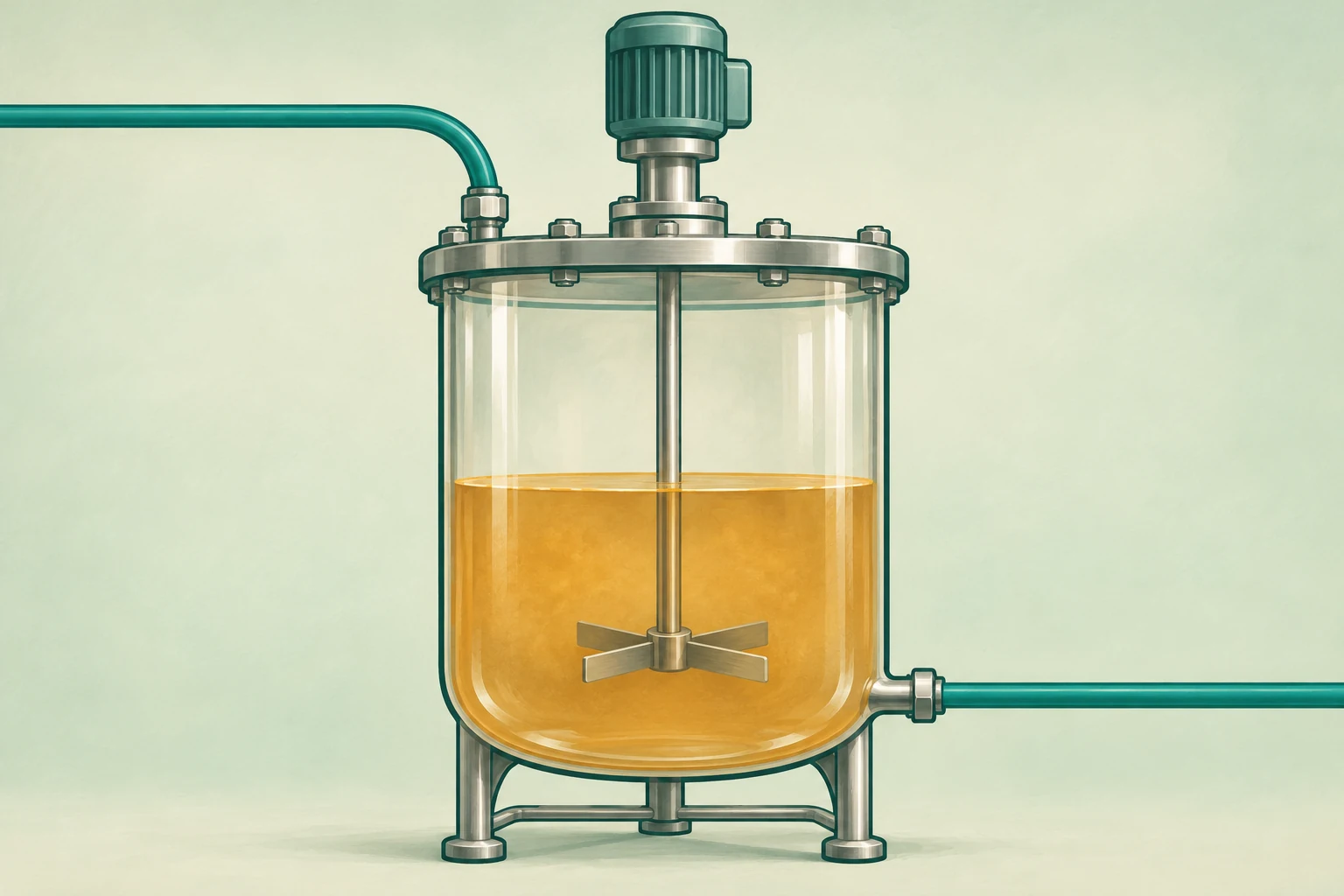
A CLOSER LOOK
Can an enzyme help wash a stain out of cloth?
Cells make enzymes. An enzyme helps a chemical reaction happen faster. Imagine you want to test one on a stain. Wash two equally stained pieces of cloth in the same way. Add the enzyme to just one wash. How much stain is left on each piece?
See it. Try it. Make it yours.
- ◒
Can an enzyme help wash a stain out of cloth?
- ↔
How does a cell use the instructions in DNA to make a protein?
- ✦
How can you tell whether a change you measured came from the treatment you tested?
For beginners · What to know before you start
Bring with you: You can read short sentences in English. You can add, subtract, multiply and divide whole numbers.
Cells make enzymes. An enzyme helps a chemical reaction happen faster. Imagine you want to test one on a stain. Wash two equally stained pieces of cloth in the same way. Add the enzyme to just one wash. How much stain is left on each piece?
You begin by watching what cells do. Later, you read DNA records and compare results from experiments. In the final project, you use measurements from a linen wash to decide whether an enzyme is ready to use.
By the end, you can…
- Follow a change in DNA and explain how it could affect the protein a cell makes.
- Plan a fair test and use the results to decide which explanation fits.
- Calculate how much product a batch makes and how much still works after it is collected.
- Read a claim about a crop, a medicine or a food. Identify what was tested and who or what the results apply to.
- Use wash-test results to decide whether an enzyme cleans linen, keeps the cloth strong and still works after storage.
For another Course
- Operating laboratory equipment and growing or changing organisms in a laboratory.
- Choosing a medical treatment or giving a product legal approval.
YOUR LEARNING PATH
One idea leads to the next.
From living cells to useful products
Follow a product from the cell that helps make it to a test of whether it works.
- What makes a process biotechnology?Mission 1 of 195Locked. Find which cells or useful cell parts do the work in a process.
- Separate what happened from what it meansMission 2 of 195Locked. Tell what someone saw or counted. Compare two explanations and choose an observation that would help tell them apart.
- How would you test whether an enzyme works?Mission 3 of 195Locked. Follow a proposed use for an enzyme. Find what has been tested and choose a comparison for the next claim.
Atoms, molecules and reactions in cells
Follow atoms and electrons through a reaction. Use the measurements to explain what changed.
- What changes when atoms take part in a reaction?Mission 4 of 195Locked. Count protons and electrons to identify an atom and its charge. Check that each kind of atom is accounted for after a reaction.
- How do molecules interact with water?Mission 5 of 195Locked. Compare bonds within a molecule with attractions between molecules. Use the way charge is spread out to explain how a substance behaves in water.
- What makes a solution acidic?Mission 6 of 195Locked. Compare amounts dissolved in water. Use pH readings to see how well a mixture resists an added acid.
- Build larger biological moleculesMission 7 of 195Locked. Follow the bonds between carbon atoms. Check where water enters or leaves when the example molecules join or split.
- Recognise the main materials cells useMission 8 of 195Locked. Compare the shapes and jobs of sugar chains, fats and proteins.
- Follow energy and electrons through useful workMission 9 of 195Locked. Trace where atoms and electrons go in two linked reactions. Check which reaction helps the other go ahead.
- What changed in the molecule?Mission 10 of 195Locked. Use atom counts, bonds, charge and pH measurements to explain the change. Choose a separate test for the product's proposed use.
How cells move materials and make products
Follow water or a protein across a cell boundary. Use counts and measurements to explain how a cell sample changed.
- What can different cells do?Mission 11 of 195Locked. Compare a bacterium, a cell with a nucleus and a virus. Find where each keeps its genetic material and which work a virus depends on a host cell to do.
- Explain what can cross a cell boundaryMission 12 of 195Locked. Count how much material crosses a membrane each way. Use the route and the conditions on each side to explain the difference.
- Follow a protein through a eukaryotic cellMission 13 of 195Locked. Follow a protein from where it is made to where it is needed. Find which part of the journey still needs checking.
- Explain how a sample of cells can changeMission 14 of 195Locked. Compare cell counts, cell size, DNA copying and signs of life. Decide which change each observation supports.
- Why did the cell count change?Mission 15 of 195Locked. Use cell counts, water movement and records of individual cells to test possible explanations.
How DNA is stored, copied and changed
Pair the letters in DNA, follow the two strands as they are copied, and investigate what a change could do.
- How do the two DNA strands fit together?Mission 16 of 195Locked. Identify the parts of a DNA unit. Use the base-pairing rules and strand directions to write its partner strand.
- Locate a gene inside a genomeMission 17 of 195Locked. Read a DNA map to locate a gene and count copies. Decide what else you need to find out whether it makes a product.
- How does a cell copy its DNA?Mission 18 of 195Locked. Follow each original DNA strand into a new pair and use a short starting strand to work out which bases can be added.
- How are chromosome ends copied and protected?Mission 19 of 195Locked. Distinguish copying a chromosome end, protecting it and measuring its behaviour over time.
- What might a DNA change do?Mission 20 of 195Locked. Compare two DNA sequences or maps. Choose a measurement that tests a possible effect of the change.
How cells use DNA to make proteins
Follow a gene's message from DNA to a protein. Use measurements to find where production or activity changed.
- Three jobs RNA can doMission 21 of 195Locked. Trace how different RNAs carry a message, bring an amino acid or form part of a ribosome.
- How is RNA made from DNA?Mission 22 of 195Locked. Use a DNA strand to write the RNA made from it. Follow what is kept or removed as the RNA is processed.
- How do three RNA letters specify an amino acid?Mission 23 of 195Locked. Use the reading frame and code table to work out which amino acids are joined. Check how a change in the message affects the chain.
- How does a protein become ready to work?Mission 24 of 195Locked. Distinguish a protein’s sequence, shape, processing, location and useful work.
- Why can cells with the same DNA make different amounts of protein?Mission 25 of 195Locked. Track RNA and protein amounts over time and choose evidence for competing explanations.
- Which step in making a working enzyme needs checking?Mission 26 of 195Locked. Compare DNA, RNA, protein and activity in the same samples to find which step needs checking.
How traits pass from parents to offspring
Predict which DNA versions offspring can inherit. Compare plants raised in different conditions and track a DNA version across generations.
- How many copies of a gene does a plant have?Mission 27 of 195Locked. Count chromosome sets and copies of a gene. Identify which DNA versions occur at the same position.
- Which total belongs under the fraction?Mission 28 of 195Locked. Use the right whole when comparing seeds, plants and DNA copies.
- How do we work out the chance of two draws?Mission 29 of 195Locked. Count possible results when drawing tokens. Check how the chance changes if the first token is put back.
- Which gene versions can offspring inherit?Mission 30 of 195Locked. Follow chromosome separation as egg or sperm cells form. Combine the possible contributions from each parent for one gene.
- Which pairs of DNA versions can travel together?Mission 31 of 195Locked. Trace two locations and count new combinations relative to the parent’s actual arrangement.
- Interpret traits without one-gene shortcutsMission 32 of 195Locked. Use genotype and condition records to explain the particular trait that was measured.
- Why do some DNA versions become more common?Mission 33 of 195Locked. Compare a DNA version's share in successive generations. Consider chance sampling and differences in how many offspring plants leave.
- Explain a changing trait without a one-gene shortcutMission 34 of 195Locked. Connect a plant cross, pigment measurements in two growing conditions and offspring counts. Explain which question each result answers.
Measuring amounts, concentrations and rates
Follow a substance as a sample is diluted or divided. Use units, graphs and instrument readings to calculate how much was there at the start.
- Make very small quantities readableMission 35 of 195Locked. Read a unit, interpret a power of ten and convert the same quantity to another unit.
- Report digits without inventing precisionMission 36 of 195Locked. Report a measured result without adding unsupported digits.
- Separate amount from amount per volumeMission 37 of 195Locked. Calculate total target and target per final solution volume.
- Count particles using moles and massMission 38 of 195Locked. Count specified particles with moles and compare masses using a supplied molar mass.
- Connect particle amount with solution volumeMission 39 of 195Locked. Calculate moles per final volume while keeping the named particles clear.
- Conserve material through a dilutionMission 40 of 195Locked. Follow the specified target through portions and changes in volume.
- Name the percentage and account for lossesMission 41 of 195Locked. Identify a percent basis and calculate how much target survives a stated step.
- Read change over timeMission 42 of 195Locked. Read points and calculate rates using changes in both amount and time.
- Read multiplicative scales and model limitsMission 43 of 195Locked. Read equal factors on a log axis and distinguish observations from model predictions.
- Choose what a measurement can supportMission 44 of 195Locked. Separate display resolution, uncertainty, agreement and repeat precision.
- Connect an instrument reading to the intended claimMission 45 of 195Locked. Relate an instrument to known references and distinguish signal from the biological target.
- How much was in the starting sample?Mission 46 of 195Locked. Use the recovered amount, the portions taken and the stated losses to calculate the starting amount.
Designing fair experiments and reading the results
Plan fair comparisons between groups. Use the spread in their measurements to decide how precisely you can estimate a difference.
- Build a fair comparisonMission 47 of 195Locked. Find which units received each condition and what their comparison can show.
- Repeat the right unit and assign by chanceMission 48 of 195Locked. Separate independent plants, repeated readings and random assignment.
- Could the test day or the observer change the result?Mission 49 of 195Locked. Compare treatments tested on the same day. Check what the observer knew and which outcome the team chose to report.
- Show the distribution and compare its centresMission 50 of 195Locked. Read the distribution and calculate its mean and median.
- Measure spread without erasing unusual valuesMission 51 of 195Locked. Measure spread on its proper scale and investigate an unusual reading.
- Separate sample spread from uncertainty in a meanMission 52 of 195Locked. Distinguish variation among plants from uncertainty in a sample mean.
- Build an interval and judge the size of an effectMission 53 of 195Locked. Build and interpret an interval without confusing it with the spread of individuals.
- Could random assignment give a difference this large?Mission 54 of 195Locked. Count the possible assignments under the model and use them to explain the p-value.
- Understand false decisions across many testsMission 55 of 195Locked. Distinguish decision errors and calculate the risk from testing several questions.
- Build a genotype reference from allele frequenciesMission 56 of 195Locked. Build genotype predictions from the two contributing gamete pools.
- Investigate a departure from the genotype referenceMission 57 of 195Locked. Compare a pooled genotype record with its reference and investigate the difference.
- Test two factors in all combinationsMission 58 of 195Locked. Build a four-group light-and-coating comparison, then calculate how the coating’s effect changes with light.
- Can a study detect a useful difference?Mission 59 of 195Locked. Estimate the chance of detecting a difference of the size that matters. Decide whether an interval supports practical similarity.
- Check a fitted relationship against the observationsMission 60 of 195Locked. Compare paired observations with a fitted line and calculate its residuals.
- Repair a persuasive but unreliable studyMission 61 of 195Locked. Repair a study plan and state what its original evidence can still establish.
What a laboratory sample can tell you
Follow a sample from collection to testing. Use checks with known materials to explain a weak or missing signal.
- Choose the plants and portions behind a resultMission 62 of 195Locked. Decide what a sample actually represents and account for a mixture.
- Follow a sample from its source to its reportMission 63 of 195Locked. Follow a sample back to its source and distinguish a site effect from a handling effect.
- Separate target recovery from purityMission 64 of 195Locked. Choose the part of a sample that fits the question and calculate recovery or purity.
- Distinguish an intact target from a working measurementMission 65 of 195Locked. Check whether the molecule is intact and whether the surrounding sample changes its signal.
- Locate the stages checked by each controlMission 66 of 195Locked. Trace a blank or positive control through the steps it actually tests.
- Can the test tell two substances apart?Mission 67 of 195Locked. Calculate the response to an addition and decide what one signal can identify.
- Explain why a negative signal may be inconclusiveMission 68 of 195Locked. Write a report whose claim fits the sample and the control results.
Copying and measuring DNA and RNA
Follow the copying of a selected sequence. Use signals, separated fragments and comparison samples to check what was present at the start.
- Trace what PCR copiesMission 69 of 195Locked. Follow which DNA region gets copied and which evidence identifies it.
- Separate ideal doubling from measured amplificationMission 70 of 195Locked. Count copies across cycles and investigate a flat signal.
- Interpret a calibrated amplification curveMission 71 of 195Locked. Compare rising signals and use a measured calibration to estimate starting amount.
- Trace an RNA measurement through a DNA copyMission 72 of 195Locked. Trace RNA through DNA copying and use a matched no-enzyme check.
- Compare amounts with a justified referenceMission 73 of 195Locked. Compare RNA amounts on the right input basis and check the reference.
- Estimate target amount from empty partitionsMission 74 of 195Locked. Read the positive and negative partitions and calculate a concentration with stated limits.
- Read size and limits from a gelMission 75 of 195Locked. Read a gel in the right direction and distinguish size, amount and identity.
- Reconcile amplification and separation resultsMission 76 of 195Locked. Report what a curve, a gel and the controls can establish together.
Reading and mapping genomes
Put short DNA sequences in order. Work out which regions of a genome were measured and where the evidence leaves a gap.
- Read a probe signal at a fragment or in a cellMission 77 of 195Locked. Use a matching probe to distinguish sequence recognition from spatial location.
- Interpret a sequence read and its uncertaintyMission 78 of 195Locked. Build a short read and interpret uncertainty in its letters and placement.
- Follow light or electric current into a sequence callMission 79 of 195Locked. Read one tracked optical location over time and interpret a current trace.
- Which parts of a genome did the reads cover?Mission 80 of 195Locked. Count independent samples and examine which DNA positions and gaps the reads actually span.
- How do overlapping DNA reads fit together?Mission 81 of 195Locked. Build an overlap sequence and test which repeat joins the reads actually support.
- Separate inheritance mapping, association and mechanismMission 82 of 195Locked. Compare inheritance and population evidence before claiming a trait mechanism.
- Choose the tested positions for a genomic questionMission 83 of 195Locked. Limit a genome report to the positions it can call and the effects actually tested.
- Choose sequencing evidence for a difficult regionMission 84 of 195Locked. Compare two reports of the same difficult DNA region. Check which plant each report came from and which reads actually span the region.
Using computers to compare biological sequences
Compare sequence records, check what a search result means and choose a test for a predicted protein function.
- Identify the exact molecule, file and conditionsMission 85 of 195Locked. Recover the named input and keep sample descriptions attached to it.
- How much of each sequence matches?Mission 86 of 195Locked. Count matching letters in the alignment and calculate how much of each original sequence it covers.
- Interpret a database match without overstating functionMission 87 of 195Locked. Interpret a database match and inspect the evidence behind its label.
- Trace gene copies through duplication and species splitsMission 88 of 195Locked. Read a gene-copy tree and identify the event connecting two copies.
- Audit sample identity, read quality and filteringMission 89 of 195Locked. Trace workflow choices and calculate which evidence a filter retained.
- Do the DNA reads support a new sequence version?Mission 90 of 195Locked. Separate read counts, molecule counts and a proposed variation in a sample.
- Interpret a gene list and its network edgesMission 91 of 195Locked. Compare a gene list with eligible genes and interpret a network connection.
- Test predictions on the right independent casesMission 92 of 195Locked. Test predictions on truly separate examples and count errors in each actual class.
- Does the protein do what the computer predicts?Mission 93 of 195Locked. Compare a sequence match and a computer prediction with a controlled test of the protein's activity.
Measuring genes, proteins and other molecules together
Compare measurements from cold-treated leaves. Check whether a difference came from the molecules in each cell, the mix of cells or how the samples were handled.
- Which plants and molecules should a cold-leaf study measure?Mission 94 of 195Locked. Choose the molecules and plants to measure for a question about a cold leaf.
- Choose between probes and sequence readsMission 95 of 195Locked. Decide whether a brighter spot follows the sample or its label.
- Which RNA could have produced this fragment?Mission 96 of 195Locked. Follow an RNA fragment and decide which transcript it can identify.
- Do more sequence reads mean more RNA?Mission 97 of 195Locked. Compare fragment counts after accounting for how the samples were prepared and what each count represents.
- Judge expression changes across real samplesMission 98 of 195Locked. Decide when a change in RNA reads indicates more than a change in the library.
- How can different cell mixtures give the same reading?Mission 99 of 195Locked. Build two cell mixtures that give the same bulk signal.
- Keep cell, plant and location records separateMission 100 of 195Locked. Trace a measured signal to a cell, a patch of tissue or its source plant.
- Can material flow through a pool that stays the same size?Mission 101 of 195Locked. Follow material through a pool whose total stays unchanged.
- How could you compare cold-treated leaves fairly?Mission 102 of 195Locked. Redesign a cold-leaf study so the plant, cell type and processing day remain distinguishable.
- Why do RNA, protein and chemical measurements disagree?Mission 103 of 195Locked. Explain why RNA, protein and a chemical pool can tell different parts of one story.
Joining DNA and editing genes
Trace a planned DNA change into a cell. Check which cells carry it and whether their descendants still make a working product.
- Explain the logic of joining DNAMission 104 of 195Locked. Read a design map, then decide what the measured DNA confirms.
- Which cells carry the intended DNA?Mission 105 of 195Locked. Separate the cells that pass a marker check from the ones with a verified construct.
- Explain product formation in a hostMission 106 of 195Locked. Choose a host by the useful activity it produces.
- Separate recognition, cutting and repairMission 107 of 195Locked. Follow a target from recognition to a measured final DNA sequence.
- Compare changing a base with copying new sequenceMission 108 of 195Locked. Compare changing a base with copying a short pattern.
- How many cells carry the intended edit?Mission 109 of 195Locked. Compare two groups of cells with the same fraction of altered DNA copies. Check what a measurement of the whole group can tell you about one cell.
- Did the DNA reach the cell and its descendants?Mission 110 of 195Locked. Follow the material into the cell and test whether its effect lasts.
- Evaluate an intended genetic changeMission 111 of 195Locked. Decide which enzyme-producing lineages meet the stated goal over time.
Measuring proteins, enzymes and other cell molecules
Compare protein identity, amount and activity. Investigate a fabric-cleaning enzyme and choose a test of its performance on cloth.
- How do protein chains fit together?Mission 112 of 195Locked. Follow the parts of a protein from its chain to an assembly.
- Predict charge and separate dissolved from working proteinMission 113 of 195Locked. Predict the charge of a protein and account for the material that stays dissolved.
- Explain catalysis and saturationMission 114 of 195Locked. Use a rate curve to separate a faster reaction from a change in its endpoint.
- Compare competing explanations for a rate changeMission 115 of 195Locked. Compare two enzyme curves and choose a test of the possible cause.
- Explain antibody recognition and responseMission 116 of 195Locked. Find out what an antibody actually recognised.
- Did the body receive antibodies or make them?Mission 117 of 195Locked. Follow where an antibody came from and what its signal means.
- Read protein identity and activity evidenceMission 118 of 195Locked. Compare a protein band, a target measurement and a reaction rate.
- What can a protein's mass and shape tell us?Mission 119 of 195Locked. Read an ion signal and test what a protein shape can explain.
- Trace a protein abundance claim back to evidenceMission 120 of 195Locked. Follow measured fragments back to their possible parent proteins.
- Compare peptide amounts and missing measurementsMission 121 of 195Locked. Use a reference to compare protein measurements fairly.
- Choose evidence for regulation and bindingMission 122 of 195Locked. Read DNA marks, accessibility and RNA as different measurements.
- Interpret a set of small-molecule signalsMission 123 of 195Locked. Compare small-molecule signals across samples and measurement days.
- Which protein is present, and can it clean fabric?Mission 124 of 195Locked. Decide which protein is present, which sample works, and what remains to test on real fabric.
Studying cells and growing tissue models
Compare cells from different donors, read cell images and test whether a model tissue can act as a barrier.
- Choose a cell model for a questionMission 125 of 195Locked. Find which cells were sampled and how many independent donors they represent.
- Separate an image from a biological conclusionMission 126 of 195Locked. Measure a cell image and tell what its light pattern can show.
- Read a cell population without hiding subgroupsMission 127 of 195Locked. Set a gate on cell measurements and count what stays inside.
- Distinguish signal spillover from cell mixturesMission 128 of 195Locked. Use single-label checks to tell when light from one label reaches two detectors. Compare that effect with signals from different kinds of cells.
- Evaluate specialised and engineered cell modelsMission 129 of 195Locked. Trace the descendants of one cell before deciding what it could produce.
- Choose a tissue model for the feature under studyMission 130 of 195Locked. Choose a tissue model that includes the part needed for a particular test.
- Compare a cell model with an engineered tissueMission 131 of 195Locked. Follow a path through a support and check whether it still carries its load.
- Does the model tissue form a tighter barrier?Mission 132 of 195Locked. Account for the tracer on both sides and in the support before claiming a tighter barrier.
How cells use energy and make products
Trace carbon and energy through a cell. Test what limits production and compare a living cell with a system made from cell parts.
- Compare ways cells use carbon and energyMission 133 of 195Locked. Account for carbon and the reusable carriers when a cell processes sugar.
- Follow electrons and ATP through a respiratory chainMission 134 of 195Locked. Trace how electrons, oxygen and returning protons relate to ATP formation.
- Measure light, carbon and oxygen on the right boundaryMission 135 of 195Locked. Find which input supplies carbon and what a vessel’s gas record can show.
- Why might a larger supply fail to increase output?Mission 136 of 195Locked. Follow the amount of material at a branch and the rate at which it enters each route.
- Turn a biological design into a testable modelMission 137 of 195Locked. Change a biological input and use timed measurements to test whether that input changes the response.
- Explain production without a living host cellMission 138 of 195Locked. Decide what information, material and machinery a cell-free system needs.
- Test a proposed increase in pathway outputMission 139 of 195Locked. Compare carbon use and the active product delivered. Choose a measurement that would help decide between two possible changes.
Cell growth and biological production
Follow cells, feed and product through a production run. Calculate which run can meet an order in the time available.
- Read a culture as a changing populationMission 140 of 195Locked. Compare cell mass, viable colonies and changing multiplication rates.
- Account for material in a processMission 141 of 195Locked. Close a vessel material account before explaining a missing amount.
- Compare batch, fed and continuous productionMission 142 of 195Locked. Use feed and outlet records to distinguish changing volume from changing cell or product amount.
- Which run delivers more useful product?Mission 143 of 195Locked. Choose a measure that fits the order, such as usable product per run or per hour.
- Test a growth model against limiting conditionsMission 144 of 195Locked. Predict a growth response, then test the assumptions of the model.
- Choose between unequal production runsMission 145 of 195Locked. Choose a run for a delivery target and revisit that decision over a complete facility cycle.
Controlling conditions in a bioreactor
Trace how mixing, cooling and oxygen supply reach cells in a tank. Investigate why the same process behaves differently in a larger tank.
- Explain how a production environment is controlledMission 146 of 195Locked. Follow a change from a tank reading to the actual valve and liquid.
- Balance oxygen delivery and cellular demandMission 147 of 195Locked. Work out when oxygen enters the liquid faster or slower than cells use it.
- Explain why a larger vessel behaves differentlyMission 148 of 195Locked. Compare mixing, cooling and blade travel in two tanks of different sizes.
- What slows the reaction inside a bead?Mission 149 of 195Locked. Find where movement or reaction can slow product formation inside a bead.
- Explain a process that fails after enlargementMission 150 of 195Locked. Use the first changed measurement to design a fair test of a larger tank.
Recovering, purifying and storing a product
Track the desired product through each separation. Compare how much still works after storage and shipment.
- Choose the first separation from product locationMission 151 of 195Locked. Find where the target goes during a separation.
- Explain why molecules separate in a columnMission 152 of 195Locked. Follow material through a column and choose how to test collected fractions.
- Explain a separation that stops workingMission 153 of 195Locked. Choose a collection window using target and impurity measurements.
- Track recovery, purity and function togetherMission 154 of 195Locked. Keep mass, purity, activity and recovery separate in a purification account.
- Does the stored product still work?Mission 155 of 195Locked. Check that activity and other required properties survive storage.
- Choose a purification route under three constraintsMission 156 of 195Locked. Compare recovery, storage and the delivery limits. Calculate how much working product reaches the user.
Checking laboratory methods and product quality
Test a measurement against known amounts in the same kind of sample. Decide whether a batch meets the product requirements.
- What amount does this instrument reading represent?Mission 157 of 195Locked. Read a result between measured standards and follow it back to the original sample.
- Does the test work in this kind of sample?Mission 158 of 195Locked. Compare blank and added-target measurements in the same material.
- Follow a biological recognition event into a measurementMission 159 of 195Locked. Trace a sensor reading from recognition to an electrical signal.
- Compare results across runs and laboratoriesMission 160 of 195Locked. Compare repeated measurements and trace their references.
- Which checks does the finished product need?Mission 161 of 195Locked. Check every property a product is required to have.
- Link process conditions to product qualityMission 162 of 195Locked. Distinguish a measured combination from an untested one and investigate an unexpected result.
- Decide whether a measurement supports releaseMission 163 of 195Locked. Decide what a low reading can establish about each of two products.
Evidence for medical tests and treatments
Use results from the people tested to explain a screening result. Compare laboratory changes with measured benefits and harms in treatment studies.
- Interpret diagnostic results in a populationMission 164 of 195Locked. Use the right group to interpret a test result.
- Compare ways a biological product can helpMission 165 of 195Locked. Match a biological product to evidence for its intended job.
- Separate a delivered amount from a useful responseMission 166 of 195Locked. Track how much product reaches the part of the body being studied. Compare the amount there with the response measured there.
- Evaluate genetic and cellular treatment claimsMission 167 of 195Locked. Distinguish a change to cells from proof of benefit over time.
- Read an early benefit claim cautiouslyMission 168 of 195Locked. Compare an outcome in people with an outcome measured in a laboratory.
- Judge personalised and comparable-product claimsMission 169 of 195Locked. Test a genetic prediction or a product comparison in the relevant group.
- Explain a screening result without a base-rate errorMission 170 of 195Locked. Choose a screening claim by rebuilding the group of positive results.
- What did the treatment study actually show?Mission 171 of 195Locked. Compare binding to the target, delivery to the tissue and how long the measured function improved.
Biotechnology in farming, food and industry
Compare crops in field trials, trace food through storage and work out the cost of delivering a usable product.
- Compare ways to improve a crop populationMission 172 of 195Locked. Test whether a marker predicts the wanted trait in a new family.
- Test a crop claim in the conditions that matterMission 173 of 195Locked. Compare actual harvest in fair field trials.
- What can a fish or tank study tell us?Mission 174 of 195Locked. Compare the family lines preserved in a collection. Use independent tanks and observations of individual fish to judge growth and health.
- Connect food transformation to evidence of qualityMission 175 of 195Locked. Trace a food change without treating flavour as a safety or nutrition test.
- Choose a biological route for an industrial needMission 176 of 195Locked. Measure useful product and test what happens to a material after use.
- How much usable material reaches the process?Mission 177 of 195Locked. Calculate the usable part of a delivery and investigate why production slowed.
- Compare a promising process with a viable product routeMission 178 of 195Locked. Compare costs for the same accepted output and find where the preferred option changes.
- Assess a crop claim across environmentsMission 179 of 195Locked. Use harvest and pest measurements from each field site to say where the crop claim has been tested.
- Choose a consistent food-production routeMission 180 of 195Locked. Follow a lot through testing and storage. Work out how much acceptable food can be delivered and at what cost.
Biotechnology for water treatment and the environment
Trace pollutants and their products through treatment. Compare what remains, its effects on living things and the resources each method uses.
- Read a community without counting only DNAMission 181 of 195Locked. Tell which parts of a sampled community were measured.
- Follow carbon and nitrogen through treatmentMission 182 of 195Locked. Trace nitrogen and carbon through a treatment boundary.
- Decide whether a pollutant has been transformedMission 183 of 195Locked. Find the original material in water, on solids or in measured products.
- Compare environmental claims on a fair basisMission 184 of 195Locked. Compare a defined environmental effect for the same useful service.
- Check a treatment claim from flask to fieldMission 185 of 195Locked. Test the chemical, biological and energy claims in a stream-treatment report.
Safe handling, consent and responsible use
Trace how a material could reach people. Check who agreed to a proposed use of their samples or data and who can authorise it.
- How could someone be exposed to this material?Mission 186 of 195Locked. Follow the material from its source to a person it could reach. Choose a control that interrupts that path.
- Explain why prevention needs several layersMission 187 of 195Locked. Separate containment, sample identity and responsible access.
- Evaluate a study's responsibilities to participantsMission 188 of 195Locked. Compare the stated permission with the actual proposal and check who is represented.
- Separate evidence, review and permissionMission 189 of 195Locked. Distinguish a measured claim from a formal decision with a stated scope.
- Who can use the study records, and for what?Mission 190 of 195Locked. Compare a new proposal with the original permission. State which checks and protections the team would need.
Testing an enzyme wash for a linen order
Plan fair wash tests, compare stain removal with loss of fabric strength and decide which stored lots can meet the order.
- Turn a broad need into a testable product questionMission 191 of 195Locked. Turn the buyer's needs into measurable limits for stain removal and fabric strength. Choose a fair comparison for each test.
- Plan samples and independent comparisonsMission 192 of 195Locked. Plan independent baths with a fair comparison across production lots and cloth rolls.
- Why do the enzyme and fabric tests tell different stories?Mission 193 of 195Locked. Find the first disagreement between molecular and activity records, then choose a test that can separate explanations.
- Compare complete production and recovery routesMission 194 of 195Locked. Calculate how much activity remains after production and storage. Compare the routes again when the shipment changes.
- Which linen lots can be released?Mission 195 of 195Locked. Use the wash results, strength measurements and storage records to decide which lots meet the order. Say what evidence would change your decision.Mastery Challenge
A Debsie Course · For beginners